You cannot reliably confirm a fever without a thermometer, and that honest limit is the starting point. Owners understandably reach for touch — warm ears, a warm belly, a dry nose — but each of those changes with a sunny nap, a centrally heated room, excitement, or simple sleep, and a dog with a genuinely raised temperature can still feel unremarkable to a hand. What you can do well without equipment is read the whole dog, judge urgency accurately, and give your vet a report that leads to the right next step.
The Signs That, Together, Suggest a Raised Temperature
Look for a cluster rather than a single clue. A dog running a temperature often becomes unusually lethargic, loses interest in food and in activities it normally demands, and may shiver, pant while resting, or stretch out on cool floors and tiles as if seeking relief. Ears and the groin may feel warm, eyes may look dull, and the dog may drink more, or oddly less, than usual. None of these signs confirms fever, because pain, nausea, anxiety, and infection without fever can produce a similar picture, but a dog showing several of them together has earned a same-day phone call rather than a wait-and-see evening.
Why the Familiar Touch Tests Mislead
The dry-nose test fails because nose moisture varies through the day in healthy dogs and a wet nose can sit on a genuinely ill one. Ear warmth fails because ears are radiators: they warm in sun and cool in draughts regardless of core temperature. Even behaviour misleads in isolation, since a dog tired from a long walk can look flat for an evening and be normal by morning. The pattern that matters is change from your dog's own baseline, persisting for hours and gathering signs rather than shedding them. If you do own a pet thermometer, only use a method your vet has shown you, on a calm dog, and stop if the attempt distresses your dog, because a stressed reading helps nobody.
What to Do While You Decide and Call
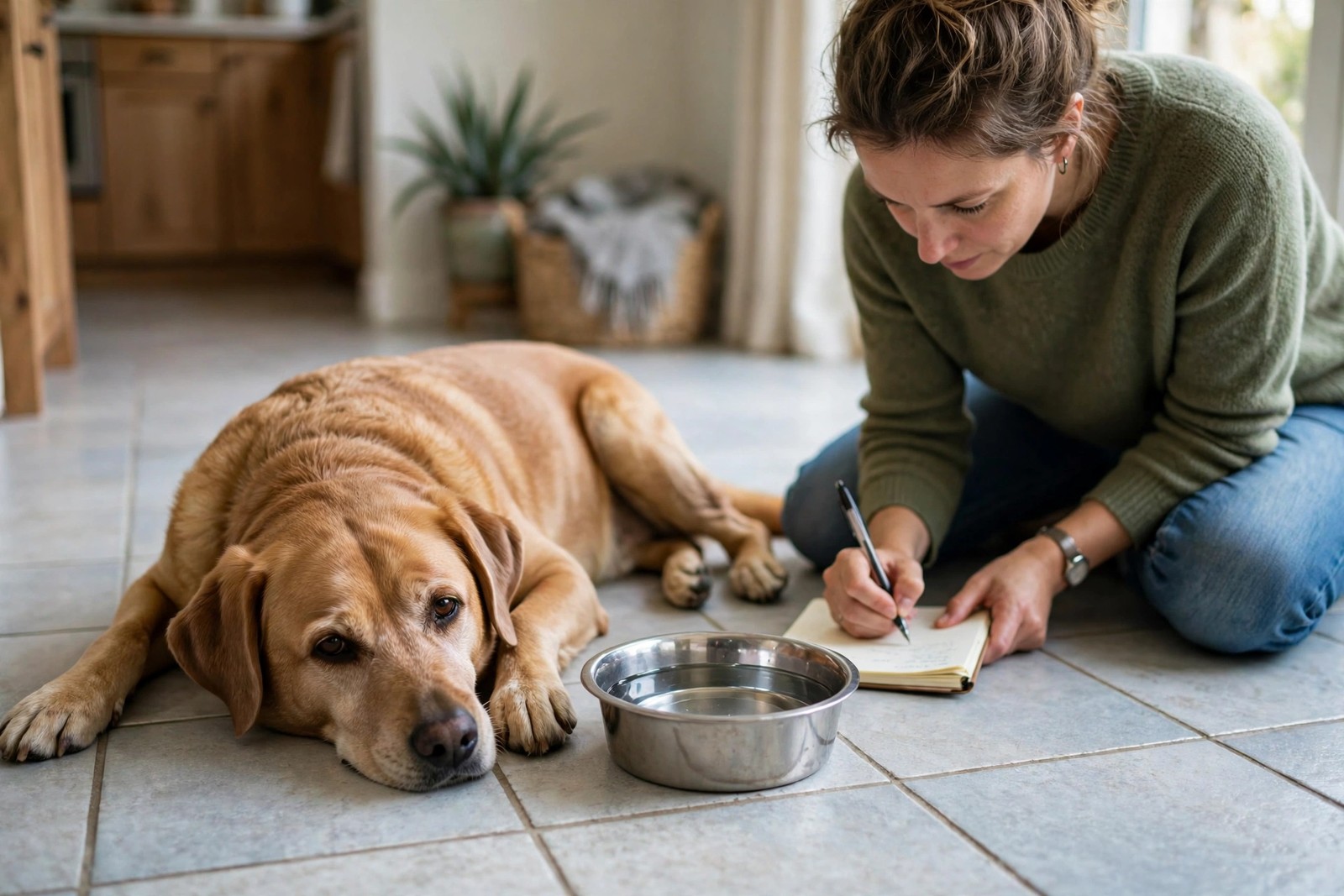
Keep your dog quiet in a cool, comfortable room, offer fresh water without forcing drinking, and postpone exercise, visitors, and play. Write down when each sign started, whether your dog has eaten, drunk, urinated, and passed stools normally, any vomiting, coughing, wounds, recent vaccinations, travel, or contact with unwell dogs, and whether any medicine of any kind has been given. Phone your vet the same day and read those notes in order. Never give human fever or pain medicines to a dog, because medicines that are routine for people can be dangerous for dogs, and a masked temperature also hides information the vet needs.
Signs That Make the Call Urgent
Contact a vet urgently, rather than waiting for a routine slot, if your dog is a puppy or senior with these signs, cannot be roused properly, breathes with difficulty, collapses, has repeated vomiting or diarrhoea, shows a swollen abdomen, or seems to be in pain. A dog that refuses all water, has not urinated, or deteriorates visibly across a few hours also belongs in the urgent category. Trust the direction of travel: a dog gathering signs needs help sooner than a dog shedding them, even if neither has a confirmed temperature. Emergency services would rather assess a dog early than meet the same dog in crisis at midnight.
Recording the Episode for the Next One
Note the date, the signs in their order, what you reported, the advice you received, and how long recovery took, and keep any temperature the clinic measured during the visit. Over time those records show whether episodes cluster around seasons, activities, or other illnesses, which helps your vet decide whether investigation is warranted. Filing those fever-episode notes in KinsLe's Pet Passport means the history is complete and portable the next time you have to describe a worrying evening by phone.