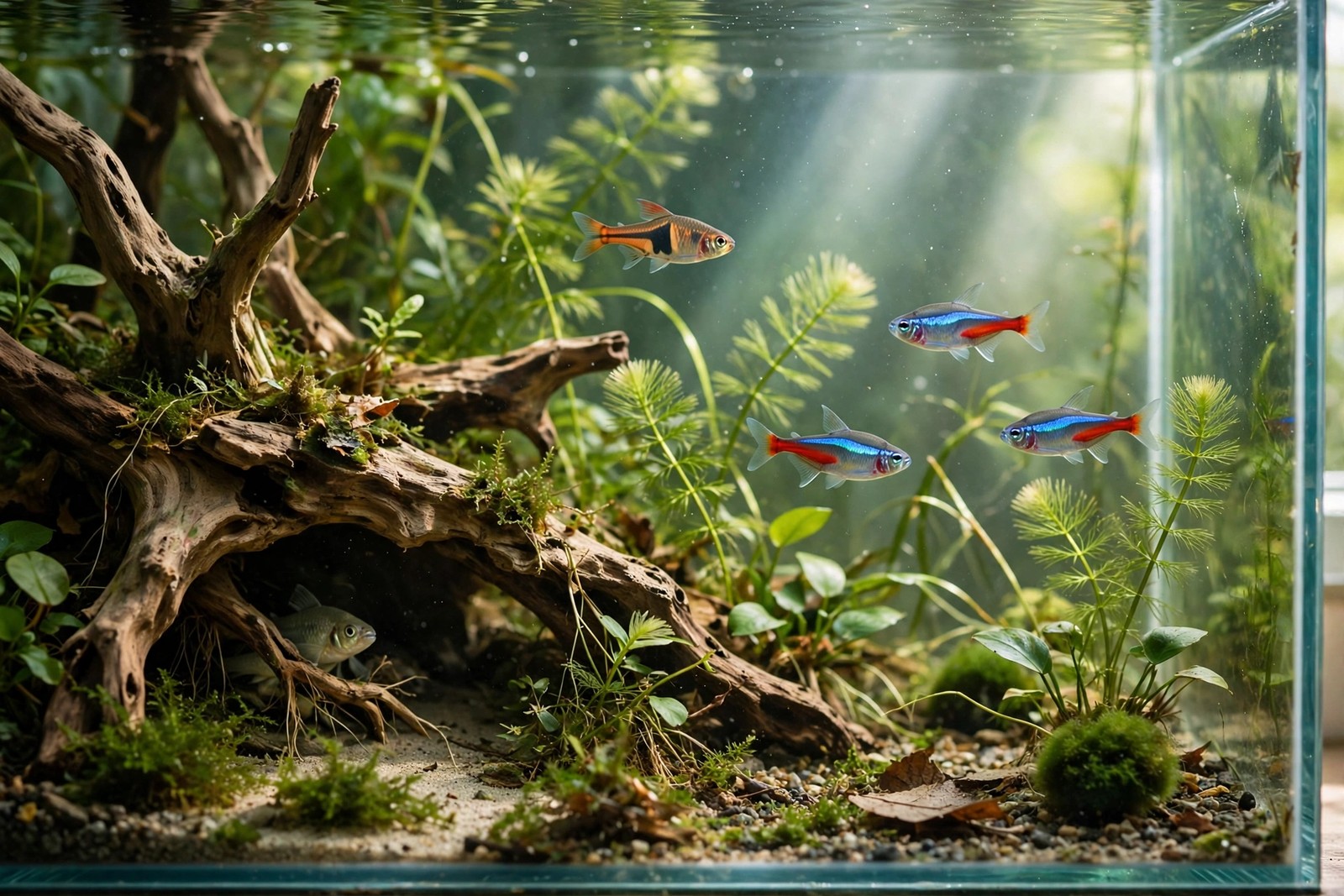
Fish cannot tell you the tank feels wrong, but their behavior describes it precisely once you know the vocabulary. Layout stress has a recognizable set of signs. A fish hiding constantly — emerging only to snatch food and retreat — is telling you the open water feels exposed. Glass-surfing, the restless up-and-down or back-and-forth swimming along one pane, often signals a fish with nowhere meaningful to go and sight lines it cannot escape. Colors washed out compared with how the fish looked when settled are a classic stress marker across many species. Watch the social map too: a single fish claiming the sole cave while its tankmates huddle in a corner is a layout failure, not a personality clash, and a fish pacing a single route repeatedly is tracing the limits of a space that offers it nothing else to do.
Read the Tank Like a Map
Before changing anything, spend ten quiet minutes watching where each fish actually spends its time. Note which areas are used, which are avoided, and where the tension happens. A bare center with every fish pressed to the edges suggests the open space feels like a risk with no cover within reach. Chasing that always starts at one cave mouth suggests territories are squeezed together with no buffer between them. A shelter everyone wants and no one will share suggests you have one good hiding place in a tank that needs three. This kind of observation separates layout problems from water or health problems: layout stress follows the geography — it happens in particular places, around particular structures, and often eases when the lights dim — while a fish that is unwell tends to look unwell everywhere it goes.
Fix the Layout, One Change at a Time
The fixes are layout answers. Break up sight lines with plants, wood, or rockwork placed so a fish can get out of another fish's view without crossing the whole tank. Provide more than one shelter — ideally more shelters than territorial fish — and spread territories out rather than clustering every cave at one end. Keep open swimming space genuinely open for the species that cruise it, instead of filling the center with tall decor that turns the tank into a maze for everyone. Then discipline yourself: change one thing at a time and watch for a week before judging it. Moving everything at once destroys your evidence and stresses the fish with a wholly new world; a single change, observed for a week, tells you exactly what helped — hiding easing, color returning, the corner crowd dispersing into the tank.
Write the Observations Down
A week of watching is easy to misremember, so keep brief notes: which change you made, and what the hiding, surfing, color, and crowding looked like each day. Those notes are the shared log the Care Teams feature in KinsLe can hold for a household tank, with observation duty and water-change duty assigned by name so the watching actually happens on a schedule instead of when someone remembers. Share the notes with anyone else who feeds or maintains the tank, because a second person's weekend rearrangement can quietly undo the experiment you are running. Layout work is slow, patient, and genuinely effective: most layout-stressed fish settle visibly within weeks once the geography stops working against them. Recorded in KinsLe, the Care Teams log shows which single layout change you made, who watched the tank each evening, and how the fish responded across the full week.