
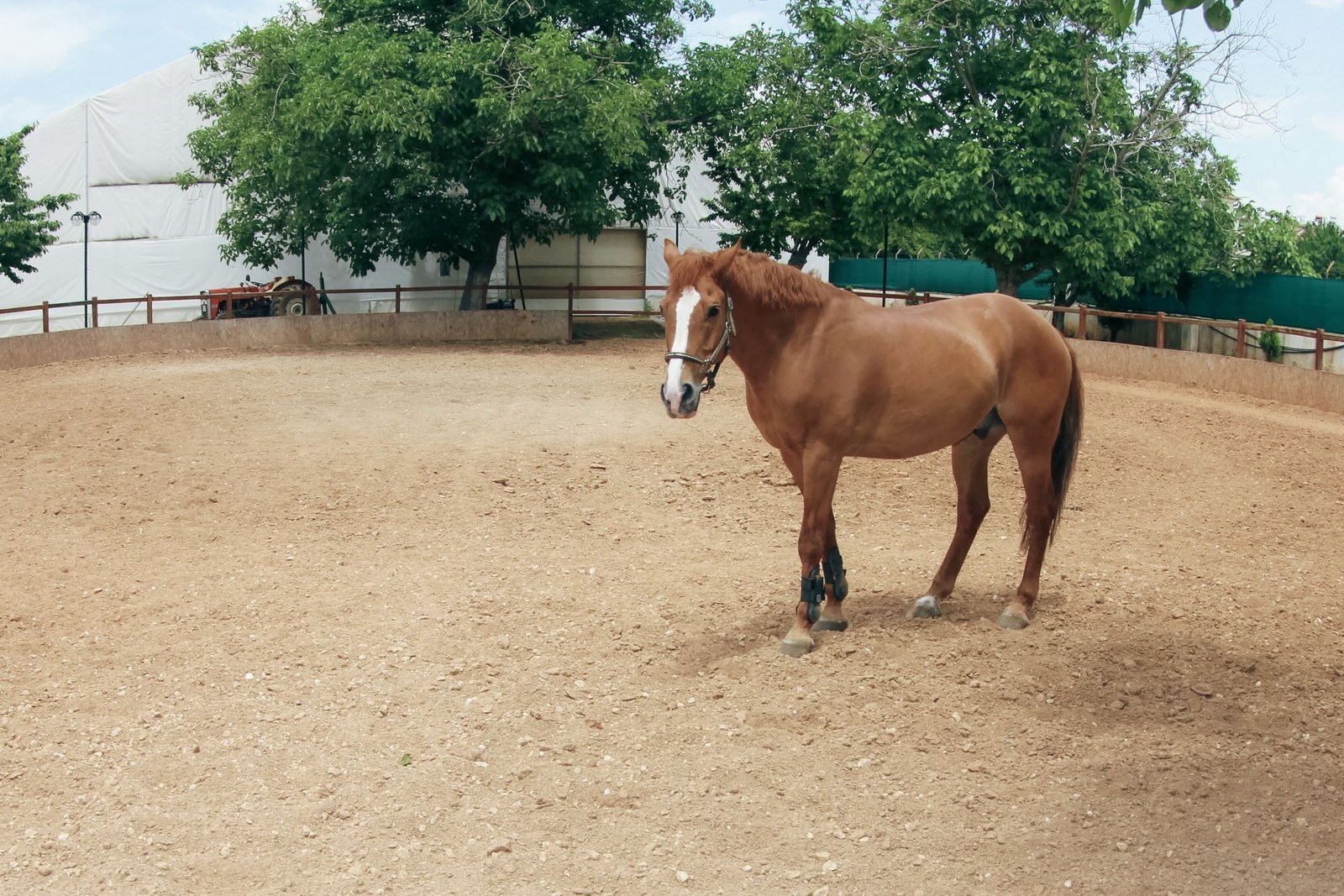
Learn to body condition score your horse — it is the single most useful skill in feeding. Run your hands over six areas: neck, withers, shoulder, ribs, loin, and tailhead. On a 1-to-9 scale, most horses should sit around a 5: ribs you can feel easily but not see sharply, a withers and shoulder that blend smoothly, and no deep crease down the back. Your hands tell the truth that winter coats hide.
Feeling, not just looking
Eyes lie, especially under a fluffy winter coat or after a fresh clip. The hand test is what counts: at a healthy weight, ribs feel like the back of your hand — there, but with a thin covering. If ribs feel like knuckles, the horse is too thin; if you have to press hard to find them at all, he is too heavy. Check the neck for a crest that has gone hard and lumpy (a heaviness flag), the tailhead for fat pads, and the topline — a horse can carry belly fat while losing muscle along the spine, which is condition loss disguised as roundness.
Photograph and score on a schedule
Memory is unreliable for slow change, which is how most weight problems develop. Score your horse the same way once a month and take the same three photos each time: side view, front, and rear. Stand him square on level ground in decent light. Over months, those photos reveal the creeping gain or the gradual loss you would never catch day to day. A weight tape around the heart girth adds a number to the pictures — not perfectly accurate, but excellent for tracking direction.
What the score tells you to do
A score drifting up means cutting feed before the horse is obese — reduce concentrates first, then consider a grazing muzzle or measured hay nets rather than starving the horse of forage. A score drifting down means adding calories, but also asking why: worn teeth, parasites, and dental issues cause weight loss that extra feed cannot fix. Big or sudden changes in either direction, or a horse you cannot get to gain despite feeding up, are conversations for your veterinarian, not just the feed store.
Safety notes
Never crash-diet a fat horse by slashing forage — horses need continuous fiber for gut health, and rapid restriction risks serious digestive trouble. Obese horses and those with cresty necks should be evaluated for metabolic issues before any diet plan. At the other end, a very thin horse with a dull coat and lethargy needs veterinary assessment promptly; refeeding a starved horse incorrectly is dangerous.
One timeline per horse
Condition scores are most powerful as a history, not a snapshot. KinsLe's Verified QR ID Pet Profiles give every horse a unique QR ID and one profile where those monthly weight and condition updates live — a running timeline you can show your vet or share with the barn. When his code gets scanned at the barn, the Verified QR ID Pet Profiles record on KinsLe opens the profile identifying that horse, complete with his scored photo history.