
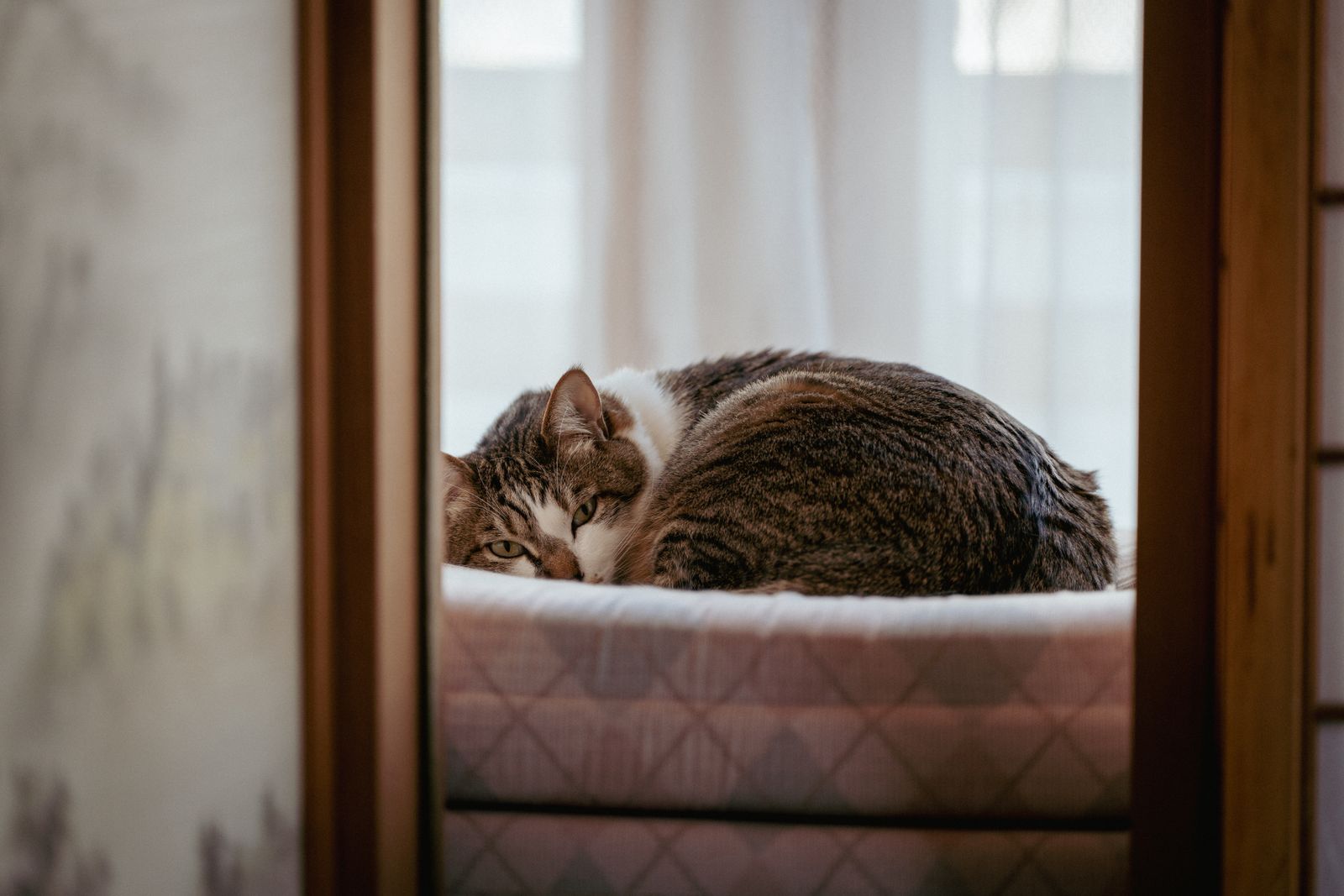
Because cats instinctively hide discomfort, a senior cat in pain usually shows it through quiet changes rather than crying: eating less, hiding more, hesitating before jumping, sleeping in a new spot, or turning grumpy when touched somewhere she used to enjoy being stroked. Your job is not to diagnose her — it is to notice the shifts early, note them down, and get your veterinarian involved while the problem is still small.
Why cats mask pain so effectively
Cats are both predators and prey animals, and showing weakness has never been safe in their world. A wild cat who limped or cried advertised herself to everything bigger. Domestic cats keep that wiring, which is why pain in an ageing cat rarely looks dramatic. Instead it leaks out through behaviour: the cat who always slept on the bed now sleeps on the floor because the jump costs too much; the cat who greeted you at the door now stays curled up because getting up is an effort she is rationing.
This is also why "she's still eating" is not the all-clear people hope for. Many cats continue eating despite significant discomfort. Eating less is a sign worth acting on, but eating normally does not cancel out other changes.
The subtle signs worth writing down
Watch for patterns across days, not single moments:
- Movement: hesitating at jumps or stairs, taking a two-step route up, landing heavily, moving stiffly after rest
- Grooming: grooming less overall, a coat becoming unkempt or matted over the back and hips she can no longer reach — or over-grooming one spot
- Litter habits: missing the box, perching awkwardly on the edge, or going less often because the trip or the step-in hurts
- Social changes: hiding, sleeping in unusual low or secluded spots, withdrawing from family time, or new irritability when picked up or stroked in a particular place
- Daily life: eating more slowly, dropping food, reduced play, sleeping far more, or no longer greeting you as she used to
Any one of these can have several causes, from joint pain to dental trouble to illness — which is precisely why they belong in front of a vet rather than in a home-guessing game.
What to do with what you notice
Keep a simple dated log: what changed, when you first noticed it, and whether it is getting better, worse, or staying the same. Short phone videos help enormously — a clip of her hesitating at the sofa or walking stiffly after a nap shows your vet something she may not reproduce in the clinic, where adrenaline often masks it.
Book the appointment rather than waiting for signs to become unmistakable; by the time a cat's pain is obvious, it has usually been present a long while. At the visit, let the vet examine her and advise on options. Never give human painkillers or another pet's medication — some common human pain relievers are genuinely dangerous to cats — and do not start, stop, or adjust any prescribed medication without veterinary guidance.
Small comforts that help at home
While you wait for veterinary advice, make life physically easier: a low-sided litter tray, food and water on the floor rather than up high, a warm bed in a quiet spot she can reach without jumping, and a step or ramp to a favourite perch. These adjustments support her; they do not treat the cause, so treat them as companions to a vet visit, not substitutes for one.
Keeping her whole story in one place
A dated record of changes is far more useful when it sits alongside her medical history. Keeping those observations with your cat's KinsLe Pet Passport means her vaccines, medications, allergies, and documents stay together in one records packet you can share with her vet at the visit — no scrambling for paperwork while you are trying to describe when the hesitation started. Storing that dated log alongside her earlier visit summaries inside the Pet Passport on KinsLe keeps her full history organized when you describe the hesitation at the clinic.