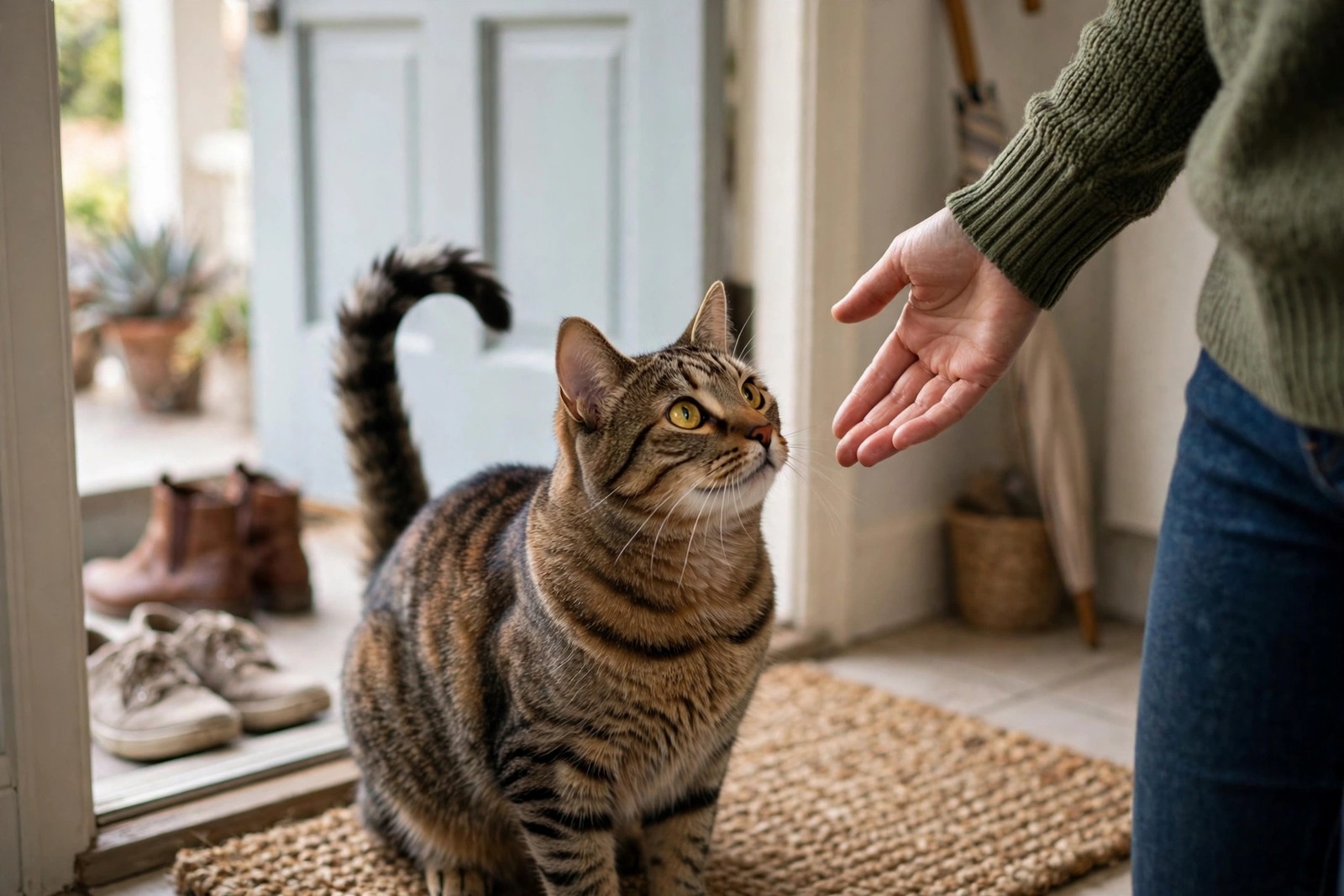
A cat's tail is a mood barometer, but only if you read all three of its dials at once: how high it is carried, what shape it makes, and how fast it moves. The same wagging motion that means joy in a dog means rising tension in a cat, so work through the common signals below and then check them against the rest of your cat's body — ears, posture, and pupils confirm or correct the tail's story.
Tail Up: Friendly and Confident
A tail carried straight up, especially with a gentle curve at the tip like a question mark or a slight forward lean, is the classic friendly greeting. Kittens hold this position to their mother, and adult cats reserve it for people and cats they feel safe with — a cat approaching you tail-up is inviting interaction. A rapid quiver or shiver running through an upright tail usually adds excitement to that greeting, often seen when you come home or produce a favourite treat. By contrast, an upright tail with fur standing on end is not friendly at all; that belongs to the frightened signals below.
The Swish Scale: Focus to Overload
Tail movement in cats is an arousal meter. A slow, lazy sweep from side to side often means your cat is watching something with interest — a bird through the window, a toy you are wiggling — and is deciding whether to pounce. As the movement speeds up and widens into deliberate thumps or hard lashing, the meaning shifts: your cat is becoming overstimulated or annoyed. During petting, a tail that starts thumping is your early warning to stop before the sudden bite or grab that owners wrongly call unprovoked. A tail wrapped tightly around the body, or around your arm, is different again — usually a cat making itself small or holding something it values.
Puffed, Low, and Tucked: Fear Signals
A tail puffed into a bottle brush, often paired with an arched back and sideways stance, means a frightened cat trying to look larger — give it room and remove the trigger rather than reaching in to comfort. A tail carried low, hanging still, or tucked between the legs or hard against the belly signals anxiety, submission, or a cat feeling unwell, especially if the change from its normal carriage is sudden. A tail held low and lashing combines the two warnings: an unhappy cat that may react defensively if approached.
Read Your Own Cat's Dialect
Breed, injury, and individual habit bend the rules — some cats naturally carry their tails low, and a docked or injured tail speaks more quietly. What matters is your cat's personal baseline and what changes around feeding, play, visitors, and petting. Over a few weeks of watching, most owners can predict the swat, the pounce, or the head-butt seconds before it happens. Keep testing those readings against your own cat's baseline, and the flicks will start to read like sentences. If a signal still puzzles you, put a follow-up question to KinsLe's Kimmy; she answers using the KinsLe Answers library.