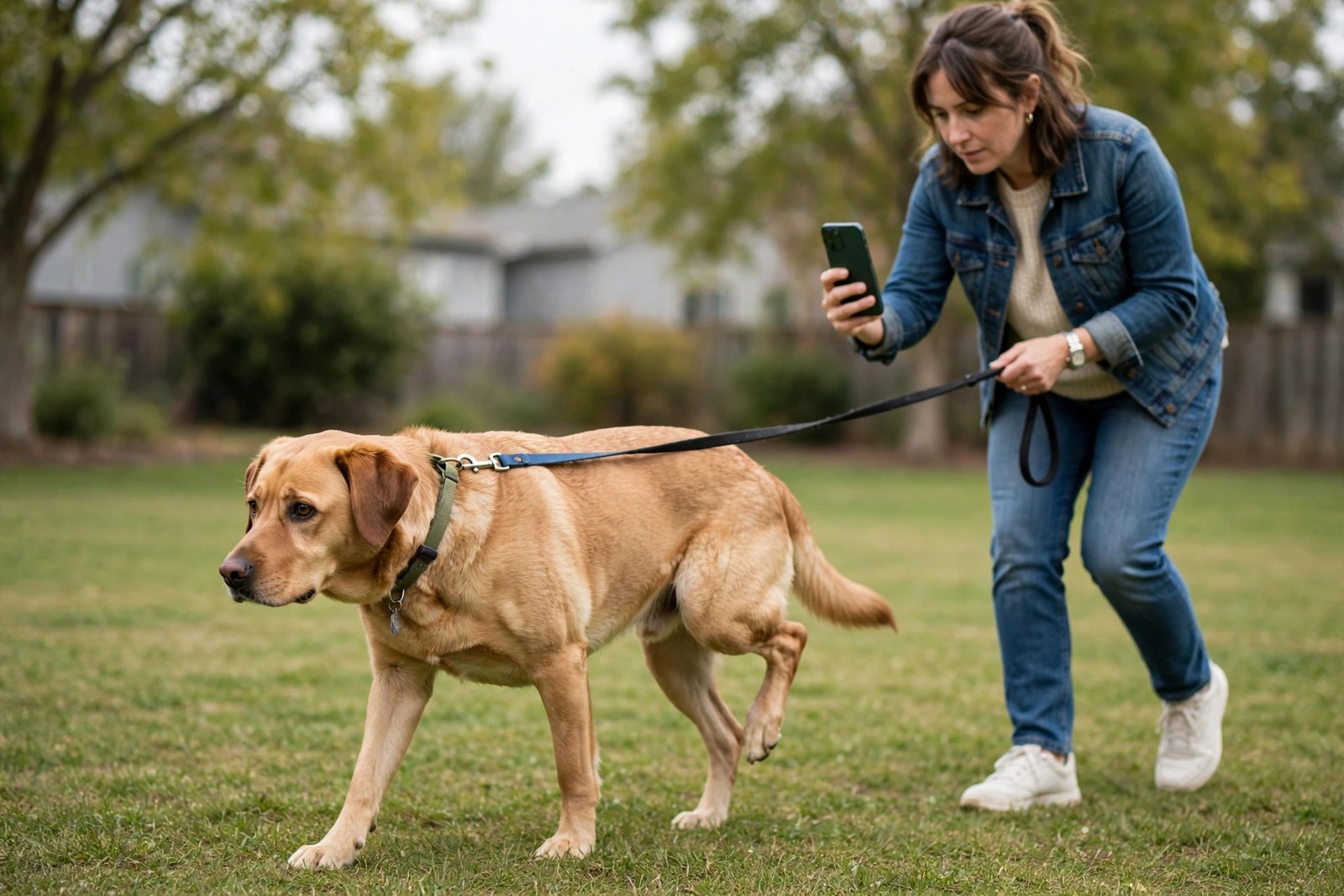
The decision with a limp is not really rest versus vet in the abstract. The decision is whether this limp carries any feature that makes waiting unsafe, and only a limp with none of those features earns a short, strict trial of rest at home. Work through the checks below in order, because a single yes in the first section settles the question immediately, however well your dog seems to be coping.
Features That Mean a Vet Examination Today
Book a vet today if your dog will not put the foot down or bears weight only in brief, toe-touching steps, cries out when moving or when the leg is touched, or guards the leg fiercely. Swelling, heat, a limb held at an odd angle, a visible wound, a broken or torn nail with bleeding, or anything that could be a bite also belongs in today's category. So does any limp that followed a fall, a jump from height, a collision, rough play that ended with a yelp, or a road incident, even if your dog walked home on the leg, because adrenaline can mask injury for hours. Add the whole dog to the judgement: a limping dog who is dull, off food, panting at rest, or trembling needs examination today, not rest and hope.
The Narrow Case Where Strict Rest Is Reasonable
Home rest suits a mild limp in a bright, eating, comfortable dog who still uses the leg and showed no traumatic start — the classic picture is a dog who was slightly stiff after an ordinary walk or woke favouring a leg that improves as the day goes on. Rest must be strict to mean anything: lead-only toilet trips in the garden, no stairs where you can avoid them, no jumping on furniture, no play, no training, and no off-lead exercise, because a dog left to self-exercise is not resting however quiet the house feels.
Recheck Points That End the Home Trial
Set the decision points before you start, so that hope does not quietly extend them. If the limp is not clearly improving within a day or two, if it worsens at any point, if swelling or pain appears, or if your dog stops using the leg, the home trial is over and the vet sees the leg. A limp that improves and then returns with exercise, or that keeps recurring in the same leg across weeks, also deserves examination rather than repeated cycles of rest, because recurring lameness has a cause that rest is masking rather than fixing. Puppies with a limp, seniors whose mobility suddenly changes, and dogs already known to have joint or bone problems should be seen rather than repeatedly rested at home.
What Not to Do While You Decide
Never give human painkillers or leftover medicines from another pet or an earlier problem, because drugs that people tolerate can seriously harm dogs and a masked limp also removes information the vet needs. Do not test the leg with a run, a ball throw, or a long walk to see how bad it is, because each test can convert a strain into a worse injury. Avoid repeatedly bending, pressing, or comparing joints if your dog objects, since home manipulation can hurt and rarely changes the decision.
Recording the Limp So the Vet Sees the Course
Note when the limp started, what happened just before it, which leg is affected, whether your dog bears weight, and how the limp changes morning to evening and day to day. A short video of your dog walking slowly on a lead, filmed on a flat surface, shows a vet the gait far better than a description, and filming daily during a home-rest trial makes improvement or deterioration objective. Keeping those dated gait notes and videos listed in KinsLe's Pet Passport means a limp that returns next season arrives at the clinic with its full history attached.