
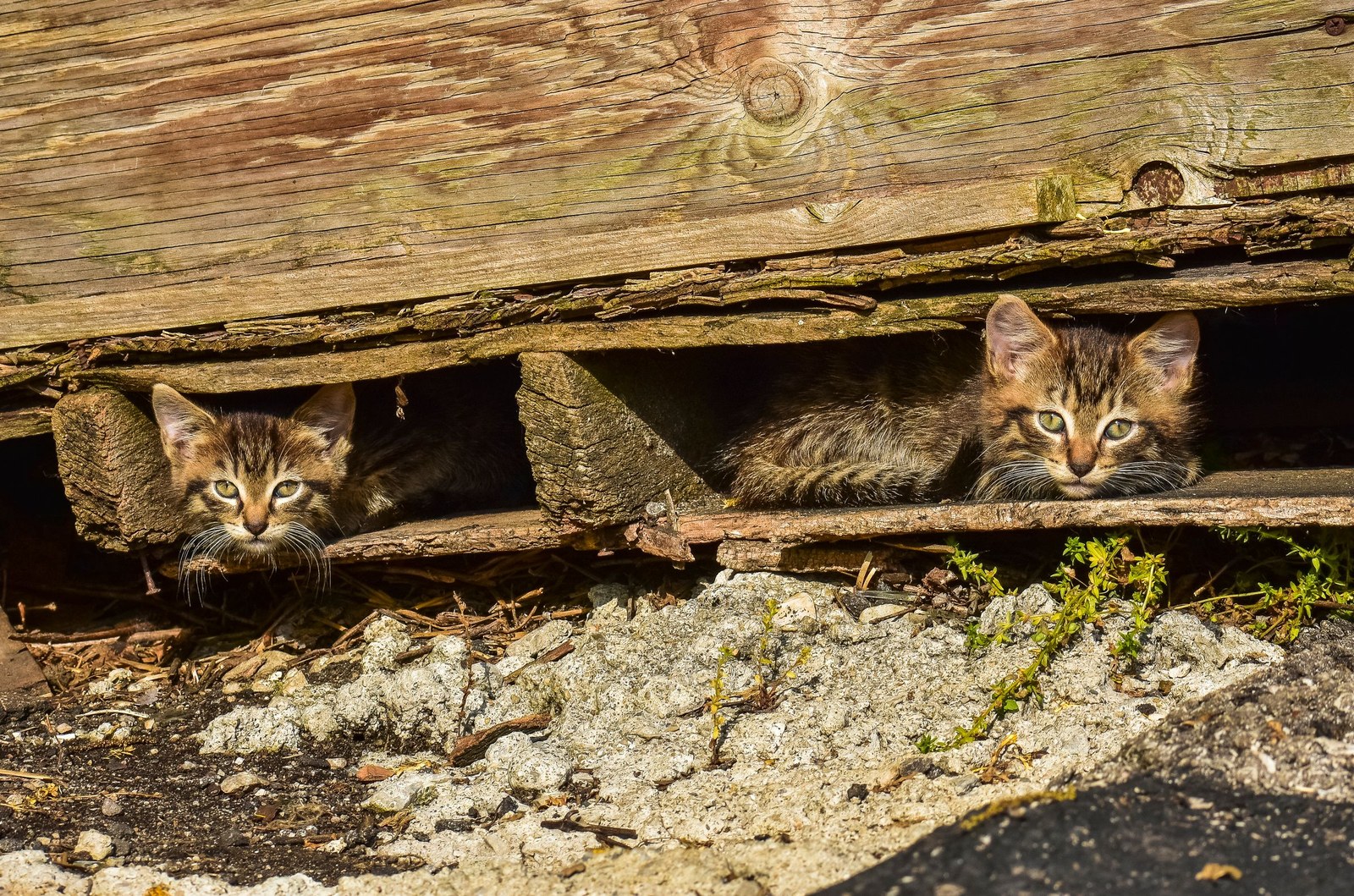
Your neighbors are your best search team: ask them to check garages, sheds, greenhouses, and under decks, share a clear photo and your phone number, and ask everyone to call or text you with sightings rather than chasing your cat. Most lost cats are found very close to home, often shut inside an outbuilding or hiding on someone else's property — places only your neighbors can search.
Why Cats Get Trapped So Close to Home
A frightened cat slips into an open garage or shed looking for cover, settles silently behind boxes or lawn equipment, and stays quiet when the door swings shut. She will often not cry out, even when hungry, because silence feels safer than attention. That is why a shed opened on Saturday and closed the same evening is such a common story in lost-cat reunions. Cats also tuck themselves under decks, into crawl spaces, behind water heaters, and inside parked vehicles. Your own yard you can search yourself; the six yards around you need permission and extra pairs of eyes.
Exactly What to Ask Neighbors to Do
Be specific — vague requests get vague help:
- Check outbuildings properly: Open the shed or garage, look behind stored items with a torch, then leave the door open for an hour so a hiding cat can slip out on her own.
- Check at quiet times: Early morning and dusk, when a scared cat is most likely to move.
- Report, don't chase: Ask people to note the time, place, and direction of travel, take a photo if they can, and call you immediately. Chasing, calling loudly, or grabbing at a frightened cat usually pushes her further away or deeper into hiding.
- Spread the word one street further: A neighbor's group chat, a note through doors on your block, and a poster at the corner all widen the net.
What to Share With Them
Give neighbors one clear, recent photo showing your cat's face and markings, a short description in plain words — "small grey tabby, white chin, pink collar" — and your mobile number in large print. Mention any defining detail a stranger could spot from a distance, like a kinked tail or one white paw. Tell them when she went missing and from where. If she is microchipped, say so; if she is shy, say that too, so nobody expects her to trot up to a stranger.
Searching Smart Yourself
Search your own property and the immediate area slowly, at night with a torch; cat eyes reflect the light from hiding places you would walk past in daylight. Leave out something that smells strongly of home — her bedding or your worn clothing — and check your own outbuildings repeatedly. Keep one door or window she could use monitored rather than leaving food out unattended, which can attract other animals. Stay patient: cats are often found days later within a few houses of home.
How KinsLe Turns Neighbors Into a Network
KinsLe's Circle of Love is the community behind its Lost Pet Alerts, which are free in every profile. When your cat goes missing, KinsLe's Lost Pet Alert is free in every profile and shows on the map, putting extra eyes on sheds, decks, and quiet corners across your neighborhood — including people you may not know personally yet. A finder can message you directly, so a sighting reaches you in minutes rather than via a poster someone might see tomorrow. It formalizes the neighborly help that already brings most cats home, just faster and wider. Through the Circle of Love on KinsLe, owners who have lived through a missing-cat search share where frightened cats actually hid and which quiet checks brought them home.