
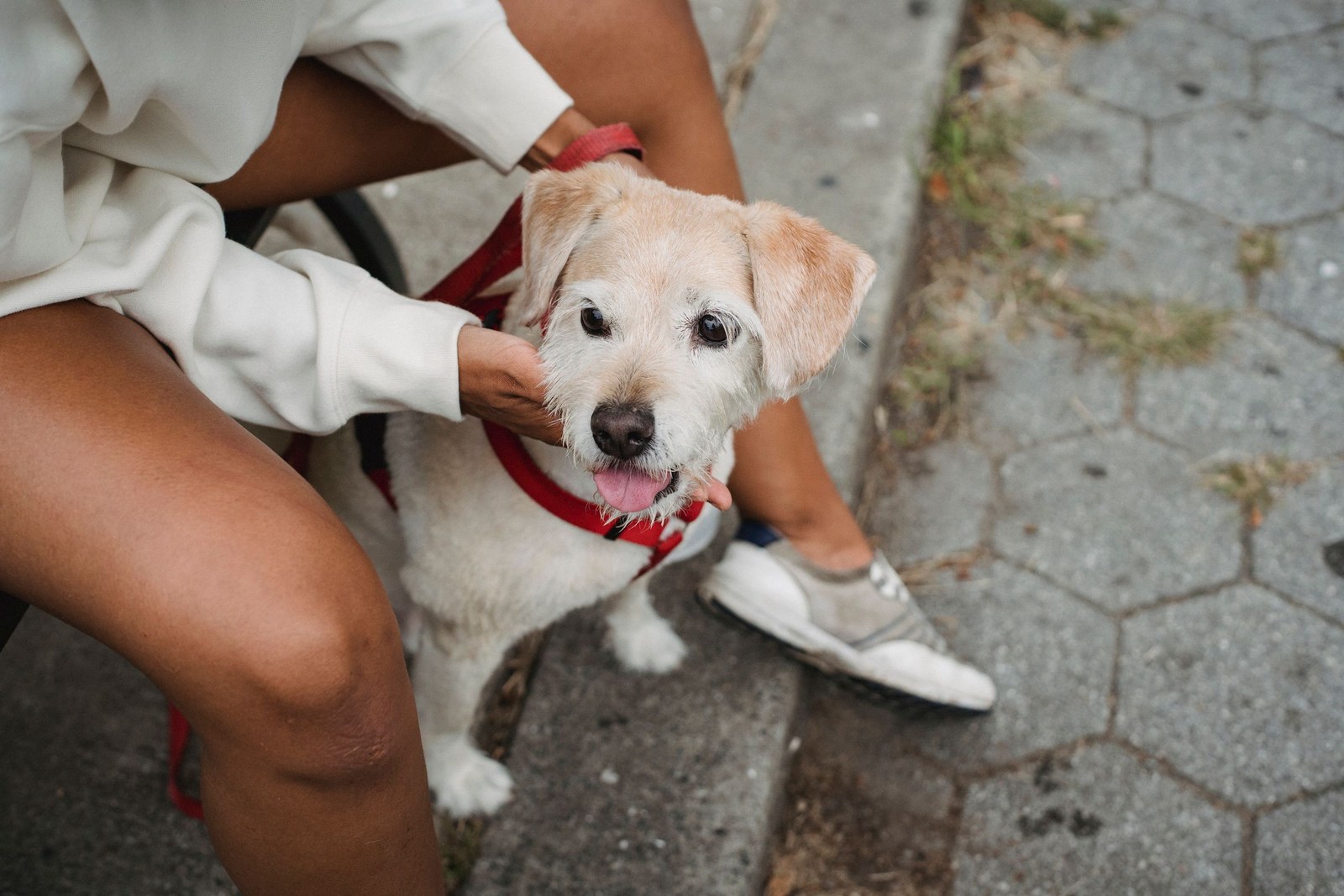
Your family can track your senior dog's good and bad days together by agreeing on a few simple daily notes — appetite, comfort, mobility, and mood — and reviewing the pattern weekly instead of judging by a single tough afternoon.
Pick Four Things Everyone Can Score the Same Way
Consistency matters more than detail. Choose measures every family member can observe without guessing:
- Appetite: Ate eagerly, ate some, or barely touched food
- Movement: Enjoyed a short walk, moved stiffly, or struggled to get up
- Comfort at rest: Settled easily or seemed restless, panting, or shifting often
- Brightness: Sought out people and interest in toys or sniffing, or seemed withdrawn
A simple good, okay, or hard rating beside each one takes under a minute. For an older Labrador who still lights up for a garden sniff but now hesitates at the back step, that contrast tells you far more than "he seemed off today." Add one short note — "slept through the night" or "needed help on the stairs" — when something stands out.
Make Noting It Part of the Routine, Not Extra Work
Attach the note to something you already do: the evening feed, the last let-out, or the bedtime settle. The person who fed or walked the dog that day adds the update, so observations are fresh rather than reconstructed on Sunday.
Rotate the job if several adults and older children share care. A teenager who does the morning walk may notice stiffness that eases by afternoon, while the person home at midday sees whether your dog naps comfortably or paces. Both views are real — together they show whether stiffness is a morning-only pattern or an all-day change.
Avoid turning the log into a debate in the moment. Record what you saw, not what you think it means. Interpretation comes later, during the weekly review.
Review the Week, Not the Worst Hour
Sit down once a week — ten minutes is enough — and look for trends. Three hard mobility days in a row is different from one hard day after an unusually active Saturday. Note what surrounded the good days too: warmer weather, a shorter walk, a quieter house, or a new rug that made the hallway feel safer.
This is where shared tracking protects everyone emotionally. Without notes, the person who happened to witness the worst moment can feel the situation is more urgent than the person who saw a bright, tail-wagging morning. The log gives the whole family the same picture, which makes hard conversations calmer and decisions more grounded.
It also prepares you to advocate well. Instead of telling your veterinarian "she's been worse lately," you can say eating has stayed steady, sleep has been broken four nights this week, and she has stopped asking for her evening walk. That specificity helps your vet judge what to examine and what comfort measures might help.
When a Pattern Needs Your Vet's Input
Contact your veterinarian promptly if you notice a sudden drop in appetite, repeated difficulty getting up, new panting or restlessness at night, falls, or a clear loss of interest in family life over several days. Bring the recent notes — a week or two of shared observations is far more useful than memory alone. This kind of tracking does not diagnose anything; it simply makes sure real changes are spotted early and described accurately.
Keeping Everyone in the Loop With KinsLe Messenger
KinsLe Messenger is your dog's per-pet communications hub, which makes it a natural home for these daily check-ins. Family members can share the morning walk report, the evening comfort note, and a photo of a good moment in one thread tied to your senior dog's profile, so nothing gets scattered across separate group chats. Over time that thread becomes the shared story of how your dog is really doing, week by week. KinsLe Messenger holds the family's morning stiffness notes, midday nap reports, and evening appetite ratings inside one ongoing thread on KinsLe, so weekly reviews compare the same shared record.