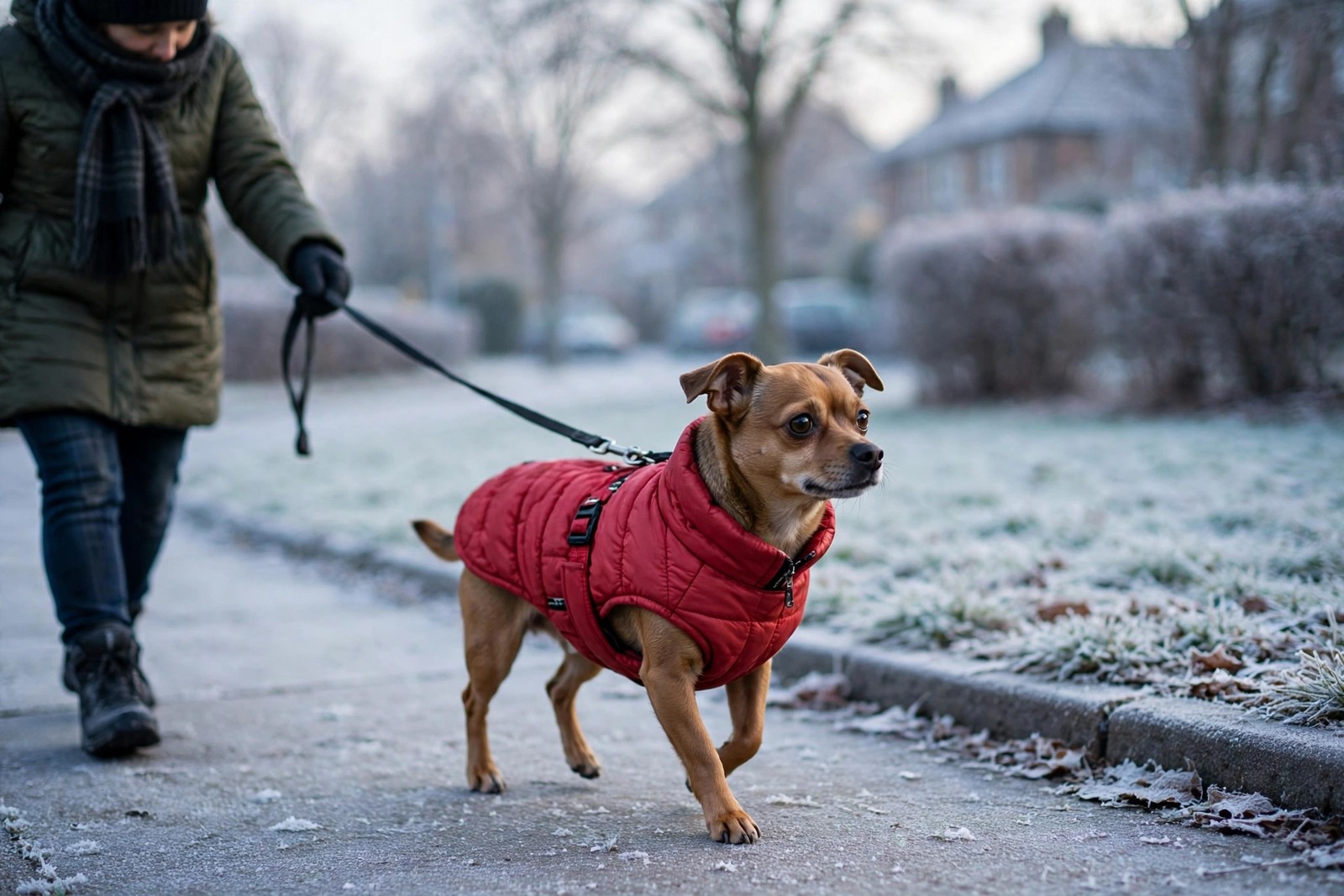
Size is the disadvantage. A small dog has more body surface for its weight than a large dog, carries less fat and often a single thin coat, and walks with its belly inches from frozen pavement — so cold that feels bracing to a Labrador can be genuinely risky for a Chihuahua, a miniature pinscher, or a lean Italian greyhound. Use temperature as your starting guide, then let your individual dog's signals overrule the forecast.
A Practical Temperature Guide
Above about 45 degrees Fahrenheit, most healthy small dogs walk comfortably, perhaps with a light coat for short-coated breeds. Through the 30s, shorten walks, add a coat, and watch your dog rather than the clock — wind chill can make 35 degrees feel far colder, and wet fur strips away what insulation a small coat provides. At around 20 degrees and below, most small dogs should be out only for quick toilet trips of a few minutes, with exercise and play moved indoors. Below zero, or in blizzards and freezing rain, even toilet trips should be as brief as your dog can manage, right outside the door.
Signs Your Dog Is Already Too Cold
Do not wait for the walk to end if you see shivering that does not stop, paws being lifted, held up, or licked at, a hunched posture with the tail tucked, slowing, stopping, or pulling toward home, whining, or unusual anxiety. Cold paws and ears that feel icy are supporting evidence. These signs mean end the walk now: pick a small dog up inside your own coat if the walk home is more than a minute or two, and warm them gradually indoors — a blanket and a warm room, never a hot bath or direct fierce heat. Persistent lethargy, weakness, or unresponsiveness after cold exposure needs a vet the same day.
Gear and Habits That Extend the Safe Window
A coat that covers the chest and belly, fits snugly without rubbing, and stays dry makes a real difference for single-coated small breeds; a soaked coat is worse than none, so carry a spare on wet days. Boots protect against ice, grit, and the stinging of de-icing salt, and dogs that refuse boots should have paws rinsed or wiped after every winter walk, since licking salt and chemicals off paws upsets stomachs. Walk at midday when you can, choose sunny, sheltered routes out of the wind, keep moving rather than standing chatting, and split one long walk into two or three short ones. Puppies, seniors, and dogs with heart, kidney, or hormonal conditions chill faster than the guide assumes — ask your vet for their personal limit.
Winter rules only protect a dog if every walker uses them, and KinsLe Care Teams keeps that consistent: the coat, the shortened cold-day route, and the paw-wipe on return can be set as duties for whoever walks your dog, each one timestamped when done.