
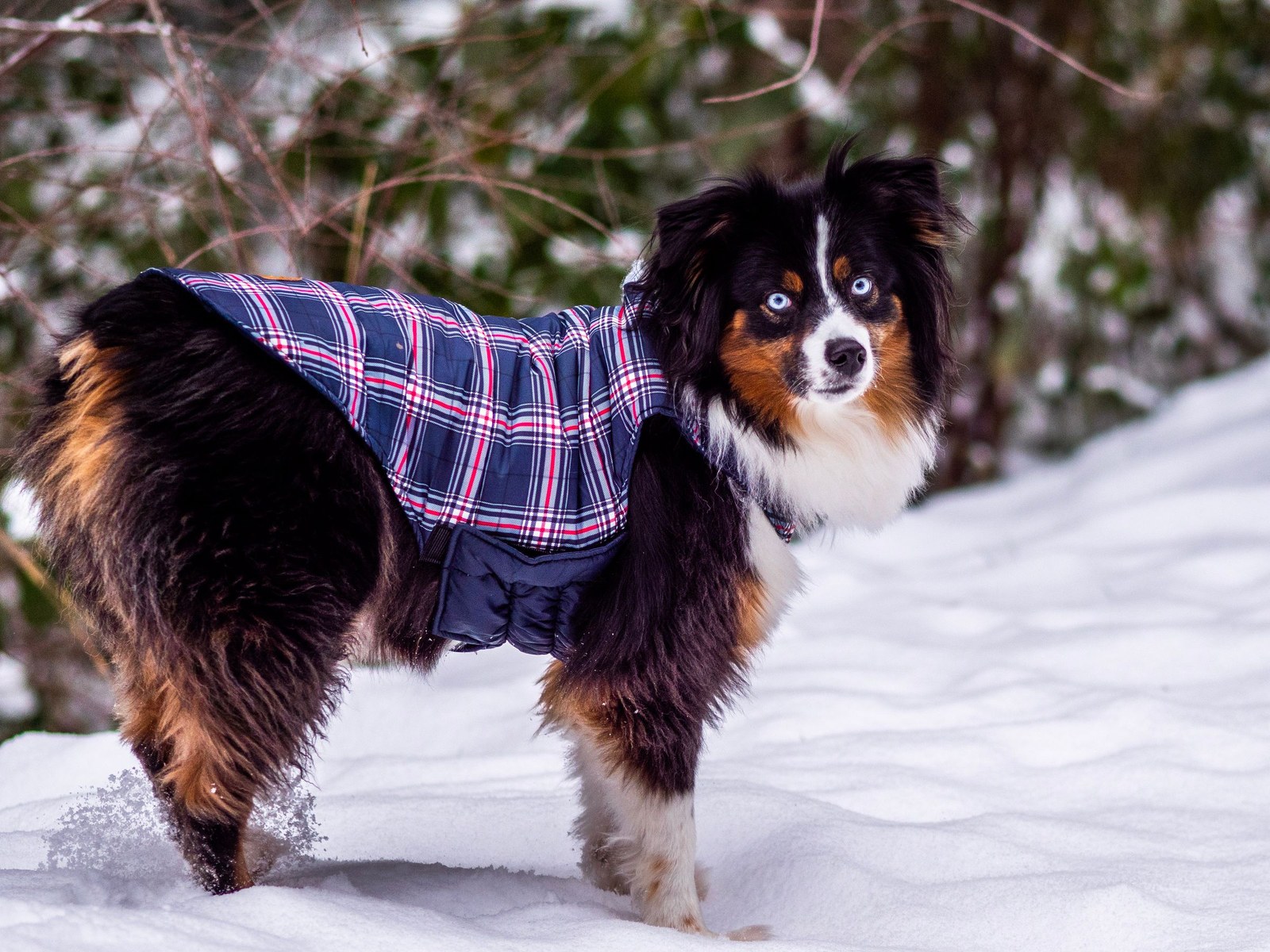
No single temperature is too cold for every dog. A thick-coated northern breed may be exhilarated on a morning that leaves a lean Greyhound shivering within minutes, because size, coat, body fat, age, and health all move the limit. Use the forecast as a starting point, then judge the individual dog in front of you — that combination is safer than any chart.
Dogs who feel the cold first
Small dogs lose heat quickly through their relatively large surface area and stand closer to cold ground and snow. Short-coated and single-coated breeds, lean dogs with little insulating fat, puppies who regulate temperature poorly, senior dogs with stiff arthritic joints and less muscle to generate warmth, and dogs with heart, kidney, or hormonal conditions all belong in the vulnerable group. For these dogs, once it is well below freezing — and sooner in wind or sleet — outside time should mean brief, purposeful toilet trips and a short stroll in the warmest part of the day, not a full exercise session. Hardy, well-conditioned double-coated adults cope far longer, but even they have a limit in deep cold, especially once they stop moving.
Wind, wet, and the signs your dog gives you
Wind strips the warm air trapped in a coat, and a wet dog loses heat dramatically faster than a dry one, so a windy, sleety morning at a given temperature is a very different outing from a calm, sunny afternoon at the same reading. Your dog's behaviour is the real-time gauge: shivering, lifting one paw after another off the ground, whining, tucking the tail, lagging, or repeatedly turning toward home all mean end the walk now. Watch ears, tail tip, and paws in deep cold, because frostbite can affect those extremities, and check paws after walks for ice balls packed between the toes and irritation from salted pavements, rinsing and drying them indoors.
Practical ways to make winter outings safer
A coat that covers the chest and belly helps small and short-coated dogs hold warmth, provided it is dry — a damp coat chills rather than warms. Keep the longer walk for midday, shorten routes on exposed windy ground, stay off frozen ponds and thin ice entirely, and dry your dog thoroughly on return, especially the belly and feet. On the coldest days, swap distance for mental work indoors: sniffing games, puzzle feeding, and short training sessions tire most dogs without the exposure. Never leave a dog shut in a cold car or tied outside a shop in freezing weather, and remember that dogs kept outdoors need insulated shelter, unfrozen drinking water, and extra food in winter — and a place indoors when a severe cold snap arrives.
If a dog gets out in the cold
Treat a winter escape as urgent. Cold drains a loose dog's energy quickly, a frightened dog may hide rather than come when called, and daylight for searching is short. Search the immediate streets at once, knock on neighbours' doors, and spread the description the same hour rather than waiting to see if he finds his own way home. That urgency is exactly why KinsLe built the Circle of Love: nearby members who know local dogs can keep an eye out on their own walks and reach you fast if yours is spotted shivering two streets away.