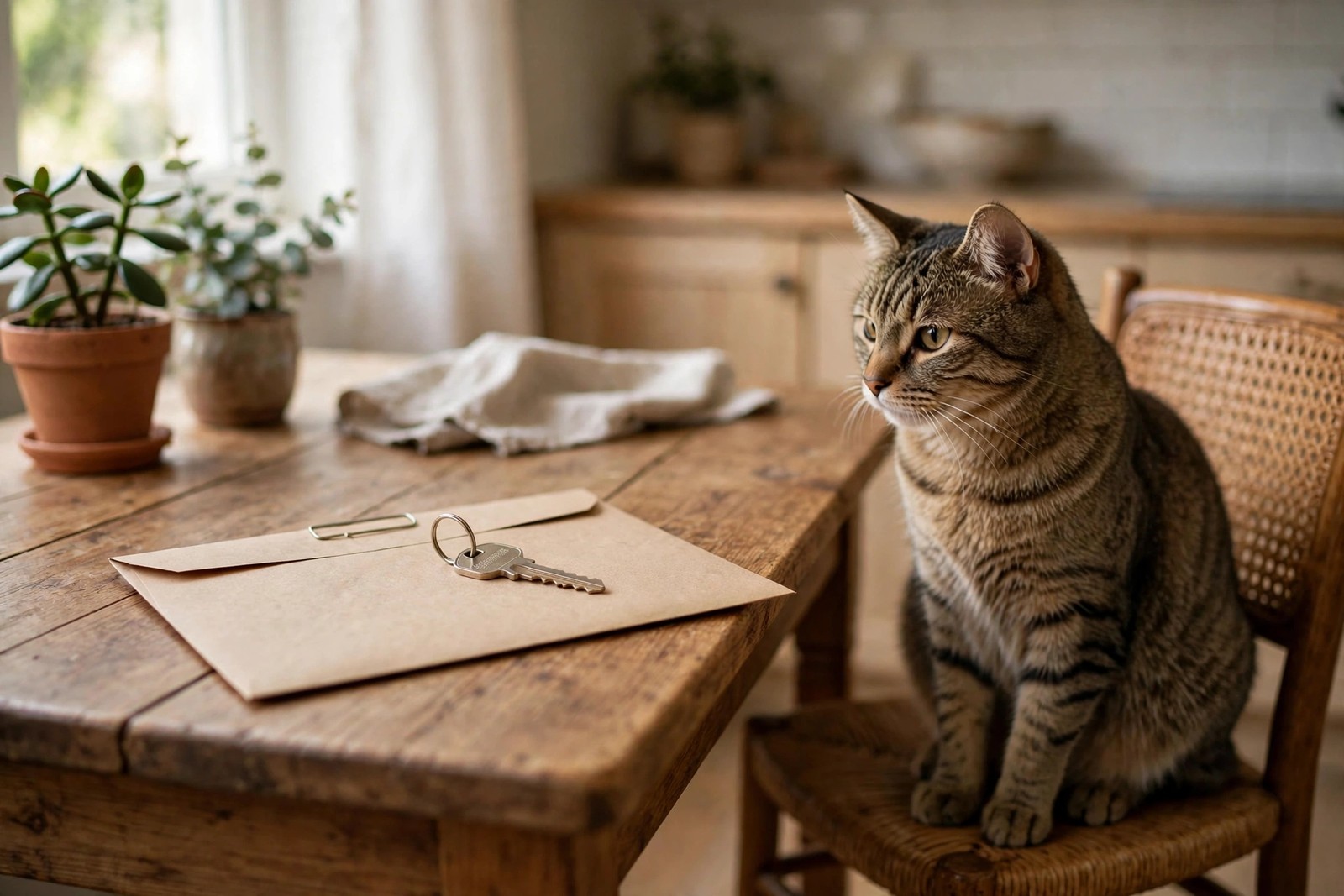
This is the one section where detail and restraint have to arrive together. A sitter locked out of your house is a cat unfed inside it, so the codes and the key's location must be exact, complete, and impossible to misread. At the same time, access information is the most sensitive thing you will write down all year, so it lives in this section and nowhere else — not repeated in a text thread, not echoed in an email, not summarized on a sticky note by the door it opens.
Precise, Complete, and in One Place Only
Write the exact codes the sitter needs and no others: the entry code for the door they will actually use, and the alarm code if the house has an alarm, with the few steps to silence it stated in order. If a door must be pulled toward you while the code runs, say so. Name which doors the codes do not open, so the sitter never wastes a rainy evening trying the back gate with a front-door number. Then stop. Extra codes for rooms the sitter has no reason to enter add risk without adding care, and the cat's world — feeding station, litter box, sleeping spots — almost always sits within the rooms the sitter is genuinely entering.
The Spare Key, Described Exactly
A spare key helps only if its description survives a flashlight search in the rain, so locate it precisely: the container it sits in, where that container rests, and any small landmark that confirms the right spot. Vague directions — outside somewhere, near the plants — are how sitters end up phoning you from a dark garden. If the key is instead held by a neighbor or the named backup person, say that instead, with their name and number, and drop the hiding place entirely; one route, clearly the route, beats two half-described ones. This access page sits inside the Pet Passport on KinsLe, inside the same packet as the cat's brief, so the key's location travels only within a document that is handed over in person and accounted for, never within a message that forwards itself.
If a Code Fails or the Sitter Is Locked Out
Plan the failure while everyone is calm. The instruction is short and absolute: if a code fails or the sitter finds themselves locked out, they phone the named backup person, and they never force entry — no shoulder to a door, no borrowed ladder, no window persuaded open. Forcing a way in damages the house, can injure the person, and may read to a neighbor exactly like the break-in it resembles. The backup person, named here with their number, either holds a working key or can reach you to authorize the next step. Add one line for the cat's sake too: a delayed visit is a problem to solve by phone, and the cat's routine can flex for an evening far better than a door frame can flex back.
Handed Over Whole, Taken Back Whole
End the section with the arrangement that closes the loop. The key and the instructions themselves stay secure during the sit — carried on the sitter's person or kept in the named place indoors, never left in a car or lent onward. The section is never photographed or messaged around; if the sitter needs to check a code, they check this page, in the house. At the sit's end, both come back: the spare key returned to its place or your hand, and the instruction packet handed back complete. Because the access section sits inside the same packet as the cat's brief, that accounting is simple — the packet is handed over whole and taken back whole, so access details never drift loose from the document that explains them.
At handover, walk through KinsLe's Pet Passport once, access page included, then take that same complete packet back into your own hands when you return.