This section exists so that a sitter never has to choose between a cat's urgent need and a stranger's wallet. Its detail is not about insurance products — no provider is recommended here, no price is quoted, and no policy is judged. The detail is about your arrangements: the fact that cover exists, the place its document lives, the amount of spending you authorize in your own words, and the paper trail you expect kept. Written before the trip, those few lines turn a 2 a.m. money panic into a decision the owner already made.
State That a Policy Exists, and Where It Lives
Open with the plain fact: the cat is insured, and here is where the policy document lives. Name the drawer, folder, or file with the same precision you would use for a passport, because a sitter may need to read the policy's own wording — what it asks for after an emergency visit, what paperwork it wants — while you are unreachable on a plane. If the document is a printed copy, say so; if the original lives digitally and a printout sits in the house, say which is which. Add the policy reference exactly as it appears on the document, copied from the page itself. That is the complete insurance content a sitter needs: existence, location, and reference. Choosing or changing cover belongs to a different conversation entirely.
Your Ceiling, in Your Own Words
The authorization is yours to set, so set it in your own terms and write the figure you choose yourself — no guide can pick it for you, because it depends on your means, your cat, and your conscience. State the ceiling plainly: the amount the sitter may spend on the cat's care without reaching you first. Then remove its hard edge by defining the exception in the same breath, which the next part covers. A ceiling written down protects everyone in the room: the sitter acts without fear of overstepping, the clinic hears a clear instruction, and you return to a decision you recognize as your own rather than one made by a tired stranger. If two people own the cat together, agree the number between you before it is written, so the page speaks with one voice.
What Counts as an Emergency Beyond It
Define, in plain framing, what may go beyond the ceiling: an emergency in which waiting for your approval would risk the cat's life or serious harm, as the attending vet presents it. Your words might cover urgent stabilization and the treatment needed to keep the cat safe until you can be reached — the shape matters more than legal polish, because the reader is a sitter seeking permission they can trust, not a lawyer. Say also that the sitter phones you as soon as the cat is safe, whatever was spent, so the exception never becomes a blank silence. Holding this paragraph in the Pet Passport on KinsLe, beside the vet contacts, keeps the money permission on the same page as the people it will be spent with.
Paperwork, Receipts, and the Notice the Policy Requires
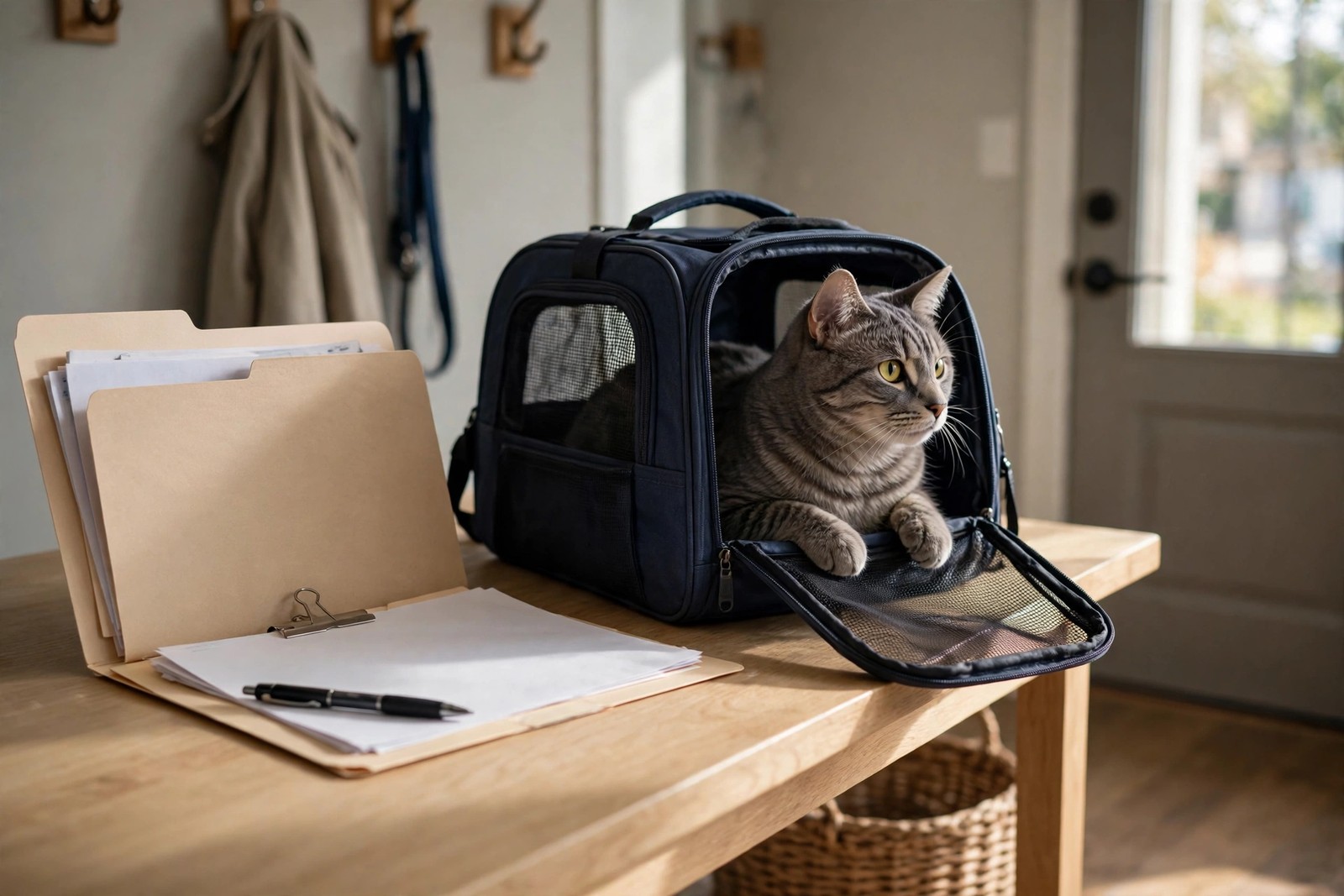
Close with the discipline that makes reimbursement and claims possible afterward: receipts and the clinic's paperwork kept for every spend, without exception. Tell the sitter to ask the clinic for itemized paperwork before leaving, to keep discharge notes with it, and to put everything in one named place rather than a coat pocket. Then note, as a document instruction copied from the policy itself, that the insurer is notified as the policy requires — the policy sets its own timing and method, and the section simply points the sitter, or you on your return, at that requirement. A short log line for each spend, written the same evening, keeps the trail followable months later.
Leave a folder beside KinsLe's Pet Passport for receipts and clinic paperwork, and the money side of any emergency stays traceable from the first call.