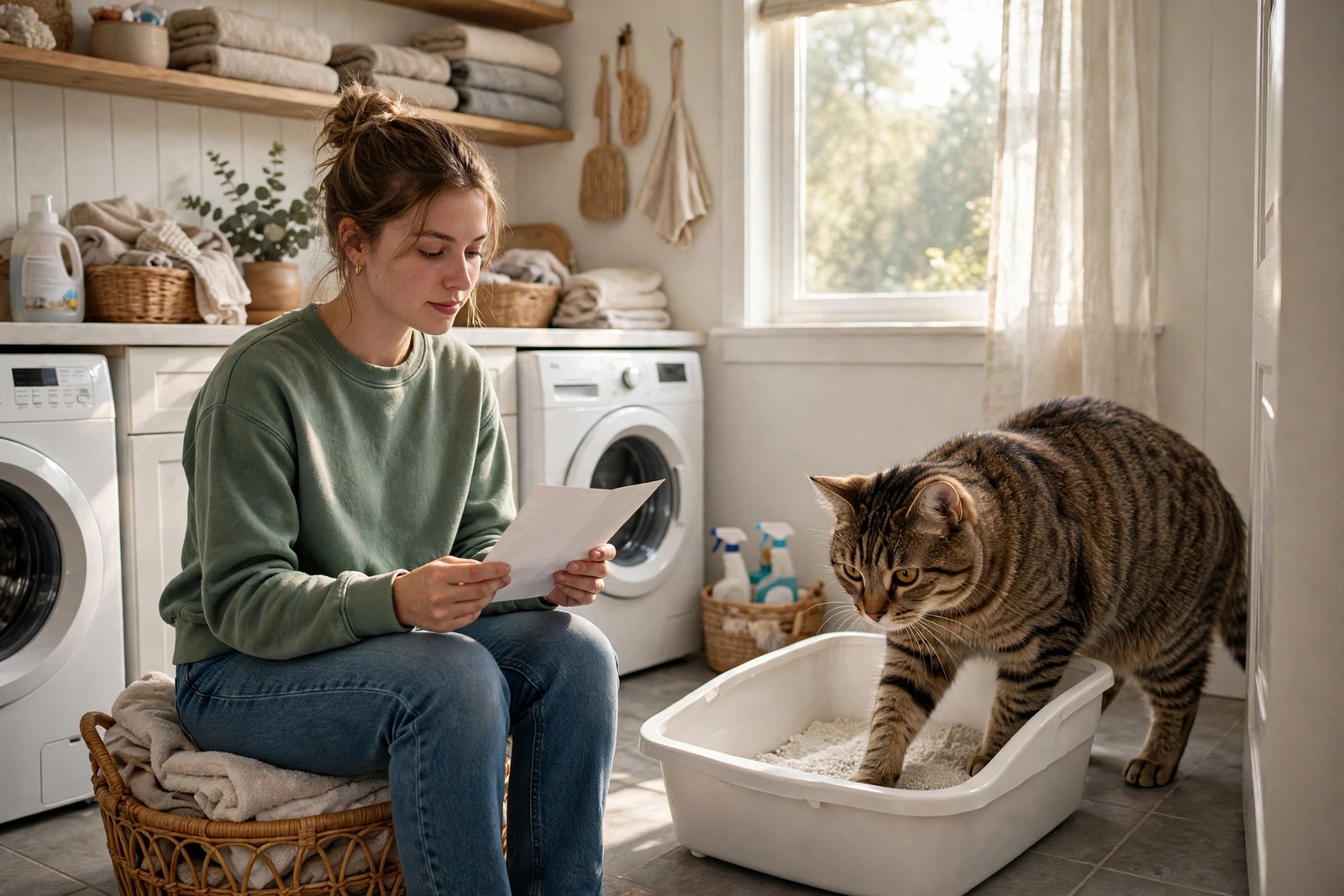
Spell this section out in full, because litter care is where a new sitter guesses most and where a cat notices fastest. A confident owner routine — where the box is, how often it is scooped, when the whole contents change — becomes a string of small decisions for someone who has never done it. Written plainly, each of those decisions disappears, and the cat's most private habit stays exactly as familiar as it was before you left.
Start With Where the Box Lives
Open with the box itself: the room it stands in, the corner or alcove, and anything a newcomer might miss, such as a second box upstairs or one tucked behind a laundry door. Say whether the door to that room stays open around the clock, because a closed door quietly turns a tidy routine into an accident on the carpet. If the box has a lid, a flap, or a liner your cat accepts, name that too — a sitter who removes a hood out of helpfulness can unsettle a cat who has always used it covered. The aim of these opening lines is simple: the sitter should be able to walk straight to the right box, in the right state, without hunting through the house or improvising a setup your cat has never seen.
Scooping, Topping Up, and the Full Change
Give scooping a clear frequency: at least daily is the standing habit in most homes, and it is what keeps a cat using the box willingly rather than picking a quiet corner instead. Then describe the full change in your own rhythm — how often you empty everything, wash the box, and start fresh — written as you actually run it, not as a universal rule imposed on every household. Litter depth deserves its own line: top up to the depth your cat knows, deep enough to dig and cover comfortably, because a suddenly shallow box feels wrong underfoot. Insist on the same litter for top-ups, and say plainly that a sudden litter change can put a cat off the box entirely; the spare bag's location belongs in this paragraph, so nobody substitutes whatever is on sale mid-sit.
Waste, Supplies, and Clean Hands
New sitters stall on the unglamorous logistics, so settle them in writing. State where scooped waste goes — the bag to use, the bin it lands in, and whether that bin leaves the house on a collection round or waits by a door. Point to where everything lives: spare litter, bags, the scoop itself, and any cleaning spray approved for the box area, each with its shelf or cupboard named. Close this part with hygiene in one firm line: hands washed after every litter job, every time, before feeding or handling food bowls. These details read as fussy on paper and feel like kindness in practice, because the sitter never has to text you about a bin or rummage through cupboards while a cat waits to be fed.
What Counts as News Worth Reporting
Tell the sitter what a change at the box means: it is information, not a mess to hide. A box the cat stops using is information for the owner the same day — a short message when it is noticed, not a summary saved for your return. The same goes for repeated trips with little to show, straining, crying at the box, or waste that looks strikingly different from the cat's usual pattern; the sitter reports the observation, and you decide with your vet whether it needs attention. Writing the reporting rule down also frees a conscientious sitter from worrying about bothering you on holiday. This litter page belongs in the Pet Passport on KinsLe, filed beside feeding notes and vet contacts, so one packet carries the whole daily picture.
Tuck the finished litter instructions into KinsLe's Pet Passport before departure, and your sitter inherits a routine with no gaps to guess at.