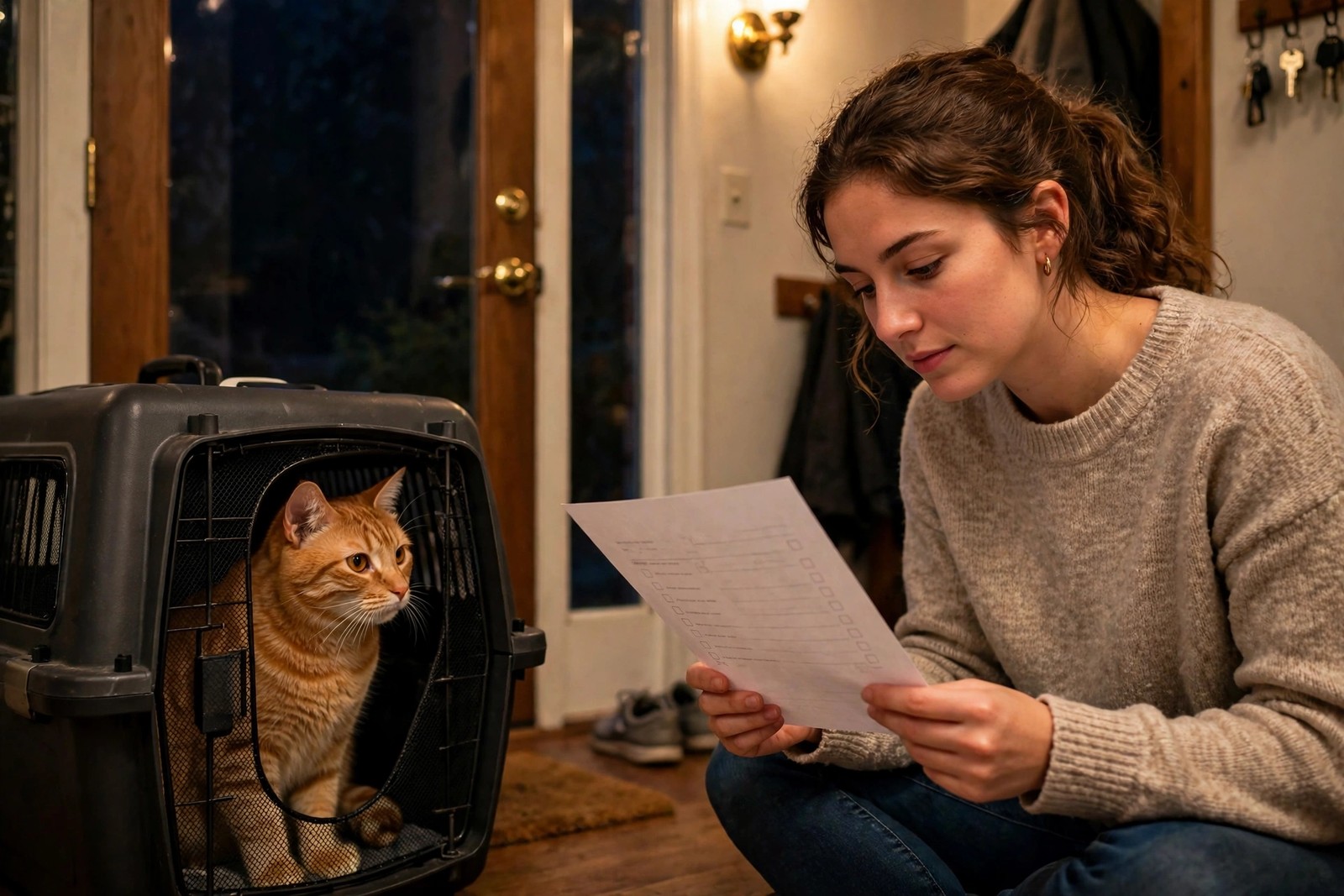
Write this section for the worst ten minutes of the sit, not the average day. Its reader may be a kind, capable person standing in your hallway at 2 a.m. with a sick cat, a phone at low battery, and no idea which of the numbers in their contacts matters. Detail here means nothing is left to memory, search, or hope: every name carries its address and number, every decision has an order, and the route to help was worked out by you, calmly, before the trip began.
The Regular Practice, Written in Full
Start with the practice that knows your cat: its full name, its street address, and its phone number, written out rather than saved as a first name in the sitter's phone. Note the practice's usual opening pattern in ordinary words — mornings, evenings, weekends — so the sitter can judge at a glance whether this is a call-now or a call-at-opening situation. Add the names of the vets your cat usually sees, because a receptionist can find a record faster when the caller can name the clinician. If your cat has an ongoing matter the practice is already aware of, one plain line saying so helps the sitter explain the call without inventing history they do not know.
The After-Hours Clinic and the Route There
Next, the emergency clinic that covers the hours your own practice is closed: again the full name, the full address, and the number, as its own unmistakable block on the page. The route to it gets worked out before the trip, not searched for in a crisis — drive it once yourself if you never have, note the parking and the entrance the clinic uses at night, and write down roughly how the journey goes so the sitter is following your directions rather than a stranger's at the worst moment. State plainly that when the regular practice is closed, this clinic is the destination, removing the one hesitation that costs time. Keeping both blocks together in the Pet Passport on KinsLe means the daytime answer and the nighttime answer sit on the same page.
Who Gets Called, and in What Order
Give the sitter a contact order and mean it: the owner first, then the vet, then the named backup person. Your own number leads the list, with a note about how to reach you while you travel and what to do if you cannot be reached — at that point the order itself answers, and the sitter calls the vet rather than waiting on a silent phone. The backup person is named in full, with their number and a line about who they are: a nearby friend or family member who knows the cat, holds a key, and can get to the house. An order written down in advance protects a conscientious sitter from the guilt of choosing, because nobody should have to rank the people in a cat's life during an emergency they did not create.
Records, Carrier, and Who May Authorize Care
Close the section with the physical things an emergency needs. Say where the cat's records live — the folder, drawer, or packet a vet can be handed — and where the carrier stands, assembled if possible, so nobody is building a carrier from a garage pile while a cat hides under a bed. Then add the authorization pointer in plain terms: the section states who may authorize emergency care while you are away, naming the person rather than leaving the clinic to guess at the sitter's standing. Keep that statement with the contacts, not buried in another part of the instructions, because the clinic will ask early. A sentence about how the sitter reaches the records and the carrier in the dark — the hallway light, the sticking door — sounds small and saves real minutes.
Slip the printed contact list into KinsLe's Pet Passport last, after you have dialed each number once to prove it rings through.