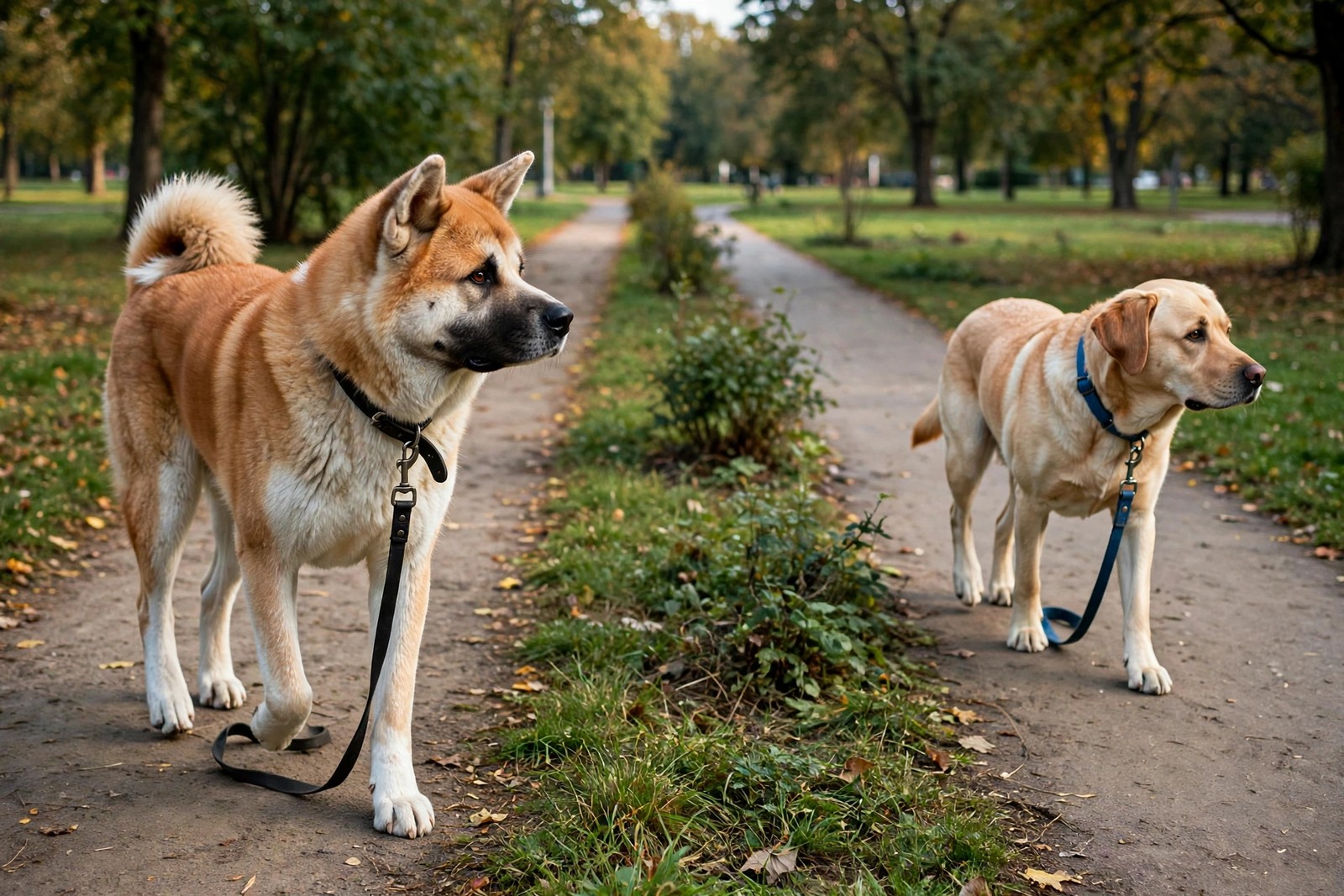
An Akita puppy is often sociable, playful with other dogs and happy in a puppy class — which is exactly why the change at maturity catches so many owners unprepared. As Akitas reach social maturity, the breed typically becomes more selective about other dogs: tolerant of familiar, well-mannered companions, reserved or dismissive with strangers, and, in many individuals, frankly intolerant of dogs of the same sex. This is a recognised tendency of the breed rather than a training failure. The adult Akita is a large, powerful, self-possessed dog who does not signal as flamboyantly as softer breeds and who, if a confrontation starts, may not back down. Owners do best when they plan for the adult temperament from the start rather than mourning the puppy's.
Same-Sex Intolerance: What It Looks Like in Practice
Intolerance of the same sex shows up often between two adult males or two adult females living in one household, or meeting regularly, where status and familiarity combine. Signs usually build before any fight: stiff, tall posture over the other dog, hard staring, freezing over toys, beds or doorways, blocking movements, and a shortening fuse — incidents that once ended with a growl settle more slowly each time. Opposite-sex pairs of Akitas generally fare better, and a household with one Akita and one easygoing dog of the opposite sex is the combination experienced breeders usually steer people towards. Two Akitas of the same sex sharing a home is a project for experts with the space and handling to keep dogs fully separated if the relationship fails, and even they make no promises. Take early signs seriously and bring in a qualified behaviour professional promptly, because rehearsed confrontations harden fast.
Socialisation Helps Manners; It Does Not Rewrite the Breed
Early, careful socialisation is still worth every effort, because it builds the skills management depends on: a young Akita who has met many calm adult dogs learns to read signals, to disengage when asked, to walk past other dogs on a loose leash and to hold a settle in their presence. What socialisation cannot do is guarantee adult tolerance — genetics and maturity have their say, and an Akita who played happily with male friends at eight months may object to the same dogs a year later.
Everyday Management for a Dog-Selective Akita
Life with an adult Akita is an exercise in calm structure:
- Walk on a leash in public and skip off-leash dog parks entirely — loose, rushing strange dogs are the trigger this breed handles worst, and you cannot control the other dogs.
- Introduce any new dog on neutral ground with parallel walking at a distance first, over several meetings, before closer contact is even considered.
- Feed dogs separately, give chews and high-value toys only in separated spaces, and manage doorways and gates, where crowding sparks arguments.
- Muzzle-train gradually and positively if your vet or behaviour professional advises it for vet visits or unavoidable close quarters, so the muzzle itself never becomes a stressor.
- Keep greetings with strange dogs brief or politely declined altogether — an Akita owes nobody a social interaction, and a calm pass-by is a complete success.
Living in a Multi-Dog Household
Where an Akita already shares a home with another dog, protect the peace proactively rather than waiting for proof that you needed to act: supervise all together-time until trust is earned over a long period, separate the dogs when you are out and when high-value resources are around, and watch adolescent Akitas especially, because that is when the same-sex relationship is particularly likely to change. If a serious fight happens between household dogs, separate them fully and get professional help before reintroducing anything — returning dogs to free contact after a real fight, on hope alone, is how the second, worse fight is arranged. Families who divide separate walks, separated feeding and supervised together-time between named adults keep those systems from slipping, and KinsLe Care Teams helps by letting you assign each management duty for both dogs to a specific person, with every completed duty marked complete with a timestamp.