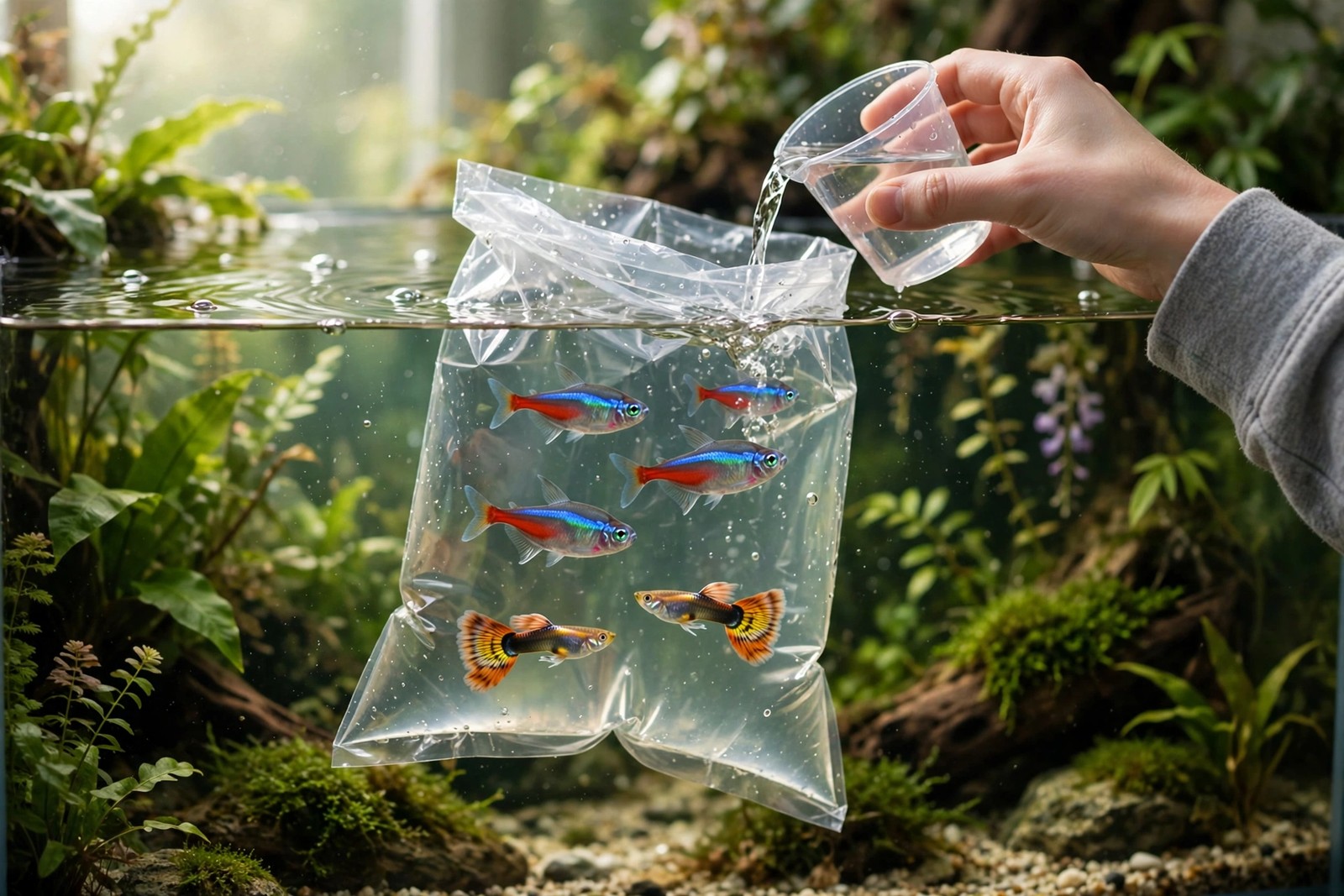
New fish are stressed by travel and then shocked by sudden changes in temperature, pH, and hardness if they are tipped straight into a tank. Acclimation slows that transfer down. For hardy freshwater fish, float the sealed transport bag in the tank for 15 to 20 minutes so the water inside matches your tank temperature, then open the bag, roll the rim down so it floats, and add a small cup of tank water every five minutes for 30 to 45 minutes. Net the fish gently into the tank at the end and discard the bag water into a sink, never into the aquarium.
Before the Bag Goes In
Test your tank water first and confirm the tank is cycled, heated to the species' range, and not already overstocked. Plan the arrival for a time when you can stay nearby, turn the aquarium lights off, and dim the room so resident fish are calmer and the newcomers are not released into a bright, busy tank. Wash and rinse your hands and any net or jug, with no soap residue, and set out a bucket for discarded water. If the fish travelled in a very full or fouled bag, or the journey was long, temperature matching still matters, but lengthy mixing in poor bag water may be unwise; ask the shop for guidance for that species before you leave with it.
Drip Acclimation for Sensitive Fish
Shrimp, delicate wild-caught fish, and marine species often do better with a drip. Place the fish and their bag water in a clean bucket beside the tank, run a length of air line from the tank with a loose knot or clamp controlling the flow, and let tank water drip in slowly until the volume in the bucket has roughly doubled or tripled. This usually takes an hour or more, and the bucket must stay at a steady temperature, so keep it in a warm room and watch that the fish cannot jump out. Net the fish into the tank afterwards, as with the float method, and dispose of the mixed water rather than adding it.
Release and the First Hours
Lower the net in gently, let the fish swim out at their own pace, and leave the lights dim for the rest of that day. Resident fish may inspect, chase briefly, or display; brief curiosity is normal, while relentless chasing, nipping, or a newcomer trapped in a corner means you should add cover, separate the aggressor or the newcomer, and seek advice if it does not settle. Skip feeding on arrival, because uneaten food fouls the water and stressed fish rarely eat well at first. Offer a small feed the next day and watch whether the new fish actually eat.
Watching the First Week
Check the new fish daily for clamped fins, rapid gill movement, spots, scratching against decor, or hiding that never eases, and test ammonia and nitrite because extra mouths change the load on your filter. Keep water changes gentle and matched in temperature. Many keepers use a separate quarantine tank before this stage for exactly these risks, and that remains the safer route for a valuable established community. Note the arrival date, source, and any symptoms or losses while details are fresh, because that record helps a shop or aquatic vet far more than a vague memory.
Calm handling at introduction prevents problems that no later fuss can undo. On KinsLe, Care Teams lets you schedule those daily first-week observations and water tests as named tasks, so a partner or housemate checks the new fish the same way you would and every completed check is logged.