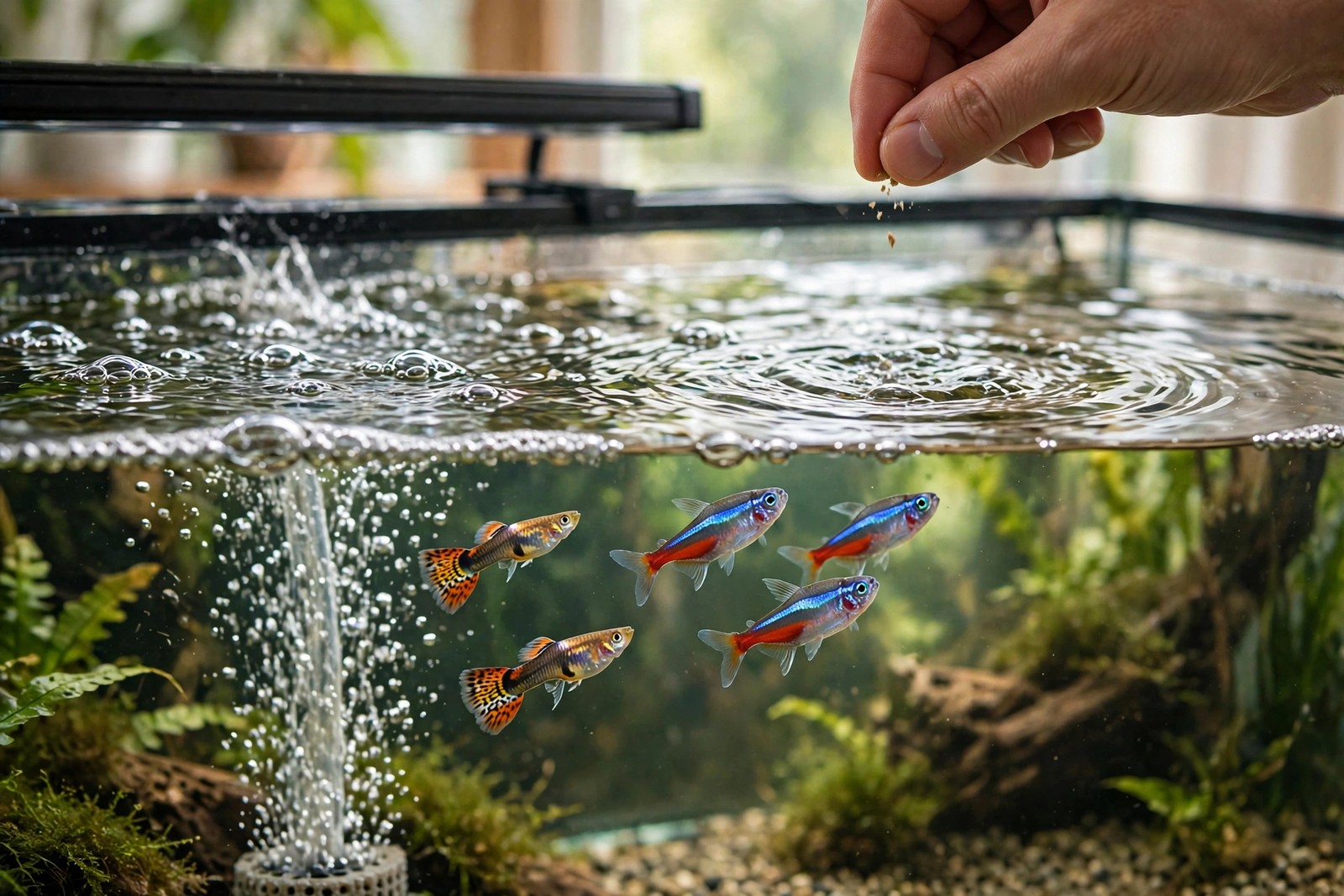
A heatwave changes two things in a tank at once. Warmer water holds less dissolved oxygen than cooler water, so fish breathe harder while their digestion speeds up, and appetites become unreliable, surging one evening and vanishing the next. Feeding by habit through that stretch is where trouble starts, because food measured for normal temperatures lands in water that is already working harder to stay clean and oxygenated. The adjustment is not complicated, but it does ask the feeder to watch the fish instead of the clock for a few days.
Smaller Portions, Watched Closely
Cut each feeding down and treat every portion as an experiment. Offer a little, watch whether the fish come up eagerly and finish it, and only then consider a little more. Some species feed more cautiously in warm, oxygen-thin water, while others beg as usual and then leave food once their faster digestion is satisfied. What matters is what is actually eaten. Remove anything uneaten promptly with a net or siphon, because decaying food in warm water fouls it quickly and feeds the kind of bacterial bloom that clouds the tank and drags oxygen down further. If test readings for waste products start reading as present when they would normally read as absent, that is the water confirming the feeding has outrun it, and portions should shrink again rather than hold steady out of routine.
Oxygen, Shade, and the Skipped Feeding
Support the fish while appetites settle. Increase surface movement so gas exchange improves, by raising aeration, adjusting the filter output to ripple the surface, or adding an air stone for the hot spell. Shade the tank from direct sun through the hottest part of the day, since a sunlit tank climbs in temperature faster than the room around it and swings harder after lights-out. Keep lids and covers from trapping heat where the setup allows safe adjustment. On the worst day of the heatwave, skip one feeding altogether without guilt. Established aquarium fish tolerate a missed meal far better than they tolerate a day of rotting food in warm, thin water, and the pause gives the filter and the fish a stretch where nothing new is being added to the system.
One Feeding Watch for the Whole Household
Heatwave feeding goes wrong in shared homes when two people each feed the usual amount, kindly and independently. Put the tank on a single shared watch for the duration of the hot weather. The Family Sharing sheet on KinsLe lists each small feeding as it happens, who gave it, and whether the fish ate eagerly, picked at it, or left food to be removed, so the next person home works from the record rather than from the assumption that the fish must be hungry by now. Log each small feeding in KinsLe on the Family Sharing sheet, and the next person home sees what was eaten before offering anything more.