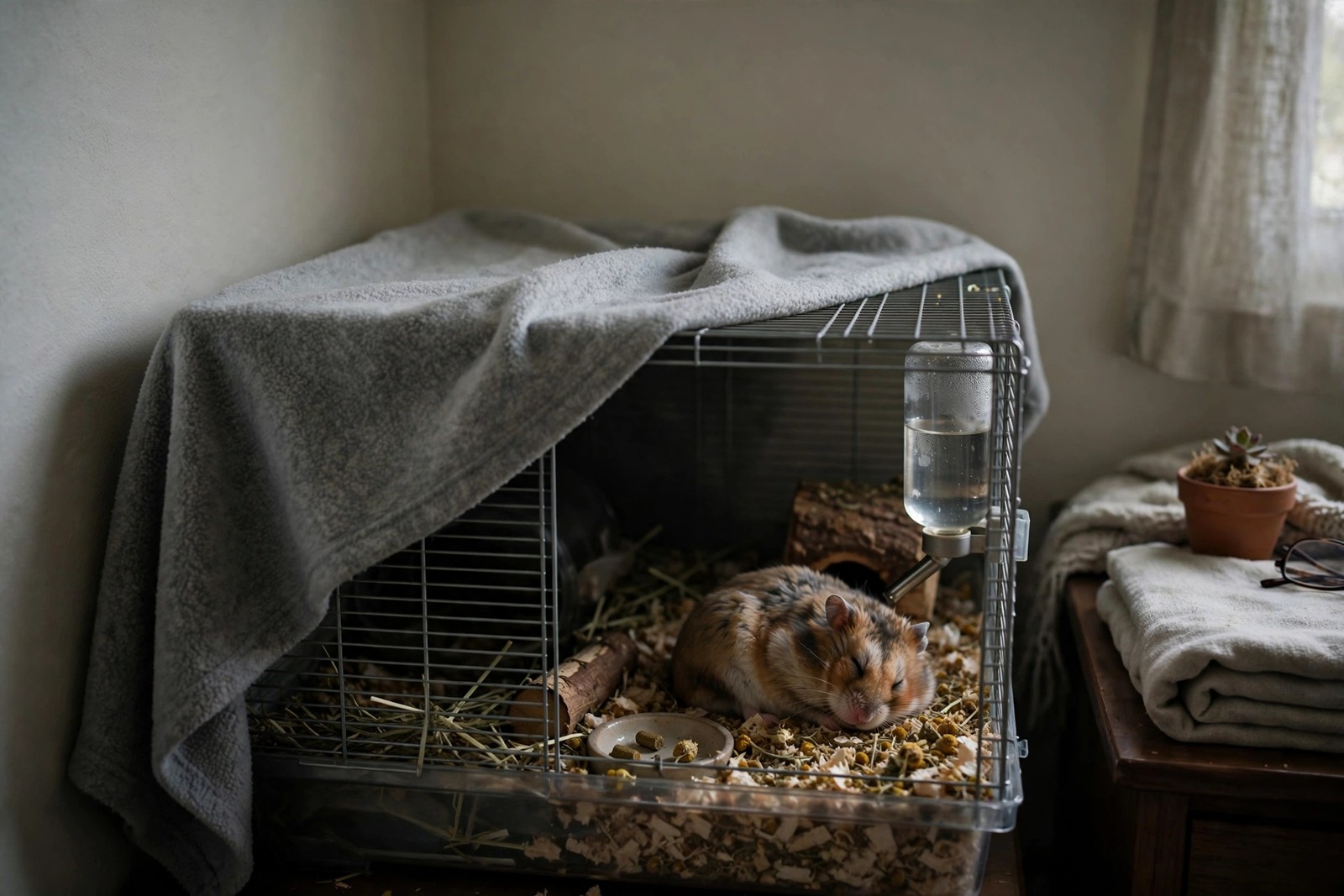
Hamsters are nocturnal, and an older hamster's daytime sleep often becomes shallower — it startles awake at sounds a young hamster slept through, and broken daytime rest shows up at night as a slower, less active animal. You cannot make an old hamster sleep more deeply, but you can remove most of what wakes it: misplaced light, household noise at the wrong hours, and well-meant daytime handling.
Give Darkness a Schedule
Keep the cage somewhere with a dependable dark period of about 10 to 12 hours in every 24, and keep that period at the same time each day — hamsters anchor their waking to light cues, and erratic light makes for erratic, restless sleep. The cage should never sit in direct sunlight, which is both a light and a dangerous heat problem, and strong artificial light late into the evening delays the natural wake-up. If the only available room is bright by day, drape a breathable fleece cover over part of the cage to shade the sleeping area while leaving ventilation fully open, and choose the room's dimmest, most shaded corner rather than a windowsill.
Move the Noise, Not Just the Hamster
Relocate the cage away from the television, games consoles, music speakers, washing machines, and the front-door hallway where voices, deliveries, and slamming doors peak during the day. A quiet bedroom or study used mainly in the evening usually beats a living room. Inside the room, place the cage on a solid, low surface that does not transmit footsteps and vibration the way a wobbly shelf does, and ask the household to treat the cage's corner as a quiet zone during daylight — normal conversation is fine, shouting and hovering toddlers are not.
Time Everything to the Evening
Shift all interaction to your hamster's schedule. Cleaning, spot-checks, food changes, and any handling should happen after it has woken on its own in the evening; a healthy senior hamster still enjoys gentle handling and short playpen sessions then. During the day, never lift the house or dig into the nest to check on it — for a light sleeper, each check costs real rest, and a hamster that is repeatedly woken can become defensive about hands near the nest. Put a small mark on the food or bedding if you need reassurance it has been active overnight, instead of disturbing it.
When Lighter Sleep Signals More
Sleep that changes alongside weight loss, a hunched posture, laboured breathing, wet tail, or a hamster no longer eating or drinking at night is not just ageing — those combinations warrant a vet visit promptly, since small mammals decline quickly. Note when the change began and what the pattern looks like before you go.
Those dated notes are worth keeping properly: your hamster's KinsLe Pet Passport gathers its health records, vet details, and care notes into one portable packet, so the sleep changes you have tracked travel with it to every senior check-up.