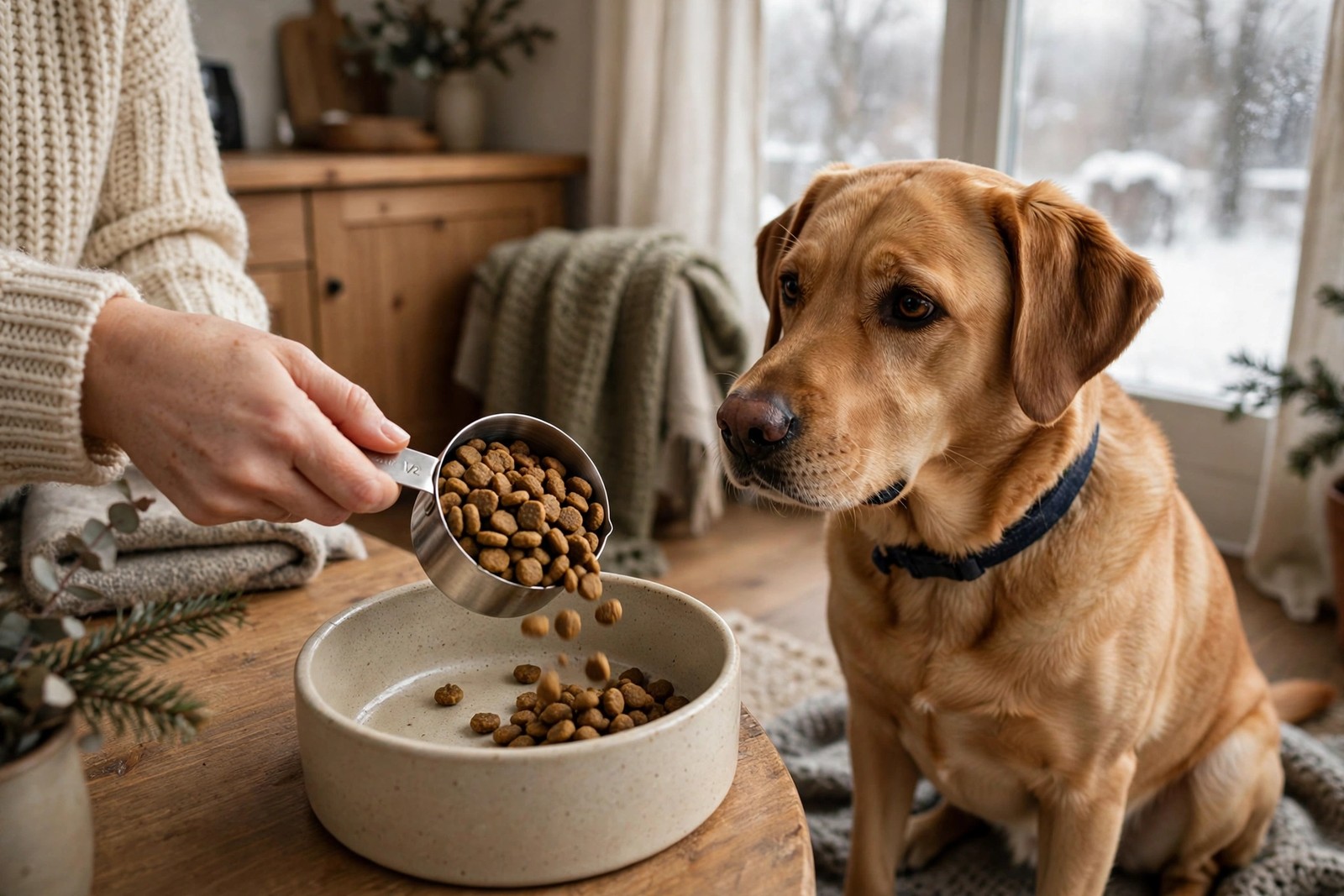
A dog who moves less in winter needs less food, and the adjustment works when the change stays gradual and measured. Trim the daily food by roughly a tenth when activity drops noticeably, keep meal times and the food itself unchanged, and recheck body condition after two weeks. The method protects a dog from the slow winter gain that owners often notice only when a harness tightens in spring.
Start With an Honest Look at Activity and Condition
Compare the winter week with the autumn week before touching the bowl. Shorter walks, fewer games, cancelled training and longer naps each reduce the energy a dog burns, while a dog who still works, runs or trains outdoors at a summer level may need no cut at all. Run your hands over the ribcage: the ribs should feel easy to find under a thin cover of fat, without pressing hard and without each rib standing out. Look down at the waist from above and across at the tuck from the side, and weigh the dog if a scale is available, since hands and eyes catch change earlier than a collar notch does. Puppies still growing, underweight dogs, pregnant or nursing dogs and dogs under veterinary care for illness should not receive a routine cut, and those dogs need a veterinarian's view on winter feeding instead. A healthy adult dog who has simply slowed down with the weather is the dog this adjustment suits.
Make the Cut With a Scale, Not a Scoop
Weigh the current daily food for two or three days first, since scoops and handfuls drift far from the amount an owner believes the bowl holds. Reduce the weighed total by roughly a tenth and divide the new total across the usual meals, keeping the feeding times steady so hunger patterns stay predictable. Treats and chews count inside the reduced total, not beside the total, and a training day with heavy rewards needs a slightly smaller meal rather than a full meal plus a full treat pouch. Hold the new portion for two weeks before judging the result, since body condition changes slowly and daily weighing invites overcorrection. Recheck ribs, waist and weight after two weeks, and adjust again in small steps: another small trim when condition still climbs, a small addition when ribs feel sharper than the target, and no change when condition holds steady. Keep fresh water available as always, and note that heated indoor air can raise thirst even while activity falls.
Hold the New Routine Across the Household
Winter weight gain often enters through side doors: extra chews on dark evenings, leftovers shared during holiday cooking, and a second family member topping up a bowl that already holds a measured meal. Agree the new weighed portion out loud, write the gram amount where the food lives, and keep the scale beside the food container so weighing stays easier than guessing. Log the portion change with the date, the starting weight or condition finding and the two-week recheck date, and a later reader can see whether the trim worked or needs revision. When activity rises again in spring, rebuild the portion gradually in the same small steps rather than restoring the old amount in one jump, and recheck condition after two weeks at the higher level as well. A dog who keeps gaining despite a measured cut, or who loses weight without a planned cut, needs a veterinarian to look for a cause beyond the weather. In KinsLe, Care Teams lets you update the feeding duty once with the new weighed portion and the recheck date, and every person who feeds your dog works from the updated duty from that day forward.