A missing-cat plan for a two-student apartment has one great strength and one real weakness. The strength is that two people can cover ground, phones, and doors at the same time. The weakness is that student schedules collide: the roommate who knows the cat's hiding places may be in a lecture when the other notices an empty food bowl. Planning means deciding the jobs, the order, and the information now, while nobody is panicking.
Decide the Roles Before You Need Them
Split the response three ways. One person searches, starting inside the apartment itself. One person stays as home base, keeping the entry door managed, a phone charged and answered, and a way back in available if the cat returns while everyone is out. The third job, alerting, can belong to home base in a two-person home: messages to the building group chat, neighbors on the floor, the landlord or building manager, and the wider alert.
Write both phone numbers down as contacts for the cat, not just the name of whoever adopted the cat. Keep a recent, clear, full-body photo on both phones, plus the microchip number, the veterinarian's number, and a plain description of the collar and any distinctive markings.
The First Search Stays Close
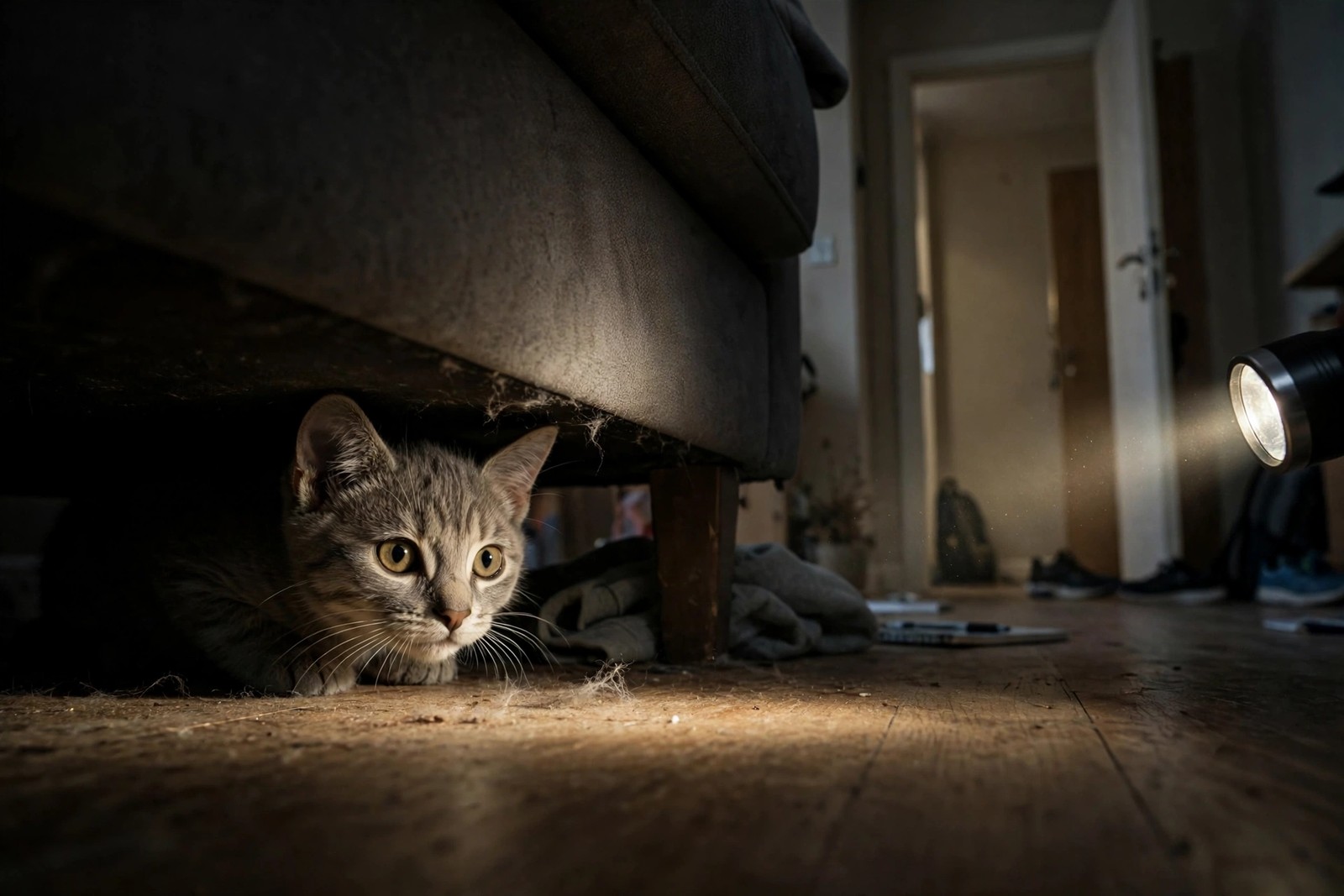
Indoor cats who get out usually do not travel far at first. They hide low, close, and silent, often within the building or just outside it, and many will not answer calling even when they hear a familiar voice. So search the apartment as if the cat never left: inside drawers and wardrobes, behind and under appliances, inside reclining furniture and box springs, on top of cabinets, and in any box with a lid.
Then work the building in expanding rings: the hallway, stairwells from top to bottom, the basement, storage rooms, laundry areas, and any garage or bike store. Ask neighbors to check their own storage spaces, sheds, and garages, and to look before closing doors. Place familiar-smelling bedding or a worn item of clothing near the point the cat left, since the scent of home is what you can honestly offer a hiding cat. Outside, think like a frightened cat rather than a person: under porches, behind bins, inside dense shrubs, and in the first covered gap in every direction from the door. Search slowly, pause and listen, and search again after dark with a flashlight, watching for eye-shine low to the ground.
Spread the Word in the First Hours
Speed matters more than polish. A short message with the photo, the street or building area, the time the cat was last seen, and a phone number beats a perfect poster finished tomorrow. Public appeals carry the description, the markings, and the photos; the microchip number itself is never published, and goes privately to shelters, veterinary clinics, and the registry instead. Post in building and neighborhood groups, tell the nearest animal shelter and the cat's veterinary clinic, and confirm the microchip contact details are current, because a chip only helps if the number it carries reaches one of you.
This is where preparation inside KinsLe pays off directly. KinsLe's Lost Pet Alert System sends an alert to nearby owners once the cat is reported missing, and it gives a finder a way to message the owner directly, so a stranger who spots the cat under a car does not have to guess which group to post in or wait for a comment to be seen. Both halves matter: the alert pushes the description outward, and the direct message pulls news back to you fast.
Keep the Plan Alive
Revisit the plan whenever anything changes: a new phone number, a moved apartment, a new collar, a roommate leaving. Searches should continue in widening rings for days, with the same photo and phone numbers, because frightened cats often surface only when hunger outweighs fear.
When the plan is settled in KinsLe before anything goes wrong, the roommate who finds the bowl untouched can trigger the Lost Pet Alert System in minutes, alerting nearby owners while anyone who finds the cat can message the owner directly through the alert.