
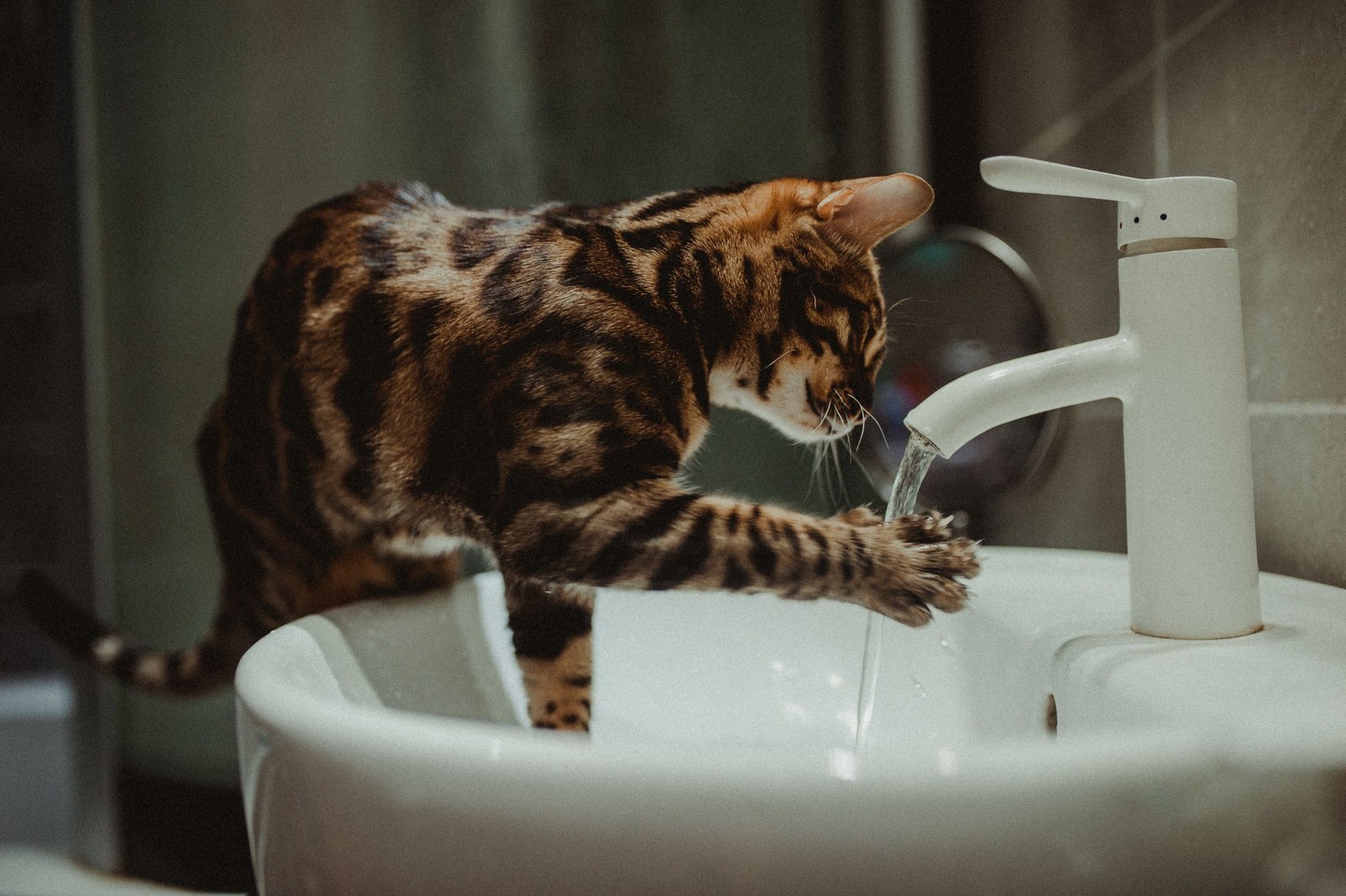
Bathe your cat safely by preparing everything first, brushing her out, using lukewarm water in a sink or tub with a non-slip surface, and washing only with a shampoo made for cats — keeping water and soap away from her face and ears the whole time. Work calmly and efficiently, rinse thoroughly, and dry her warmly. A well-run bath takes minutes; a chaotic one teaches your cat to vanish at the sound of running water forever after.
Set Up Before the Cat Arrives
Preparation is half the safety. Lay out towels, cat shampoo, a jug or gentle sprayer for rinsing, treats, and a soft brush within arm's reach. Put a non-slip mat or folded towel in the sink or tub — slipping feet panic cats fast. Close the bathroom door, fill the basin a few inches with lukewarm water (comfortably warm to your inner wrist, never hot), and trim your cat's nails a day or so beforehand if she tolerates it. Brush her thoroughly first to remove loose fur and any tangles, because wet mats tighten and become far harder to remove.
The Bath, Step by Step
- Lower your cat in gently, speaking quietly, and let her stand while you wet the coat from the neck down with the jug or a low-pressure sprayer
- Keep the head dry — clean the face separately afterward with a damp cloth
- Work a small amount of cat shampoo into the coat, avoiding eyes, ears, and mouth
- Rinse far longer than feels necessary — leftover shampoo residue irritates skin and tastes awful to a grooming cat
- Lift her straight into a large warm towel and wrap her up
Shampoo made for cats is non-negotiable: human products and dog shampoos can contain ingredients unsafe for cats, who will lick whatever remains on their fur. If anything potentially toxic is on the coat, call your veterinarian before bathing at all.
Drying and the Aftermath
Dry her in a warm, draft-free room, toweling first. Some cats tolerate a hair dryer on the lowest, coolest setting at a distance; many do not, and towel drying with patience is fine. Offer a treat or a favorite meal once she is dry so the memory ends kindly. Expect some determined re-grooming — she is restoring her own scent, and that is normal.
Safety Notes Worth Repeating
Never leave a cat unattended in water, never submerge her head, and stop and reassess if she is truly panicking rather than merely annoyed — a break and a groomer's help beats an injury to either of you. Kittens and elderly cats chill quickly, so keep sessions short and drying prompt. If bathing is needed for a skin problem, your veterinarian's instructions on products and frequency come before any general guide.
When a Professional Is the Kinder Answer
Some cats — and some owners — are simply better served by help. KinsLe's Pet Services Directory helps you find local groomers, including those experienced with cats, along with vets, sitters, and trainers in your area. A cat-savvy groomer has the handling skills, equipment, and unhurried setup that make bath day unremarkable instead of a household event. If a home bath turns panicky, turning to the Pet Services Directory on KinsLe points you toward a cat-experienced groomer whose handling setup makes the job calmer for her.