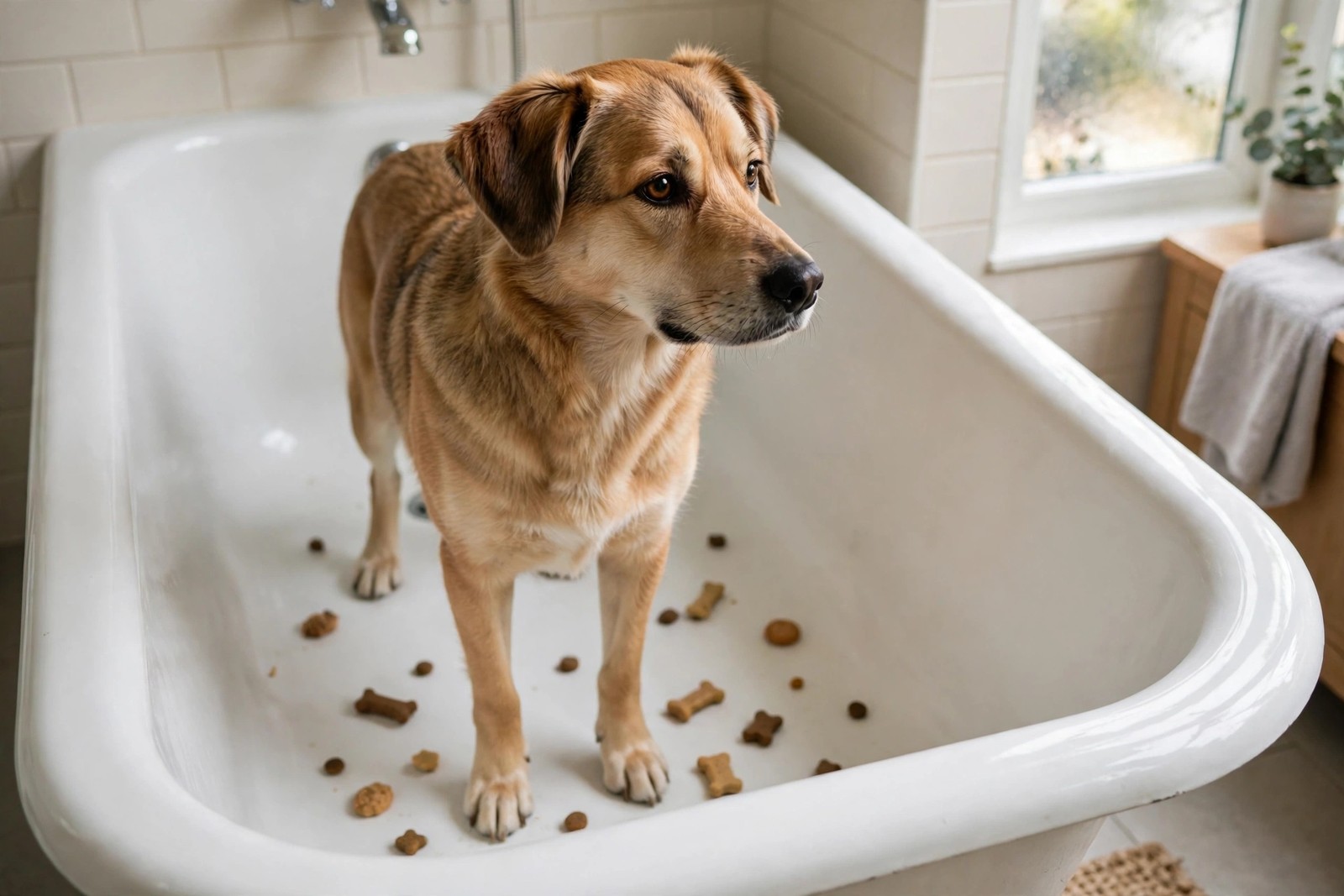
A dog who panics at water needs a training plan before a bath, and the plan starts with no water at all. The sequence runs from an empty dry tub toward standing calmly, then toward sounds and touch, then toward a shallow amount of water, and only at the end toward washing. Each stage earns rewards, each session stays short, and the dog may leave at any point. Forcing a panicking dog through a full bath teaches a harder lesson than dirt ever will.
Preparation: Set the Bathroom Up First
Prepare the room before the dog enters, since rummaging and clattering during a session raises the stakes. Lay a non-slip mat inside the tub and another mat on the floor beside the tub. Place high-value treats in a pot within reach, along with a lick mat and a soft spread your dog already likes. Gather towels, a jug, a bucket, a damp cloth, dog shampoo and a dry toy, and close the bathroom door once the dog chooses to enter. Warm the room, keep your own movements slow, and wear clothes that can get wet later in the sequence. Decide the single stage you will practise in this session and the reward that ends the session, and finish on that plan rather than extending a session that happens to go well. A second calm person can hand rewards during later stages, and that helper needs the same rule: nobody restrains the dog, nobody lifts the dog into the tub, and nobody blocks the exit.
Stages One to Three: Dry Tub, Standing, Sounds and Touch
Stage one rewards approach and entry. Scatter treats near the tub, then inside the empty dry tub, and reward your dog for stepping in and stepping straight back out without any request to stay. Repeat across several short sessions on different days until entry looks casual. Stage two builds standing. Reward your dog for remaining in the dry tub while you touch the shoulders, run a hand along the back, lift each paw briefly and place a dry towel over the back. Feed rewards through the touch sequence and release the dog before restlessness builds. Stage three adds sound and movement without wetting the dog. Pour water from a jug into a bucket outside the tub, run a tap briefly and stop, and move the shower head or jug along the tub floor while the tub stays dry. A dog who startles at a sound needs that sound repeated at a lower intensity across more sessions, paired with rewards each time, until the sound predicts food rather than danger.
Stages Four and Five: Water Arrives in Small Amounts
Stage four introduces water under the feet only. Pour a shallow amount of lukewarm water over the floor of the tub away from the dog first, then let the dog stand in the shallow layer while rewards continue. Wipe the legs and belly with a damp cloth, pour cupped water over the back, and dry the dog with a towel inside the tub before the exit. Stage five becomes a brief wash: wet one section, work in a small amount of shampoo, rinse that section with jug water, and move to the next section only while the dog stays settled. Keep the head and ears for a damp cloth rather than poured water. Stop the wash at the first hard sign of panic, which includes scrambling, frantic panting, trembling or repeated attempts to climb out, and return to an earlier stage at the next session. Waterless cleaning between sessions keeps the dog comfortable while training continues, and a dog whose panic stays intense despite slow and careful work needs a veterinarian or a qualified behaviour professional to assess the fear and guide the next step. In KinsLe, a Care Teams duty can name the current stage, the rewards and the stop signs for your dog, and each completed session is recorded, so progress builds in order instead of restarting with each helper.