
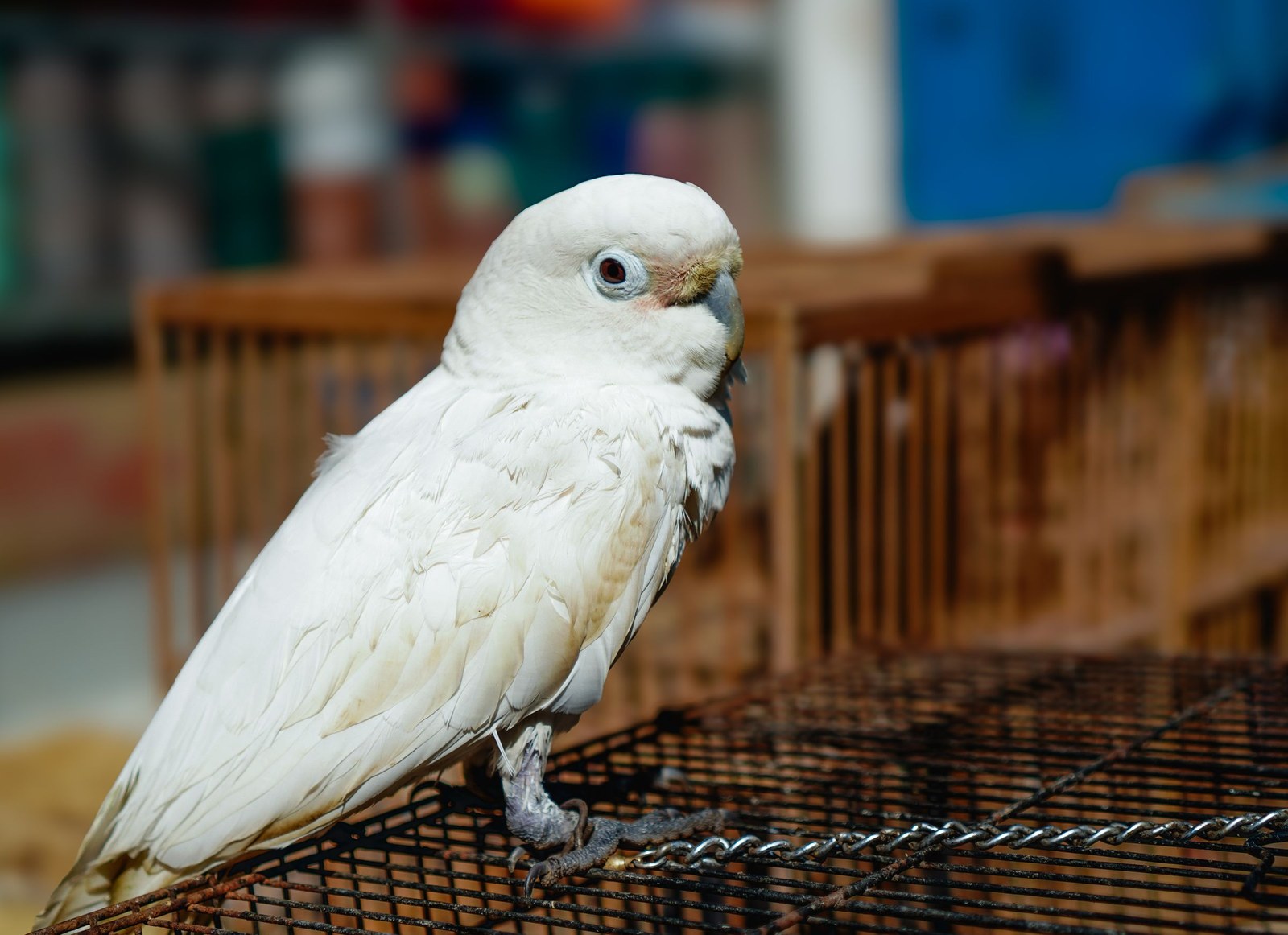
Bathe your cockatoo by offering water and letting the bird choose how to meet it — a fine spray from a misting bottle, a wide shallow dish to splash in, or a perch at the edge of your shower are the three classic options — and never by forcing a reluctant bird into water. A few sessions a week is plenty for most cockatoos, scheduled earlier in the day so feathers are fully dry before bedtime.
Reading your bird's preference
Cockatoos usually announce their style enthusiastically. The mist lover spreads its wings, fans its crest, and leans into a fine spray from a clean spray bottle, rotating like a garden sprinkler ornament. The dish bather prefers a wide, heavy, shallow bowl — a ceramic pie dish works — with an inch or two of lukewarm water to stomp and splash in. The shower companion rides a shower perch at the edge of the spray, mostly enjoying the steam and stray droplets. If your bird flattens, flees, or screams at one method, that method is wrong for this bird, however many videos show other cockatoos loving it.
Bathing, step by step
- Use plain, lukewarm water only — no soaps, shampoos, or feather sprays unless an avian vet has specifically advised one
- Bathe in a warm, draft-free room, ideally mid-morning
- Let the session end when the bird's interest ends; five enthusiastic minutes beat twenty endured ones
- Give your cockatoo time and space to shake, preen, and air-dry afterward — preening after a bath is how feathers get re-zipped and conditioned
Umbrella and Moluccan cockatoos produce abundant powder down, and regular bathing helps keep that dust distributed and feathers in good condition; you may notice your bird actively seeks baths during a moult, when new pin feathers itch.
How often is right?
Two to four times a week suits most pet cockatoos. Daily misting is fine if the bird asks for it and dries fully; less often may be right in a cold snap or for a bird that simply tolerates baths. Watch the result rather than the calendar: feathers that look sleek, a bird that bathes eagerly, and skin that is not flaky suggest the rhythm is working. A bird that never wants water at all, or one whose feathers stay soiled, is worth a conversation with an avian vet, since bathing reluctance can occasionally ride along with illness.
Safety notes
Never leave a bathing bird unattended near a filled dish, keep spray bottles reserved for water only (never one that held cleaner), and skip baths entirely for a sick, chilled, or very young bird until your vet says otherwise.
How KinsLe helps
Every cockatoo has its quirks, and through KinsLe's Family Sharing the relatives you pick can be given access to its profile, so family help with bath time starts from the bird's own page. Profile access through Family Sharing on KinsLe means that relative sees the profile itself — this powder-down bird's own page — rather than a retold version of its bathing habits.