
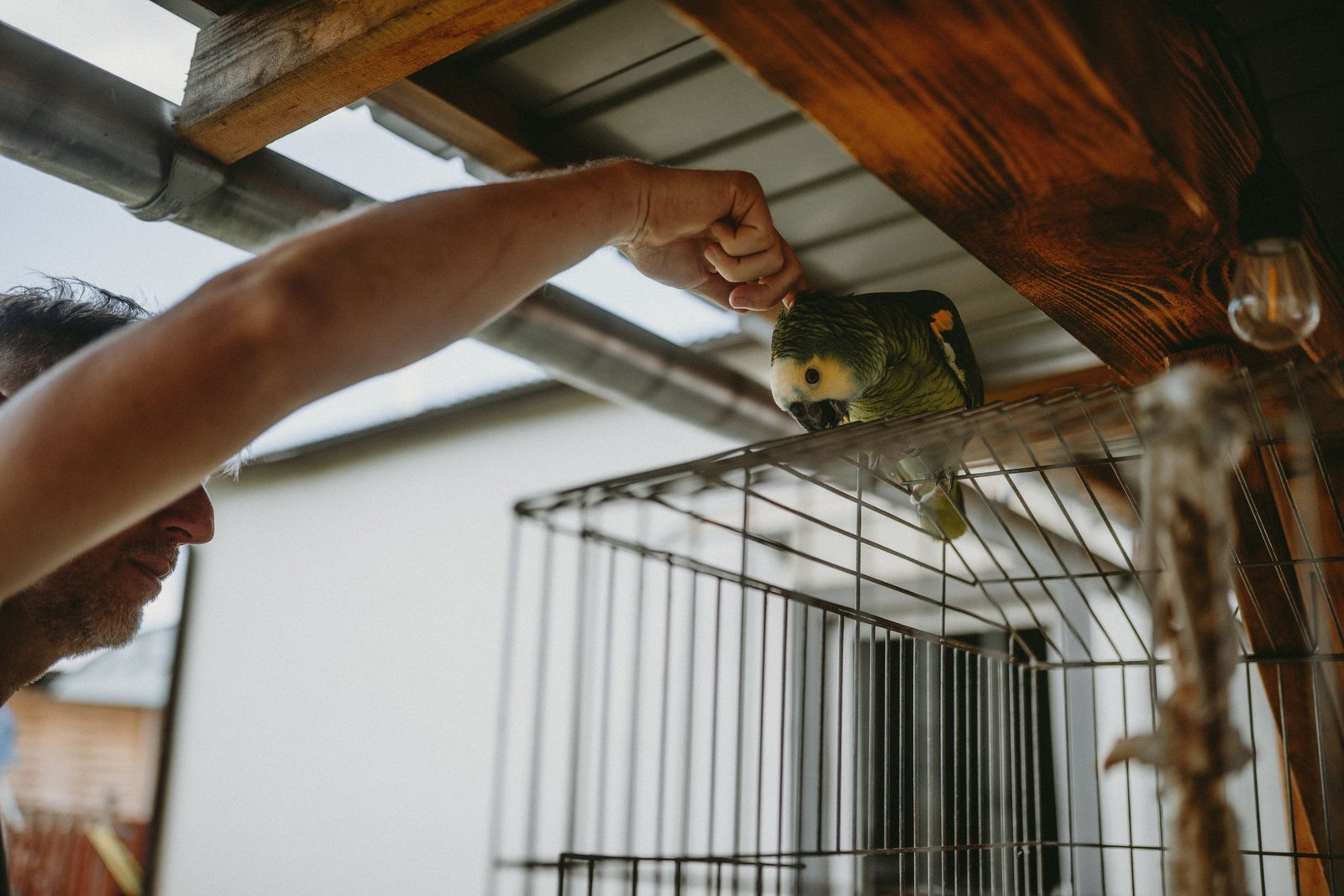
Go at your parrot's pace. Sit near the cage reading or talking softly, offer favorite treats without reaching in, and let the bird choose to come closer over days and weeks. Short, predictable, positive visits build far more trust than long sessions that push past your bird's comfort — with a frightened parrot, patience is not the slow option; it is the only one that works.
What Fear Looks Like in a New Parrot
A scared parrot is not being stubborn or unfriendly. Watch for the signals: pressing against the far side of the cage, feathers held tight and slicked down, leaning away, lunging or biting at hands that come close, refusing food it normally loves, or sitting frozen and silent. Recently rehomed and rescue parrots have often lost everything familiar at once — home, people, routine — and some have little experience of kind handling at all.
Progress has its own quiet signals: eating in your presence, playing with toys while you sit nearby, soft eye contact and slow blinks, beak grinding at rest, and moving toward your side of the cage when you arrive. Learn to read these and you will stop guessing whether you are helping.
The First Weeks: Presence Without Pressure
Start by being safe scenery. Spend time near the cage doing calm things — reading, working, watching something quiet — talking softly now and then so your voice becomes part of the furniture. Keep visits to a rhythm your parrot can predict: similar times, similar length, no sudden changes in appearance that might startle, like a new hat looming over the cage.
Do not reach into the cage in this phase; the cage is your parrot's safe territory, and hands invading it confirm its fears. Clean and change food calmly and efficiently, ideally with a routine the bird can learn. Offer high-value treats — a piece of nut, a favorite seed or fruit for many parrots — by placing them in a treat cup or offering them through the bars, then stepping back so eating does not require bravery about your hand at the same time.
Building Toward Contact
When your parrot eats treats calmly near you and moves around its cage relaxed in your presence, you can begin structured trust work:
- Target training with a stick and a click or marker word is ideal for frightened birds — the bird interacts with an object, not your hand, and earns rewards for tiny brave choices.
- Step-up practice comes later, on a hand-held perch before a hand, always by invitation: present the perch, reward the step, and let the bird step off again. The exit being free is what makes entering safe.
- Keep sessions short — five to ten minutes of training, ending on a success, beats an hour that ends in a bite.
Bites at this stage are information, not defiance: you moved faster than trust allowed. Note what preceded it, slow down a step, and rebuild.
Routines, Health, and Time
Predictability is a frightened parrot's best medicine — consistent sleep in a quiet, dark space, regular meals, and gentle daily rhythm. A vet check with an avian veterinarian is also worthwhile for a new bird: illness and pain make fear worse, and a check-up establishes care before you need it urgently. Some parrots bond in weeks; others, especially rescues with hard histories, take months. That timeline belongs to the bird, not to your hopes — and the bond that results from being allowed to take it is usually profound.
You Do Not Have to Figure This Out Alone
In KinsLe's Circle of Love — the community every free KinsLe profile is part of, open to Pet Lovers as well as owners — experienced parrot owners share the slow, steady bonding approaches that worked for their own frightened birds, which is often exactly the reassurance a new owner needs at week three when progress feels invisible.
Circle of Love on KinsLe brings together owners who remember those invisible-progress weeks and can describe how quiet presence eventually turned into voluntary closeness.