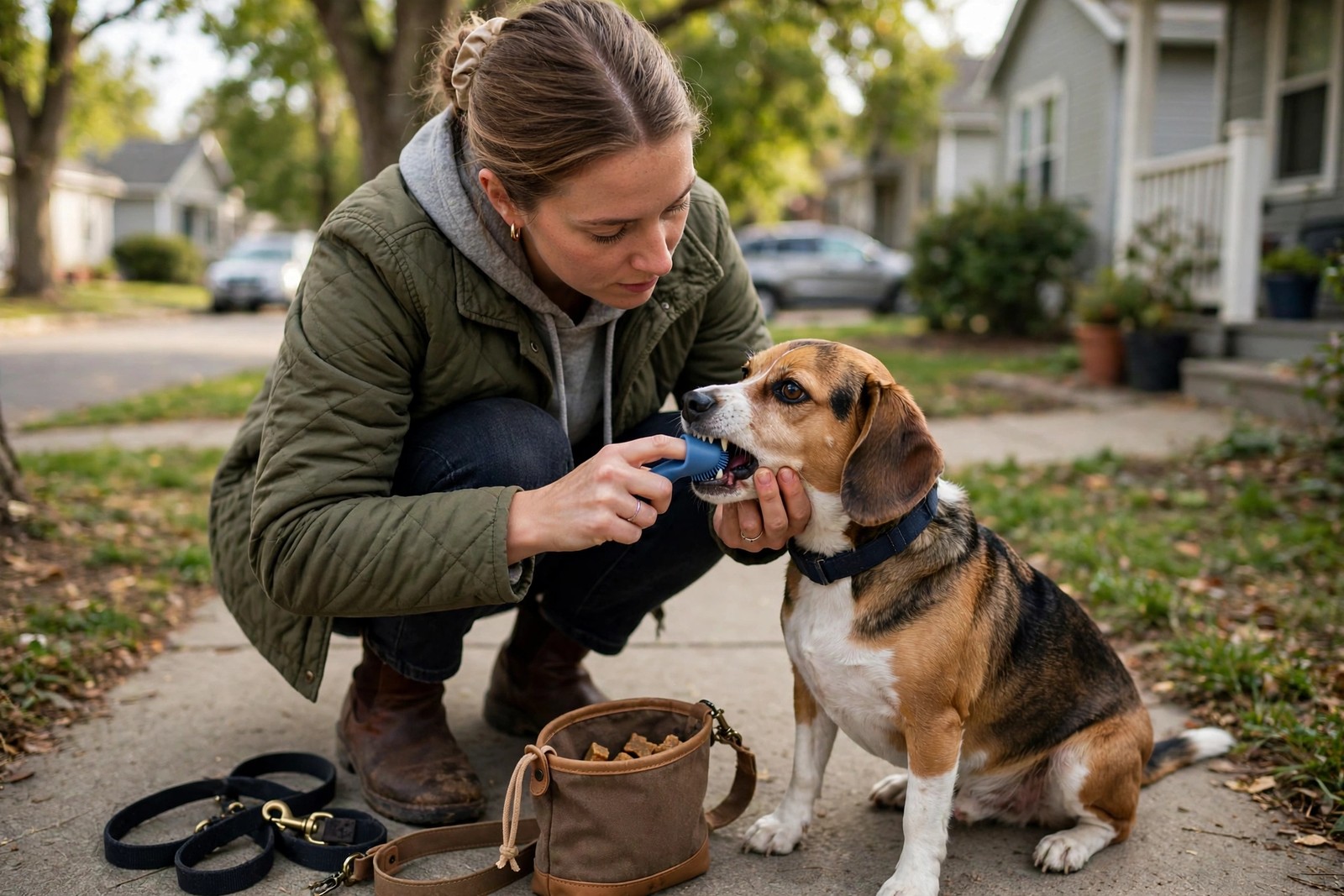
A finger brush is a workable tool, not a compromise, when a dog accepts a finger brush and refuses a normal toothbrush. The finger gives you direct feel for pressure and position, the dog reads the touch as handling rather than equipment, and a routine that happens on most days cleans more than a perfect routine that happens twice. Build the habit around the tolerated tool, with dog-safe toothpaste and a calm sequence that the dog can predict.
Toothpaste Rules and Setup
Use toothpaste made for dogs only. Never use human toothpaste, because human formulas can contain xylitol, an ingredient that is dangerous for dogs, along with fluoride levels and foaming agents that suit a person who spits rather than a dog who swallows. Read the label of any dental product before the product enters the routine, and choose a dog toothpaste in a flavour your dog likes, since the taste carries the early training. Set up in a quiet spot with good light, at a time when your dog feels relaxed rather than wound up after play. Wash your hands, check the finger brush for cracks or rough edges, place a pea-sized amount of paste on the brush, and let your dog sit or lie in the position she prefers for handling. Keep a treat or a favourite toy ready for the finish, and keep the first sessions under a minute, since a short and pleasant session today buys a longer session next week.
The Technique, in Order
Begin by letting your dog lick a small amount of paste from your clean finger, which teaches her that the flavour arrives before any brushing. Slip the finger brush on and touch the front teeth briefly, then lift the lip on one side with your free hand. Place the bristles where the tooth meets the gum, angled slightly toward the gumline, and work in small gentle circles along the outer surfaces, moving from the back teeth forward. The outer surfaces of the back teeth and the large canine teeth collect heavy plaque, so give those areas steady attention, and cover the lower teeth on the same side before switching sides. A dog rarely needs the inner surfaces brushed at home, since the tongue keeps those surfaces cleaner and access requires a wide open mouth that few dogs offer calmly. Pause when your dog pulls away, let her settle, and resume once or finish for the day without scolding. Build across sessions toward most days of the week, since plaque hardens into tartar over time and frequent gentle disruption of plaque is the point of home care. Rinse the finger brush after use, let the brush dry, and replace a worn or chewed brush promptly.
What Home Brushing Can and Cannot Do
Home brushing maintains clean teeth and fresh gums, and no home routine removes hardened tartar or examines below the gumline. Ask a veterinarian to check the teeth and gums at routine visits, and book a visit sooner when you notice bleeding gums, a loose tooth, a broken tooth, reluctance to chew, pawing at the mouth or a new and strong mouth odour, since a veterinarian needs to investigate the cause of signs like those rather than a home article naming one. A dog who tolerates a finger brush may later accept a soft brush with a small head, and that change is optional rather than a goal, introduced only by the same lick, touch and reward sequence. Keep sessions paired with the same cue and the same finish, and the predictability itself lowers resistance over time. Note sore spots or bleeding in a dated log, with the side of the mouth involved, and that log turns a vague worry at the clinic into a precise conversation. In KinsLe, Care Teams can list teeth as a recurring duty on the days you choose, naming the finger brush and the dog-safe paste, and each completed session is recorded so a partner or sitter keeps the same rhythm without guessing.