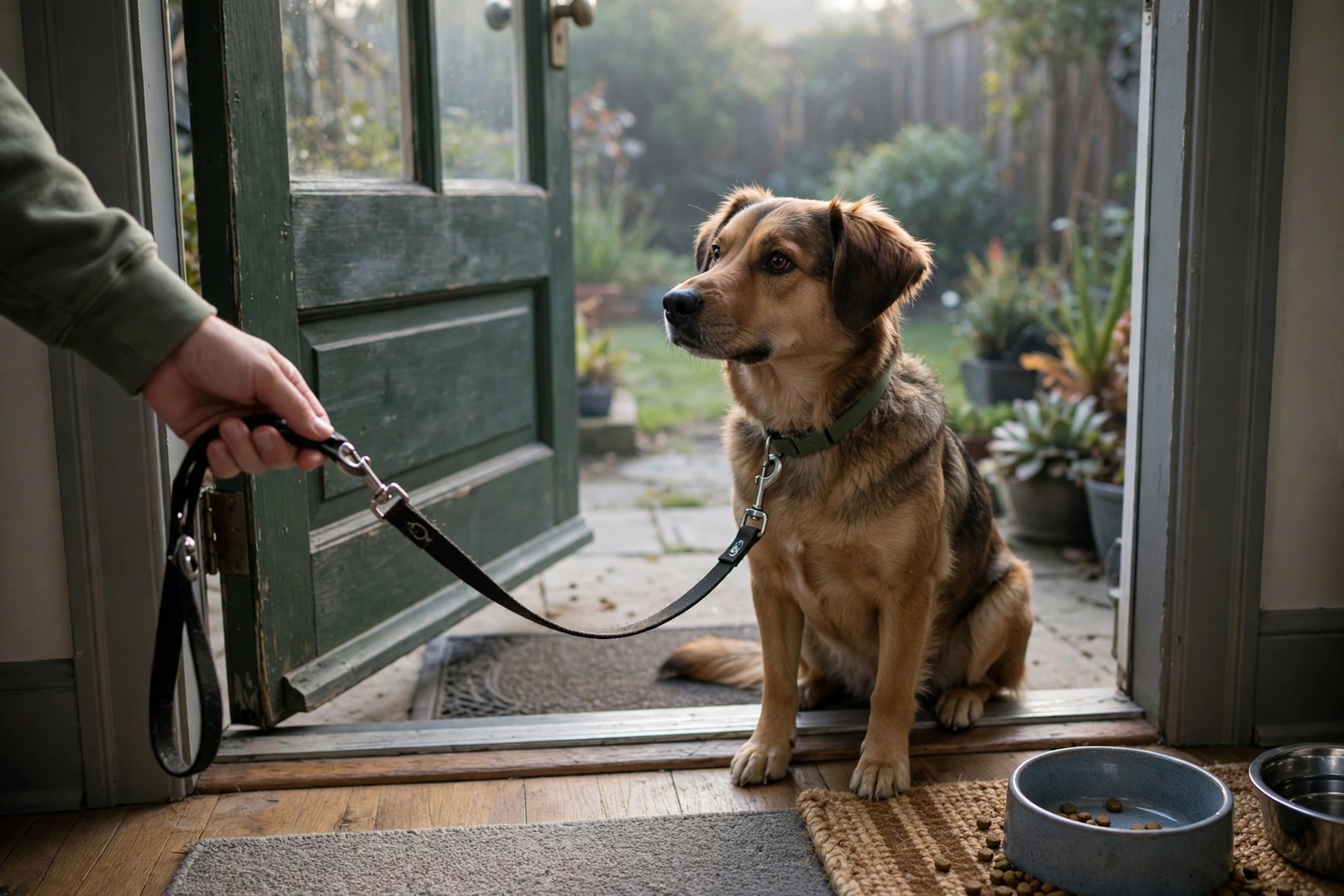
A reliable morning routine runs on order and repetition. The sequence has four steps in a fixed order: a toilet trip first on waking, breakfast next, a short walk after breakfast, and a calm settle on a bed or a mat as the final step before you start work. Run the sequence at the same times each morning, prepare the equipment the night before, and teach each step as a small skill. A dog who can predict the morning stops inventing a morning of her own.
Steps One and Two: Toilet First, Then Breakfast
Take your dog out for a toilet trip as soon as you wake, before coffee and before her breakfast. Overnight bladders fill, and a dog who toilets first can then eat, walk and settle without a mounting need colouring every later step. Use the same door, the same small area and the same cue word, reward toileting outside, and keep this trip short and purely functional. Serve breakfast back inside at a steady time, in the usual bowl and the usual place, and let your dog eat without games or training demands around the bowl. Puppies and senior dogs may need a second toilet trip soon after eating, and the walk in step three covers that need, while a puppy may need a garden trip sooner. Keep the gap between breakfast and the walk brief and calm, since vigorous exercise straight after a meal suits no dog, and use the gap for your own dressing and preparation while your dog digests and waits.
Step Three: A Short Walk With a Job to Do
Walk a familiar local loop at a brisk but unhurried pace, and treat the walk as the second toilet chance as well as the exercise and sniffing portion of the morning. A regular route removes decisions on busy mornings, and familiar smells satisfy a dog more efficiently than a new route that demands investigation. Let your dog sniff at a few chosen spots, since sniffing tires a dog in a way that pure marching does not, and keep the pace moving between those spots so the walk finishes inside your schedule. Practise calm lead behaviour and a relaxed return home, and avoid a frantic ball game as the finale, since a dog who arrives home buzzing carries that energy into the settle. On a rushed morning, shorten the loop rather than skipping the walk, and protect the order of the steps even when each step shrinks. Lay out the lead, bags, treats and your own shoes beside the door the night before, and that small preparation removes the fumbling that makes a dog bounce while waiting.
Step Four: Teach the Settle as a Rewarded Job
The settle works when the dog has learned the mat as a place where good things happen quietly. Teach the skill apart from busy mornings first: send your dog to the mat, reward lying down, then offer a long-lasting chew or a lick mat on the mat itself, and reward calm pauses without exciting praise. Use one settle cue and one release word, sit down at your desk as the final step, and let the mat sit within sight of your workspace. A dog who pops up returns to the mat calmly once or twice, and a dog who cannot settle yet needs an earlier step reviewed, usually a shorter walk or an unmet toilet need, rather than firmer commands. Keep a filled chew toy or a portion of breakfast reserved for the mat on work mornings, and the mat gains value as the place where that item appears. Across a couple of weeks of identical mornings, a dog can begin offering the sequence, heading for the mat as the laptop opens, and that offered settle is the sign the routine has landed. In KinsLe, Care Teams can hold the morning as a single duty with the four steps listed in order and the settle cue written in, and a partner or sitter covering your morning follows the same sequence without a briefing.