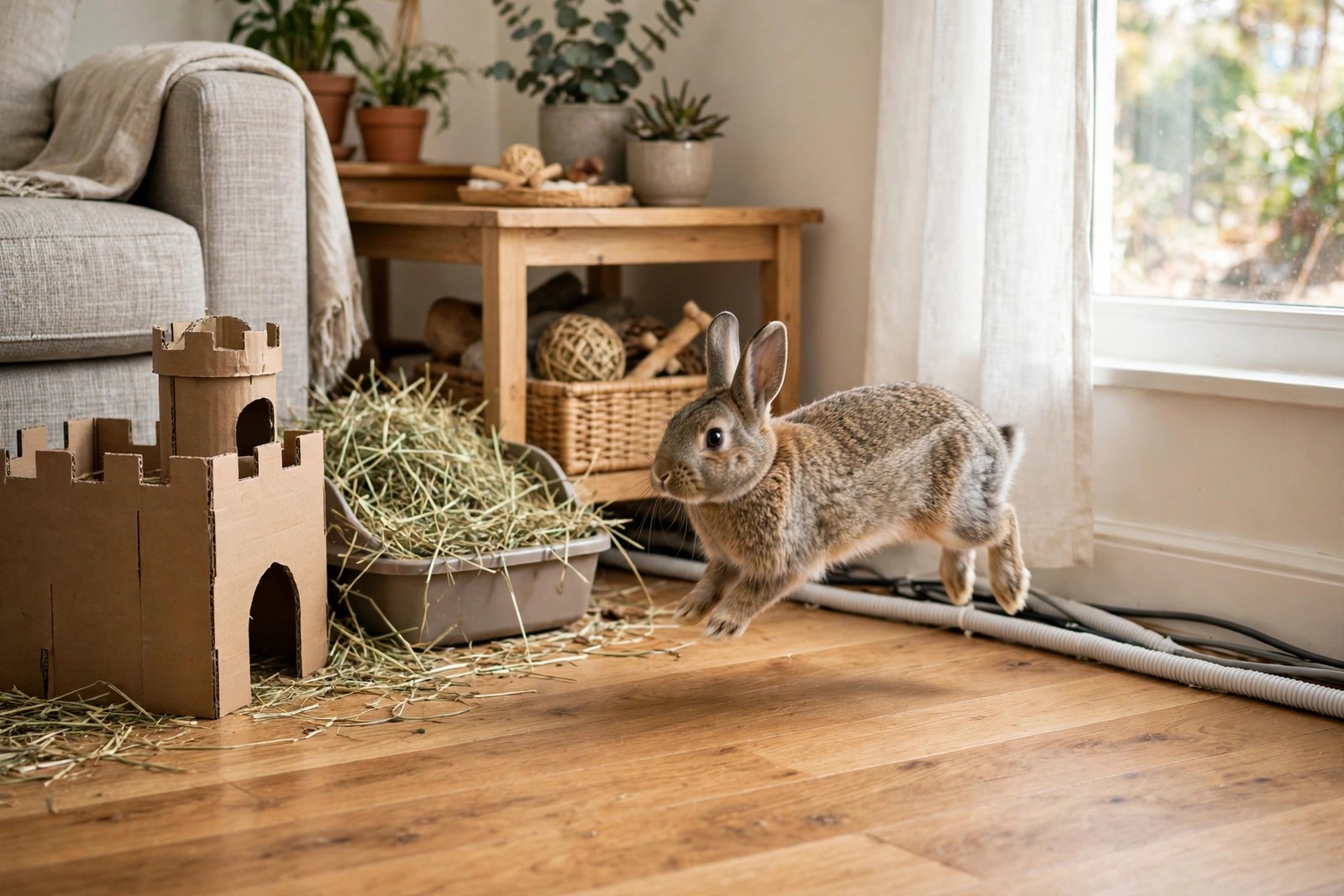
A free-roaming rabbit explores with its teeth. Rabbits chew to keep ever-growing teeth worn, to investigate new objects, and to clear anything that blocks a promising path, which in a living room means cables, baseboards, chair legs, carpet edges, and the interesting darkness behind the sofa. Bunny-proofing is therefore not tidying; it is systematically removing or armouring everything at rabbit height before the rabbit moves in.
Cables: The Non-Negotiable Job
Electrical cables are the first priority, because a single bite can kill a rabbit and start a fire. Run every accessible cable, chargers, lamp leads, router wires, extension cords, through split-loom tubing or a rigid cable cover, and check the whole run, since one exposed curve at a corner is where chewing starts. Better still, lift cables off the floor entirely, route them behind heavy furniture the rabbit cannot get behind, or unplug and store chargers when not in use. Do this audit on hands and knees at rabbit eye level; cables hidden from standing height are often in plain sight at twenty centimetres (about eight inches) off the floor.
Baseboards, Corners, and Furniture
Baseboards and door frames are classic targets, especially the corners. Clear plastic guards, metal corner strips, or simply placing furniture, tunnels, and hay racks along the most tempting walls give the rabbit something legal between its teeth and the woodwork. Wrap vulnerable furniture legs, provide untreated wooden chew toys and willow items right beside the things you are protecting, and expect to redirect a young rabbit many times in the first weeks. Block the gaps: the spaces behind sofas, under low cabinets, and behind washing machines and fridges are dangerous, because a rabbit that squeezes in can chew unseen cables, get stuck, or be injured when furniture moves. Fill gaps with solid boards, storage boxes, or purpose-made blockers rather than cushions a determined rabbit can shove aside.
Plants, Flooring, and the Room Itself
- Remove houseplants from the room or raise them well out of reach until each species is confirmed rabbit-safe; lilies, ivy, philodendrons, and many other common houseplants are toxic.
- Cover prized rugs and protect carpet corners with washable mats or tiles, and provide a digging box of hay or shredded paper to redirect digging.
- Set up the home base inside the room: a litter tray with hay, water, hides with two exits, and a cardboard castle, so roaming starts and ends at a toilet and rest station.
- Move medicines, cleaning products, remote controls, and small objects off low surfaces, and fit a gate at the doorway if the rabbit should not roam beyond the room.
- Supervise closely for the first sessions and note what your rabbit actually targets, because individuals have favourite crimes.
Proofing is finished when you can watch a full roaming session without intervening, not when the room merely looks tidy. Recheck tubing and guards monthly, because a guard chewed through in one corner quietly reopens the hazard. KinsLe Family Sharing helps by keeping the room's rules, the confirmed safe plants, and the known chew targets in the rabbit's shared profile, so visitors and family members do not undo the proofing by helpfully plugging a charger in at floor level.