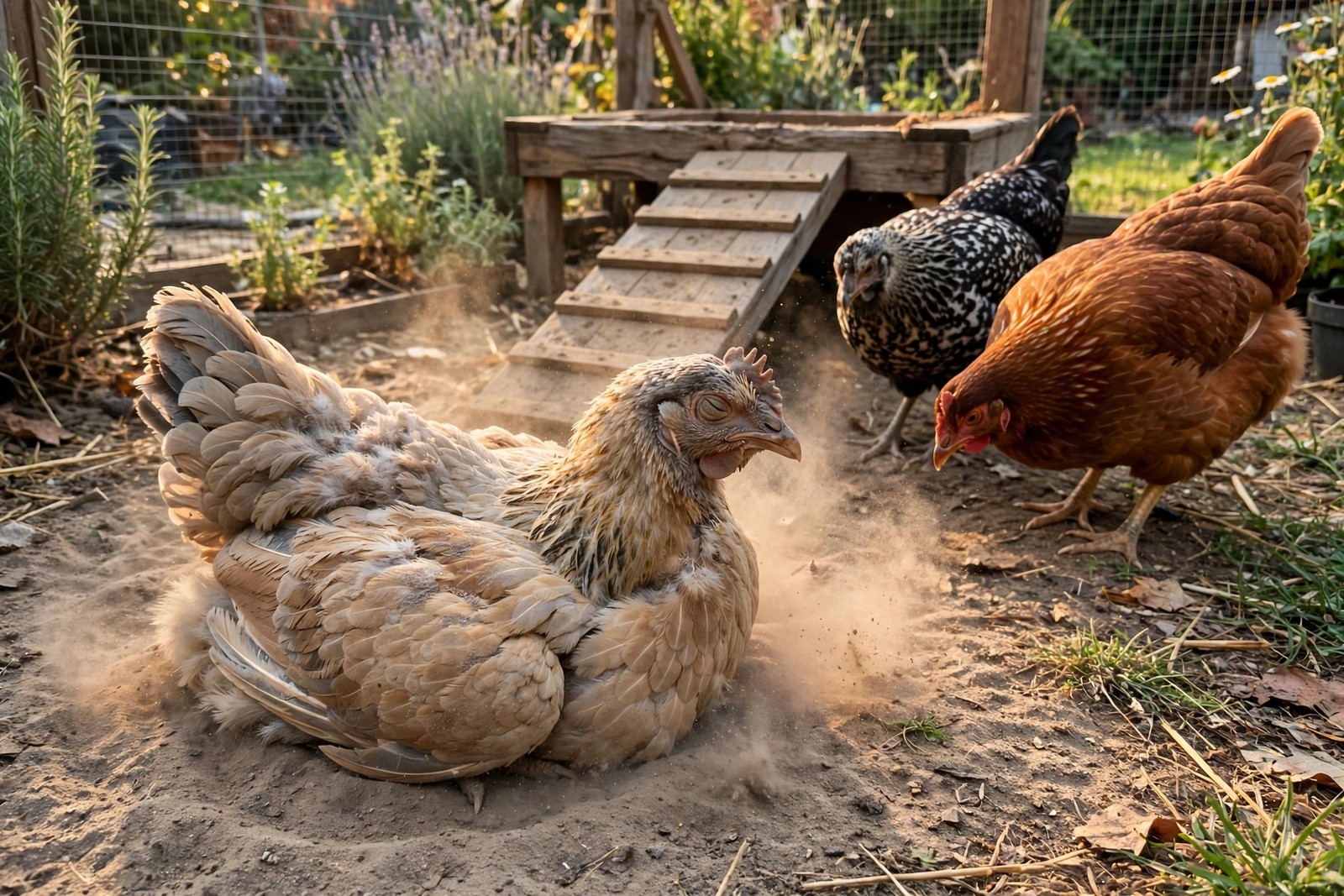
A hen who stops laying has finished one job, not her life. Hens commonly lay well for their first two to three years and then slow down, while the bird herself may live for several more years as a garden companion, slug patrol, and flock elder. Retired care is mostly the same good husbandry, adjusted for an older body and a different nutritional balance, plus a closer eye on the health problems that age brings.
Keep Her With the Flock
Do not pension her off alone. Chickens are flock animals with a settled pecking order, and a retired hen's place in that order, her companions, her dust-bathing spots, and her familiar coop are her security. Isolation is stressful and can stop an older bird eating properly. If younger, pushier hens start bullying her at feeders, add a second feeding and watering station rather than removing her, and only separate a hen who is ill, injured, or being wounded, ideally within sight of the flock while she recovers.
The Feed Change That Actually Matters
Layer feed is formulated with high calcium for shell production. A hen who no longer lays does not need that daily calcium load, and over time excess calcium can strain an older bird's kidneys. Many keepers therefore move retired hens to a grower or all-flock style feed with moderate protein and lower calcium, while offering crushed oyster shell in a separate dish: hens still laying will help themselves to the calcium they need, and the retired bird will largely leave it alone, since appetite for oyster shell tracks laying closely. Keep grit available, make changes over a week by mixing feeds, and continue kitchen greens and garden time as usual, with treats staying a small part of the day.
Health Checks for an Older Hen
- Crop: it should fill during the day and feel empty first thing in the morning; a crop still full and doughy or sour-smelling at dawn needs attention.
- Vent and rear feathers: check for pasting, swelling, or a prolapse, and for the redness and feather loss that can draw pecking from flockmates.
- Weight and breastbone: an older hen who feels sharply keel-boned under your hand is losing condition even if her feathers look full.
- Mobility and feet: watch for limping, scaly raised leg scales, swollen foot pads, reluctance to roost, or being last to leave the coop, all of which make daily life harder before they look dramatic.
- Breathing and brightness: a hen who stops dust-bathing, stands hunched away from the flock, or loses interest in favourite foods is telling you something is wrong.
Lower the roost or add a ramp so stiff legs do not have to launch and land from height, provide dry, deep bedding in winter, and keep shelter draught-free but ventilated. A retired hen with a lingering health problem deserves a vet visit just as a laying bird does; not producing eggs does not make her a lower priority. KinsLe Pet Passport supports her later years by keeping her approximate age, feed change, vet visits, and health notes in one organised record, so anyone caring for the flock knows her history at a glance.