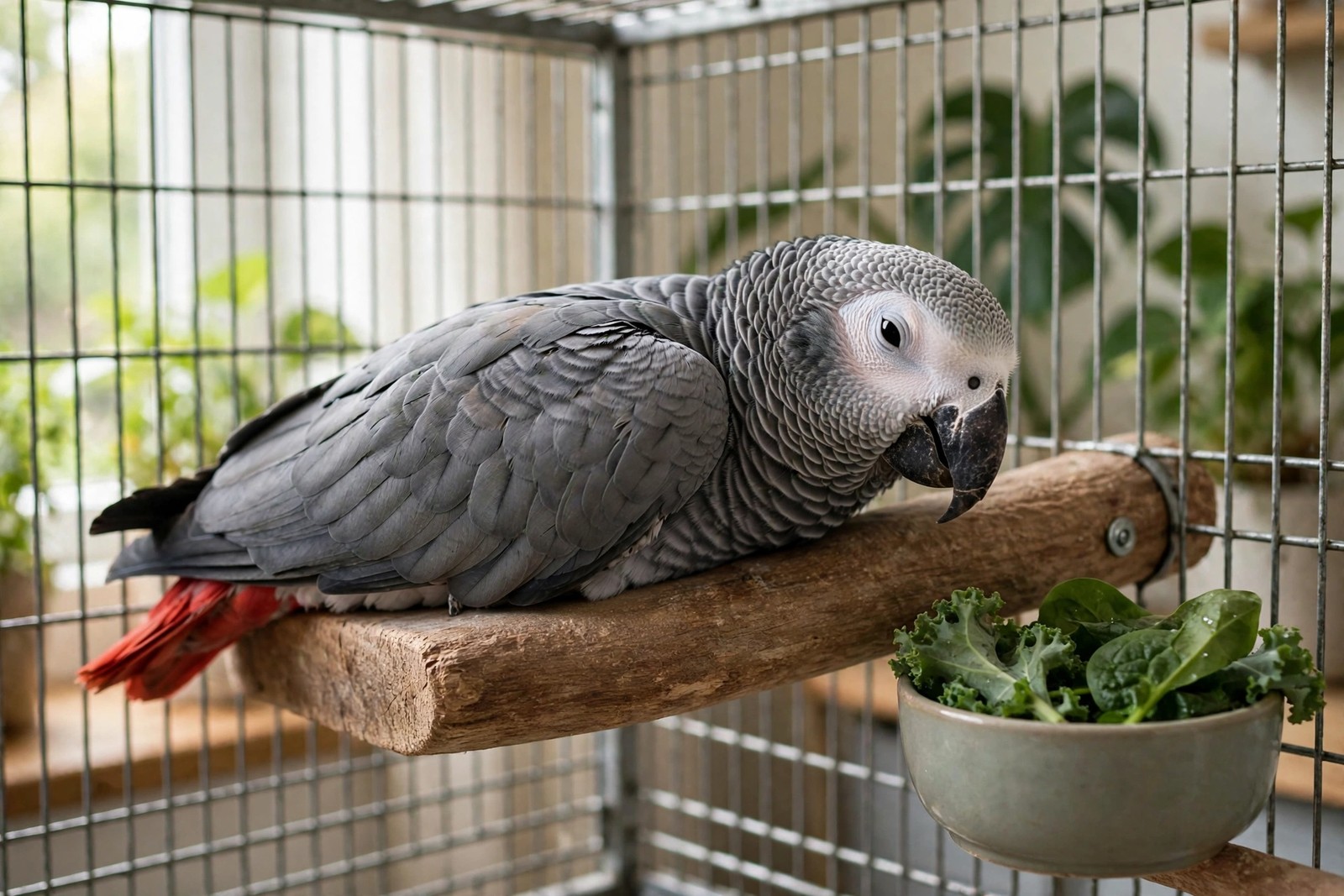
An African grey can live for decades, and the senior years reward owners who adapt early: a cage rearranged for stiffer feet, a diet watched for this species' known weak spots, and closer observation of a bird evolved to hide illness until it is advanced. Small changes made while your grey is still coping are far kinder than big changes forced by a fall or a crisis.
Rearrange the Cage for Ageing Feet and Joints
Arthritis is common in older greys and shows first as hesitation: slower climbing, gripping with the beak to steady himself, sleeping lower in the cage, or occasional falls at night. Fit wide, flat, or padded perches alongside his usual ones so sore feet can rest fully, place favourite perches, food, and water lower and closer together, and add a platform where he can sit with both feet flat. Keep one familiar high sleeping spot only if he still reaches it confidently. Put a soft towel or padding under favoured perches to cushion any fall, and check foot soles weekly for redness or sores from gripping harder to compensate.
Feeding and the Calcium Question
African greys are notably prone to low blood calcium, which in seniors can contribute to weakness, tremors, and seizures, so diet deserves vet-led attention. Feed a quality formulated diet with plenty of calcium-rich vegetables such as dark leafy greens and broccoli, go easy on the all-seed habit many older greys arrived with, and change diets gradually over weeks, since greys are famously suspicious of new food. Do not start or stop calcium or vitamin supplements on guesswork: both too little and too much cause harm, so let your avian vet set the plan from examination and blood results, and ask about safe daylight or appropriate lighting at the same visit.
Skin, Feathers, and Daily Comfort
Older greys often have drier skin and slower moults. Regular showers or gentle misting — letting him choose to step in rather than soaking him — plus reasonable household humidity help feathers stay supple and reduce the itchiness that can tip a bored senior into feather-damaging behaviour. Protect his longer rest: seniors commonly need a solid block of quiet sleep, and the cage area should be calm for it. Keep mental life rich but gentler — short training refreshers, foraging toys he can still manage, and company nearby — because an elderly grey is still a highly intelligent bird whose world should shrink in difficulty, not in interest.
Monitoring a Bird Who Hides Illness
Weigh him weekly on a gram scale at the same time of day and write it down; a steady downward drift is often the first objective sign of trouble in a bird showing nothing. Watch droppings, breathing effort, tail bobbing, voice changes, and how much of his food is eaten versus dropped. Book regular senior check-ups with an avian vet, who will typically want periodic bloodwork for a grey, and go sooner for falls, reduced grip, fluffed sitting at the cage bottom, or any seizure-like episode, which is urgent. KinsLe's Pet Passport keeps his weight log, blood results, diet plan, and vet notes in one portable packet, so his senior care stays joined up between vet visits, holidays, and anyone stepping in to help.