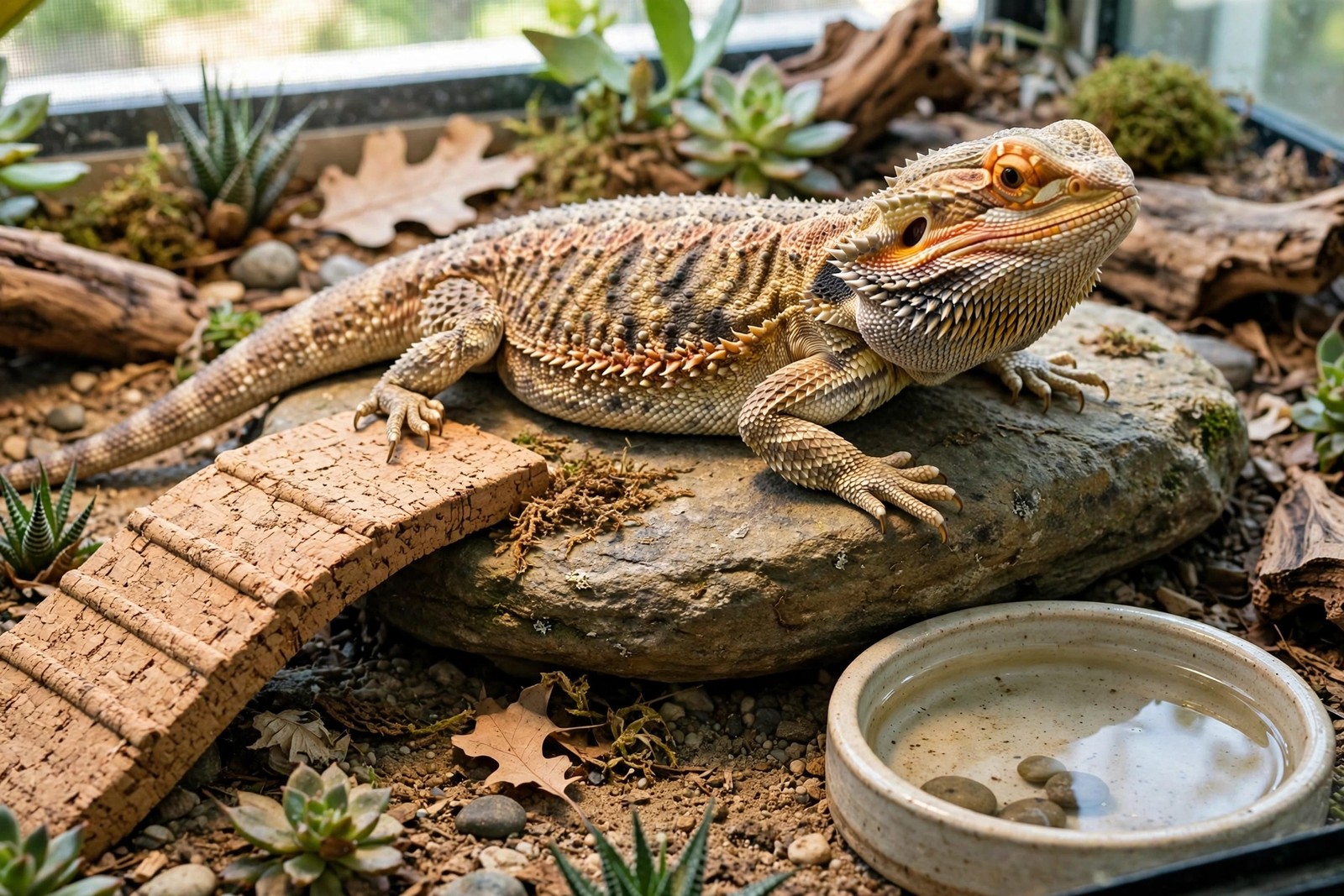
A bearded dragon in his senior years slows down gradually: longer basking, shorter bursts of activity, a pickier appetite. Good senior care is mostly about removing effort — the climb to the basking spot, the chase after fast insects, the work of staying hydrated — while keeping the heat and light he depends on as accurate as ever.
Rework the Vivarium for Stiff Joints
Climbing is the first thing ageing joints struggle with. Lower the basking platform and reach it with a wide, gentle ramp or a stack of broad, stable rocks and cork pieces rather than a steep branch, so he can walk up to the warm spot instead of hauling himself. Bring food, water, and a favourite hide within easy reach on the same level, and choose a substrate and floor surface with grip, since splayed, sliding steps on a slippery floor are a fall risk. Keep the temperature gradient itself unchanged in structure — a warm basking end and a cooler end — and verify both ends with reliable thermometers, because an elderly dragon is slower to move away from heat that is too much or to seek heat he needs.
Heat and UVB Need More Attention, Not Less
UVB lighting is non-negotiable at every age, and seniors are less able to compensate for weak output. UVB tubes lose strength before they visibly fail, so replace them on the maker's schedule and write the change date down where you will see it. Watch how he uses the gradient: a senior who never leaves the basking spot may be unable to get warm enough, in pain, or unwell, while one who avoids it entirely may be overheating. Keep a simple log of basking temperatures and appetite for a few weeks whenever you adjust the setup, rather than relying on memory.
Feeding and Hydration, Made Easier
Offer food in a shallow, low-sided dish placed where he already rests, and favour softer, smaller items: tender leafy greens chopped small, soft vegetables, and appropriately sized insects he can catch without a chase, tong-fed if he is missing moving prey. Many older dragons naturally shift toward more greens and fewer insects; follow his appetite rather than forcing the juvenile ratio. For hydration, provide a shallow water dish, drip water onto greens, and offer lukewarm, shallow soaks — water only up to his elbows, supervised throughout — which also help loosen retained shed on toes and tail tip. Never leave an elderly dragon unattended in water, since a tired senior may not hold his head up confidently.
Changes That Mean a Vet Visit
Some slowing is age; some is a signal. Book an exotics vet for weight loss you can feel along the spine and hips, limbs that drag or tremble, a sunken look around the eyes, blackening of the beard that does not lift, stuck shed constricting toes, or several days of refused food in a dragon who normally eats. Ask the vet to check joints and overall condition, and take your records along: weights, temperatures, UVB dates, and appetite notes turn a vague worry into a clearer picture. KinsLe's Pet Passport holds exactly those records in one portable packet, ready for the exotics vet, a holiday sitter, or your own monthly review of how your old dragon is really doing.