Rabbits commonly live eight to twelve years, and many are considered senior from around five to seven years depending on breed size, with giant breeds ageing sooner. An elderly rabbit usually stays itself, still opinionated about hay and routines, but joints, teeth, and grooming ability quietly decline. Senior care means reshaping the living space around stiffness, watching intake like a hawk, and treating small changes as information rather than waiting for obvious illness.
Reshape the Home for Stiff Joints
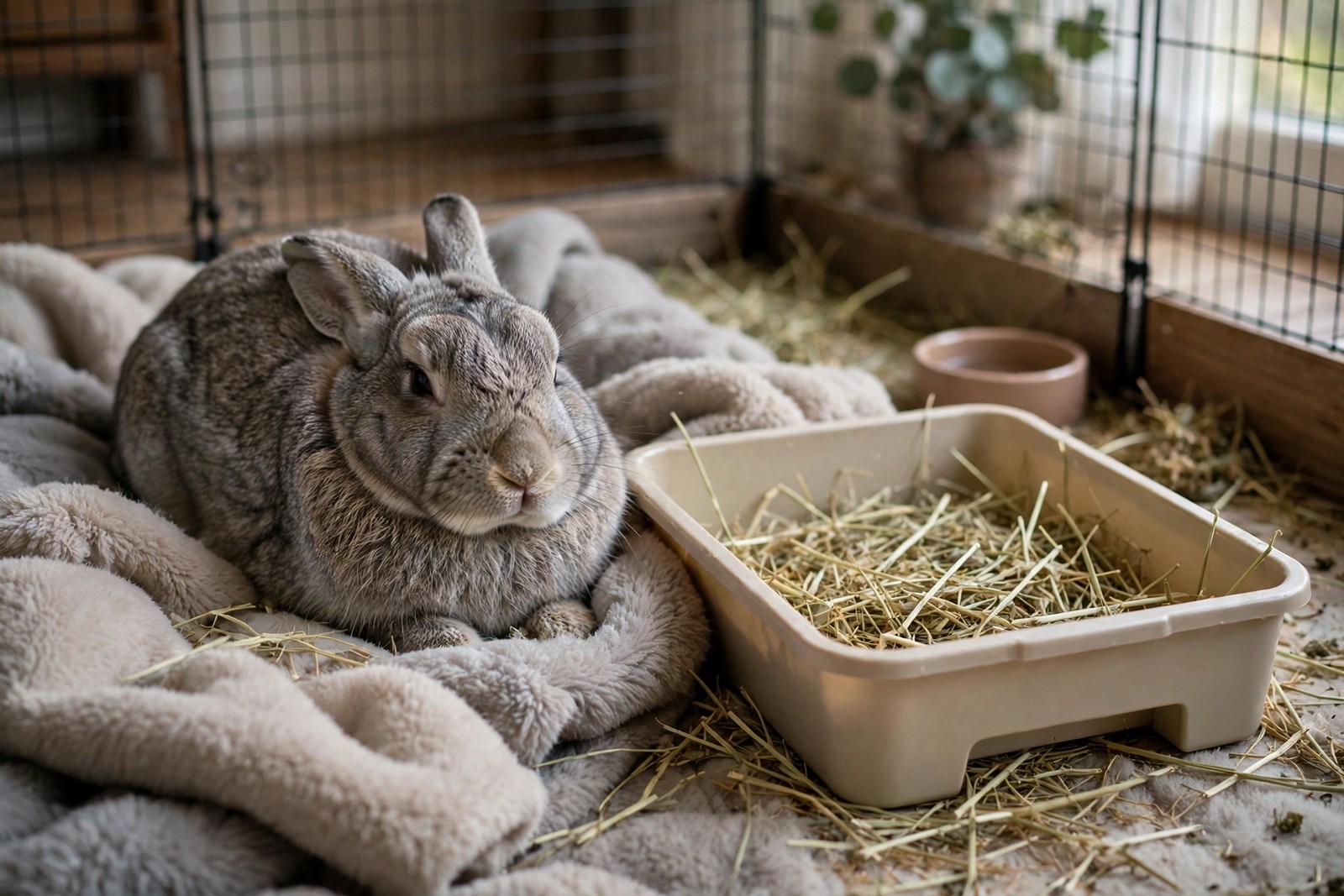
Arthritis is very common in older rabbits and often under-recognised, because rabbits hide pain and simply move less. Move to single-level living: hay, water, litter, and hides all on one floor, with a low-entry litter tray, one side cut down if needed, so the rabbit never has to hop up to toilet. Lay soft, non-slip surfaces over hard floors, since splayed slipping worsens joint strain, and provide deep, soft bedding in the rest area. Sore hocks, the bald, red, sometimes cracked skin on the underside of the back feet, develop when a stiff rabbit sits long hours on hard or damp surfaces; check them weekly, keep bedding dry, and ask your vet to assess any broken skin promptly. Gentle daily movement around a safe room still matters, because total rest stiffens joints further and slows the gut.
Teeth and the Hay Signal
A rabbit's teeth grow throughout life and are worn down by chewing long-strand hay and grass. Elderly rabbits develop molar spurs and root problems that make chewing painful, and the earliest sign is often behavioural: eating less hay, preferring softer foods, dropping food, a wet chin, smaller droppings, or weight loss under a fluffy coat. Weigh your rabbit monthly and keep two numbers in mind: hay intake and dropping output. A rabbit who has not eaten or passed droppings for around half a day, or whose appetite falls sharply, needs a vet the same day, because gut stasis escalates quickly and is often secondary to pain somewhere. Ask your vet to check the back teeth at every senior visit, since molars cannot be assessed at home.
Grooming, Bottoms, and Flystrike
An arthritic rabbit cannot twist to groom its rear or eat its caecotrophs, the soft droppings it normally consumes directly, so uneaten caecotrophs and soiling build up around the bottom. Check and gently clean the rear daily, trimming soiled fur as needed, and treat this as urgent hygiene rather than cosmetics: in warm weather, flies lay eggs in soiled fur and flystrike can develop within hours and is frequently fatal. Heavy moults also need help, with gentle brushing to remove loose fur the rabbit would otherwise swallow while grooming, and nails need clipping more often as activity falls. Watch eyes and tear ducts too, since weepy eyes in seniors can link to tooth root trouble.
Book vet checks about twice a year for a senior rabbit, or as your own vet advises, and raise reduced jumping, wet chin, head tilt, or changed litter habits early rather than at the next routine visit. KinsLe Pet Passport keeps the senior picture organised by recording weights, dental checks, vet findings, and care adjustments in one profile, so gradual changes that are easy to miss week to week become visible across the year.