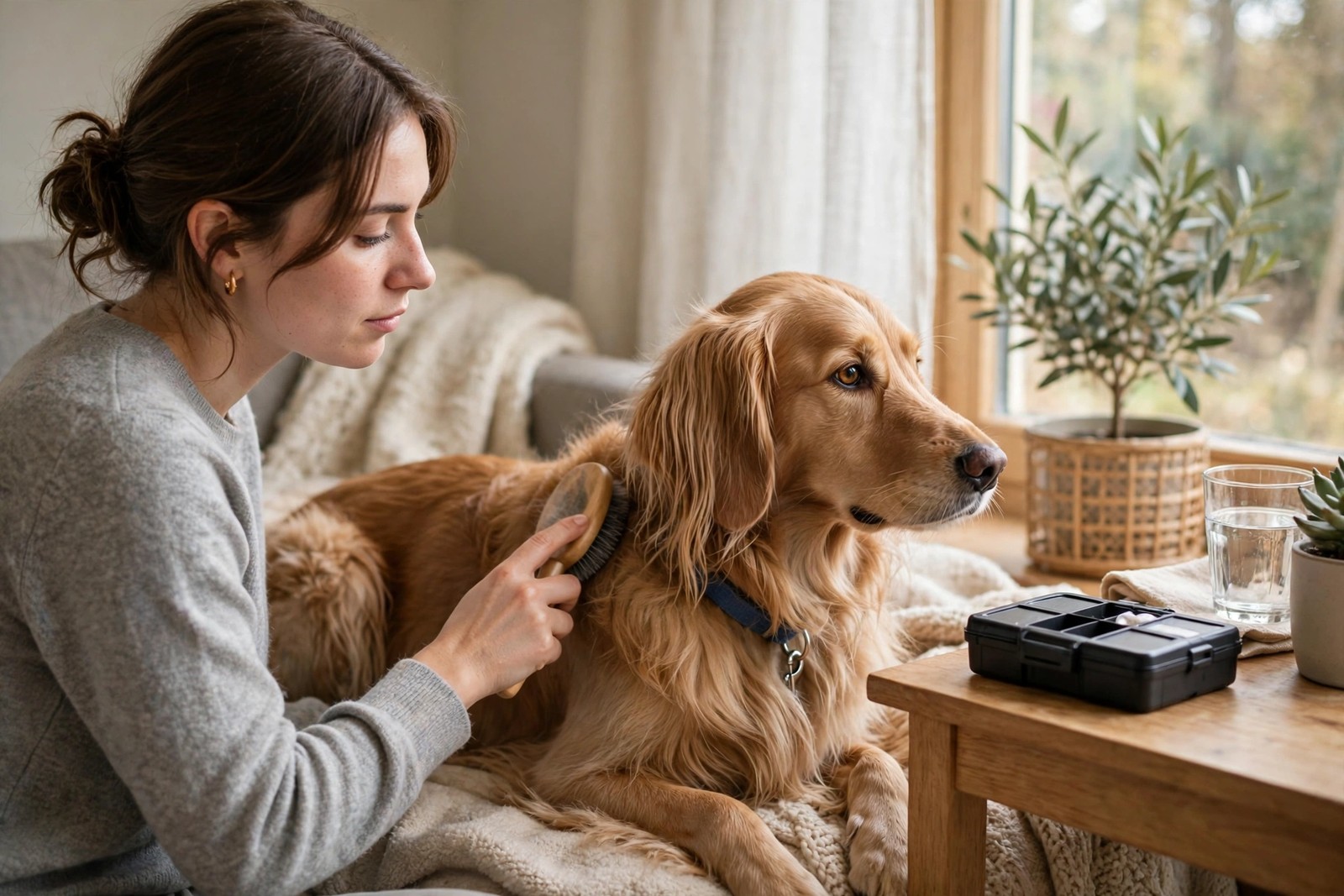
Groom more gently while medicines thin the skin: choose a soft brush, lukewarm water and a mild unscented shampoo, keep sessions short, and stop if the skin looks pink or your dog pulls away. Some long-term medicines, steroids among them, can leave skin thinner and slower to heal, and can change how the coat feels, and can increase shedding, so pressure that once felt normal may now scrape or bruise. Work with the lie of the hair rather than against it, lift mats apart with your fingers instead of tugging them through, and skip stiff slicker work on thin areas over hips, elbows and belly.
Hands, tools and water for fragile skin
Lay out everything before you call your dog: a soft pin brush or rubber grooming mitt, a wide-toothed comb for checking your work, cotton for any skin creases, and towels within reach. Test brush pressure on the back of your own hand first; if the pins drag or scratch you, they are too firm for thinned skin. Bathe only when the coat truly needs it, using lukewarm water you have checked with your wrist, and rinse until the water runs clear, since dried shampoo residue itches and invites scratching that thin skin tolerates poorly. Pat dry rather than rubbing, and let a double coat air-dry fully before a gentle comb-through so you can see the skin beneath.
The monthly photo record that shows slow change
Coat change on medicine is gradual, and memory smooths it away, which is why a dated photo set matters more here than in ordinary grooming. Once a month, in the same room and light, photograph left side, right side, back from above, chest and belly if your dog rolls willingly, plus any patch that looks thinner than last time. Keep the photos in date order beside a short note: medicine name as prescribed, dose timing exactly as the vet set it, appetite, thirst, and what the coat felt like under your hands. Bring that sequence to rechecks; a vet can judge far more from that dated sequence than from a worried description in the room.
What belongs to the vet, not the brush
Never stop, halve, skip or stretch a prescribed medicine because the coat looks worse, and never add a supplement, skin oil or medicated wash on top without asking first. Questions about the medicine itself — whether thinning is expected on it, whether timing can shift, whether a recheck should move closer — go to the prescribing vet, promptly if you see skin that tears easily, bruising without a knock, sores that linger, rapid hair loss, or a dog who seems sore when touched. Tell any professional groomer the medicine name and ask for the same light handling, no tight clipping over thin skin, and a report back on anything new they feel under the coat.
Keeping sessions short, calm and shared
Split grooming into small jobs across the week: two minutes of soft brushing today, feet and sanitary trim tomorrow, bath only on the week it is due. Pair each job with food rewards and a clear finish word, and end while your dog is still relaxed rather than when your list is complete. Watch the day after a bath or brush for extra scratching, flaking or restlessness, and write down what you see; patterns across three or four sessions tell you whether a product, a tool or the session length is the problem. A dated log kept in KinsLe under Care Teams lets family and helpers share one gentle plan, with the assigned person marking each brush-through done so nobody repeats a session the skin did not need.