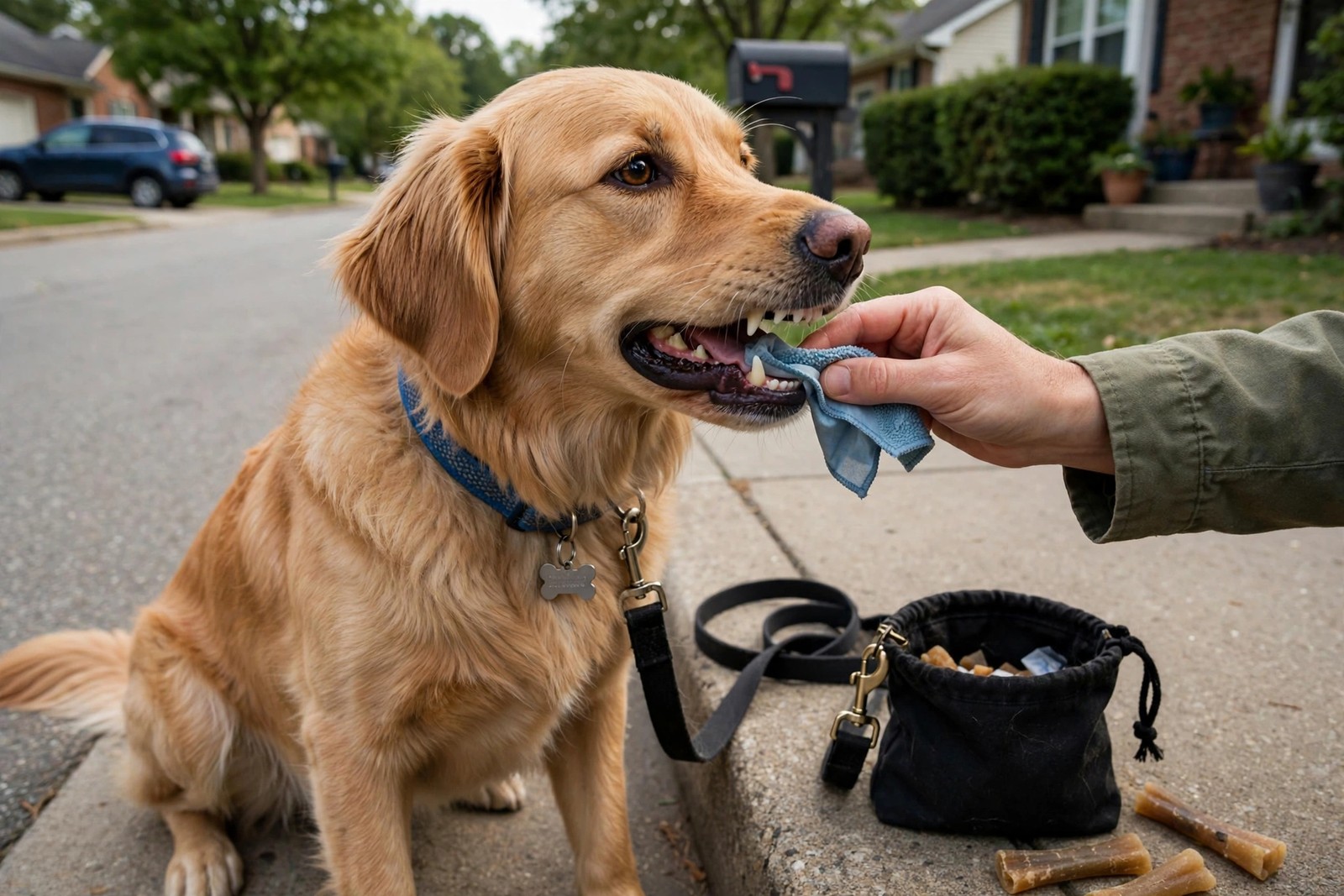
Brushing is the familiar advice, yet some dogs panic, clamp their jaws, or have painful mouths that make a brush unkind as well as impractical. Refusing to force the issue does not mean abandoning dental care. It means assembling the alternatives honestly, understanding what each one can and cannot do, and keeping professional care at the centre of the plan.
What the Alternatives Actually Do
Vet-approved dental chews work through chewing itself. The abrasive action of sustained chewing scrapes at soft plaque on the tooth surfaces a dog chews with. Choose a size matched to your dog, supervise chewing, and count the chew within her daily food so dental care does not quietly add weight. Dental wipes offer a second route. Wrapped around a finger and rubbed along the outer surfaces of the teeth, a wipe lifts some plaque and freshens the mouth in a motion many dogs accept because a finger feels less invasive than a brush.
Gels formulated for dogs can be smeared along the gumline with a finger or a wipe, and water additives go into the drinking bowl for dogs who tolerate the taste. Both support a routine rather than replacing mechanical cleaning or professional care. Ask your vet which of these options suits your dog's mouth, age, and any health conditions, because a product that suits a healthy young dog may not suit a senior with sore gums.
The Limit Every Alternative Shares
Plaque hardens into tartar, and tartar below the gumline drives the gum inflammation and tooth damage that matter in the long term. No chew, wipe, gel, or additive removes that hardened deposit. Only professional cleaning under anaesthetic reaches below the gumline safely and lets the vet examine each tooth properly. Treat home alternatives as the maintenance between cleanings that slows new plaque, not as a substitute that makes cleanings unnecessary. Your vet will judge timing by examining her mouth, and that judgment deserves more weight than any product claim.
A Routine a Brush-Shy Dog Can Accept
Anchor dental care to a calm daily moment, such as the settle after the evening walk. Offer the chew or do the wipe pass then, keep sessions short, and stop before she becomes stressed. A dog who ends each session relaxed will accept the next one, while a dog pushed past tolerance starts avoiding you at the sight of the wipe packet. Pair the routine with praise and a favourite quiet activity so the association stays positive across weeks. If she accepts a wipe on the front teeth only at first, accept that partial win and extend the area gradually as her confidence grows.
Signs That Move Care Back to the Vet
Between professional checks, watch her mouth and her eating. Book a dental visit for red, swollen, or bleeding gums, a loose or broken tooth, brown tartar building along the gumline, or breath that becomes newly foul. Dropping food, chewing on one side, pawing at the mouth, or new reluctance to crunch hard food also warrant an appointment, because dogs often signal mouth pain through eating changes long before they resist handling. Note when you first saw each sign, since the timeline helps your vet judge urgency.
Planning Across Her Lifetime
Dental needs shift with age. A young dog may need only home maintenance and periodic checks, while a senior often needs closer monitoring as gums recede and old teeth wear. Build the habit of asking about her mouth at every routine appointment, and keep a simple dated record of cleanings, extractions, and findings so patterns stay visible across years and across practices if you move.
That lifetime dental record sits naturally inside KinsLe's Pet Passport, where cleaning dates, vet findings, and your own notes on breath and eating travel together whenever her care changes hands.