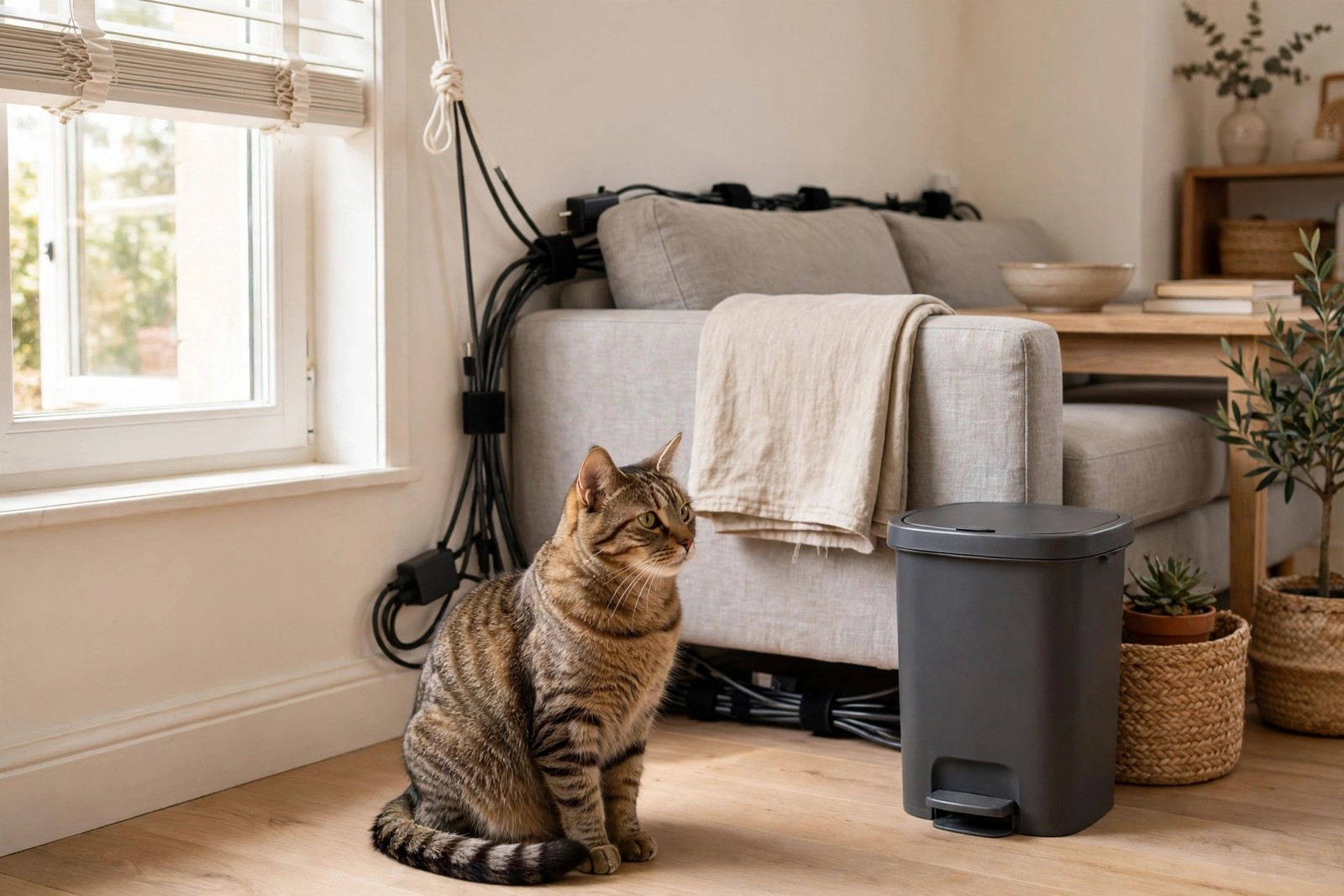
Cats do not explore a home the way dogs do. They climb it, squeeze behind it, sleep inside its warm machines, and chew the interesting string-like things — so cat-proofing means walking each room looking for what a curious, vertical, nap-seeking animal will find, then removing the handful of hazards that genuinely injure cats every year.
Cords, Loops, and Things That Swing
Dangling cords are both a chew target and a strangulation risk. Bundle electrical cables behind furniture or in covers, shorten lamp and charger cords out of reach, and deal properly with blind and curtain cords: tie them up high, fit cleats, or cut loops so no closed loop hangs at cat height. The same goes for drawstrings on bags and hoodies left draped over chairs. A room is not proofed until you have got down to cat level and looked for anything that loops, swings, or dangles invitingly.
Plants, Foods, and Oils
Lilies are the plant emergency: true lilies are seriously toxic to cats, including the pollen and the vase water, so the only safe rule is no lilies in a cat home, full stop. Check every other houseplant against a reliable toxic-plants list before it comes indoors, and move offenders out rather than hoping your cat ignores them. In the kitchen, store onions, garlic, grapes, raisins, chocolate, and artificially sweetened foods in closed cupboards, and use a lidded bin a cat cannot tip. Keep essential-oil diffusers out of rooms your cat spends time in and never where she cannot leave the scent; concentrated oils and cats are a poor mix, and a vet can advise on specific products.
Machines, Water, and Hiding Places
Cats seek warm, dark, enclosed spaces, which makes laundry the most dangerous room in the house. Keep washing machine and tumble dryer doors shut, check inside both before every single use, and make it a household rule nobody breaks. Put toilet lids down, especially for kittens, secure cleaning chemicals, medicines, and laundry pods in latched cupboards, and block the gaps behind and under large appliances where a cat can wedge herself near hot or moving parts. Check reclining chairs and sofa beds before closing them, and fit secure screens on windows your cat leans against, since a loose screen plus a leaning cat is a fall waiting to happen.
Swallowables and Everyday Discipline
String is the quiet emergency: yarn, ribbon, tinsel, hair ties, rubber bands, and thread with a needle attached can all be swallowed, and string-like objects can saw at the gut. Store them in drawers and closed boxes, clear them after wrapping or sewing, and if you ever see string hanging from your cat's mouth or rear, never pull it — that is a straight-to-the-vet situation. Finish each room, then revisit at kitten, adult, and senior stages, because what a cat can reach changes with age. KinsLe Family Sharing gives relatives you pick access to her profile, for a relative checking her cord-free, lily-free rooms.