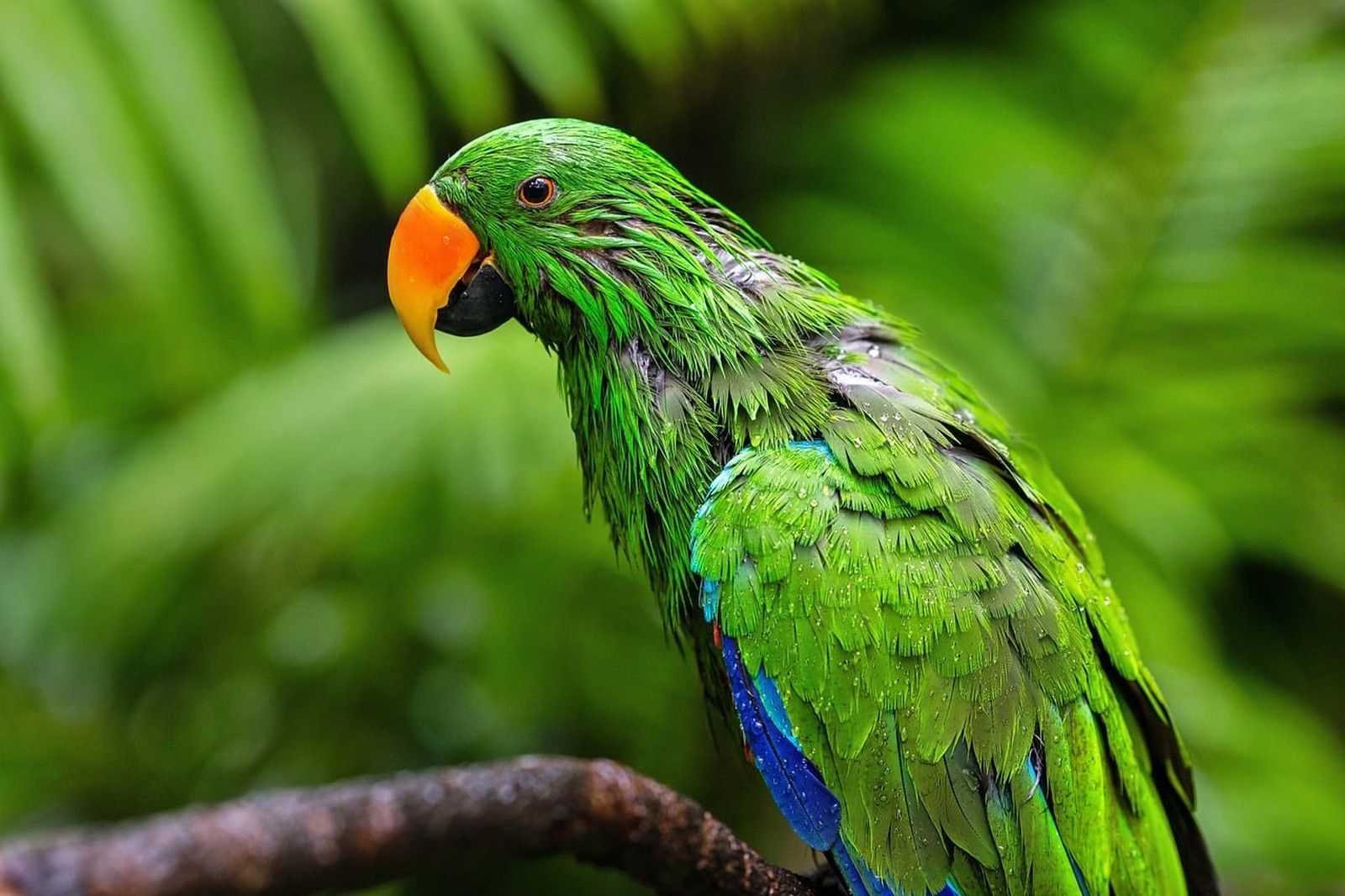
Most parrots in trees are not trying to escape — they are startled, disoriented, and surprisingly poor at flying downward, because descending to you is a skill pet parrots have rarely practised. Shouting, shaking the tree, or spraying water almost always makes things worse. The method that recovers most birds is patience plus temptation: keep the parrot in sight, put everything it loves at the bottom of the tree, and give it the time and calm to come down.
First Minutes: Watch, and Do Not Frighten It
Assign one person to watch the bird continuously and never lose the exact branch — a parrot that moves unseen is a parrot lost. Everyone else keeps voices down and movements slow, and keeps dogs and other pets indoors. Note the tree, the approximate height, and the direction the bird faces. Resist the classic mistakes: hoses and thrown objects can panic the bird into a longer flight or injure it, and climbing after a parrot usually just pushes it higher or onto a neighbour's roof.
Set the Trap It Wants to Enter
Bring the parrot's own cage outside and place it on clear ground below or just beside the tree, door wide open, with its favourite food — the treat it will do anything for at home — visible in its usual bowl, plus a second irresistible portion on top of the cage. Put familiar perches and toys in and on the cage. If the bird has a bonded companion bird, its calls from a secure cage nearby can be a powerful lure; never bring the companion out unsecured. Playing recordings of the same species' flock calls, or of your own bird's contact calls, can also draw a response that tells you it is interested.
Call It Down Like You Trained It
Stand where the parrot can see you, ideally slightly downhill or in the open so a descending flight looks easy, and use its name, its usual phrases, and the cue it steps up for at home, in your normal upbeat voice. Show the treat, eat something similar yourself if it is a bird motivated by sharing your food, and reward any movement toward you — a shuffle along the branch, a short hop — with excited praise. Expect progress in stages, often over hours: many birds come down at dawn or as dusk approaches and hunger builds, so be in position before first light if the bird roosts overnight.
If It Will Not Come Down
When a parrot settles low and stays put, a professional — a tree surgeon willing to climb with a net, or your local fire service's non-emergency line, which sometimes helps — may reach it safely; a long-handled net and a towel, used by someone experienced, are the right tools — never grab the bird by a wing or its tail. Once recovered, offer water and food, keep the bird warm and quiet, and book a vet check, since even a short adventure can mean missed meals, exhaustion, or hidden injury.
Extra watchers make the long wait workable, and KinsLe's Lost Pet Alert System sends a free alert to nearby Circle of Love members who can take a watching shift, watch neighbouring trees, and message you directly if the parrot moves while you are fetching the cage.