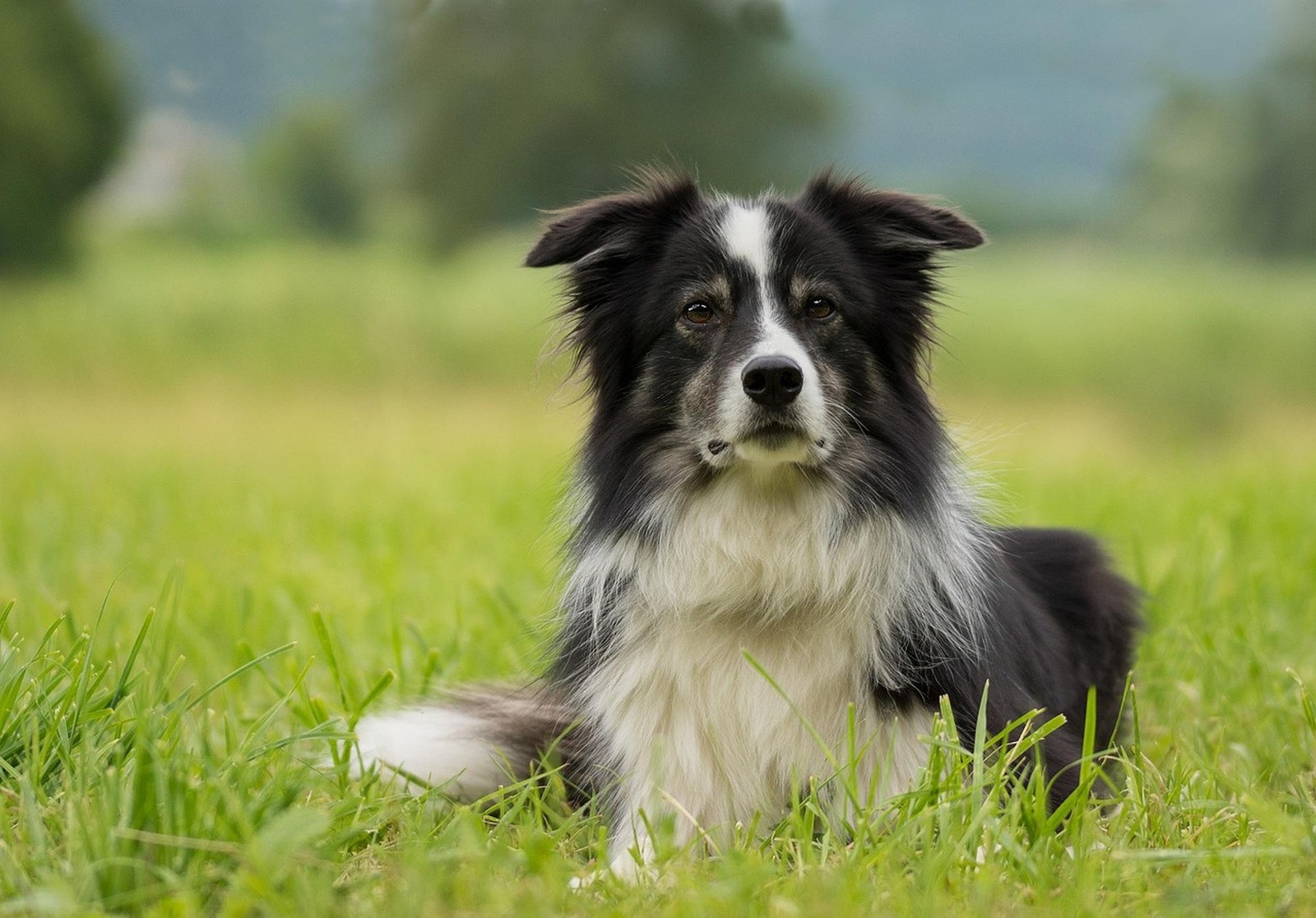
A young Border Collie chasing bikes and children is running a hardwired programme: eye the moving target, stalk it, chase it, and, in the full farm sequence, grip if it will not turn. You cannot delete that sequence, and a tired-only approach often just builds a fitter chaser. The workable answer is to give each stage a legal, scheduled version with rules and an off-switch, while managing the dog's access to the illegal versions until the new habits are stronger.
Herding-Shaped Games With Rules
Large-ball herding games, where the dog steers an oversized ball that is too big to bite toward a goal or back to you, use the eye, stalk, and circling pattern productively and can be taught with rewards for pushing from behind the ball rather than lunging at it. A flirt pole, a lure on a rope and pole, satisfies chase in a small space, but only with structure: the dog waits, chases on your release word, drops the lure on cue, and waits again, so arousal goes up and comes back down on command. Scent searches, hidden toys, and food scattered in grass recruit the nose and slow the whole system down. Retrieving can feature, but endless frantic ball throwing often winds collies tighter; prefer fewer throws with waits, searches between, and a clear finish.
Jobs Around the House
Collies settle better when the day contains tasks with a beginning and an end. Teach carrying a light item to a person or a basket, fetching named household objects, holding a down-stay while doors are answered, and a tidy-up routine where toys are dropped into a box for food rewards. Trick training, leg weaves, spins, backing up, closing a cupboard door with a paw target, gives the collie's brain detailed work that plain running never provides. Keep sessions short, end them yourself, and follow work with a chew and a mat settle, because teaching this breed to switch off is as important as teaching it to switch on.
Managing Bikes and Children Meanwhile
- Keep distance as your main tool: cross the road or turn away early when bikes approach, and work at a range where your dog can still notice, then disengage for a reward.
- Use a lead or long line anywhere chasing is possible; every completed chase of a jogger, bike, or child pays the behaviour exactly what it wants.
- Reward the look-away: mark and pay the moment your dog glances at movement and chooses you instead, in gradually busier places.
- Ask children not to run squealing directly past the dog during training, and give the dog a mat station during children's games rather than expecting self-control ringside.
- Protect rest: young collies need enforced naps and quiet days, since overtired adolescents show the worst chasing and nipping.
Heel-nipping at children, lunging at traffic, or chasing that you cannot interrupt are reasons to bring in a qualified behaviour professional promptly, because vehicle chasing in particular is life-threatening. With structure, most young collies learn that movement in the world is information, not an instruction. KinsLe Care Teams helps the household deliver that structure by assigning the day's games, jobs, training minutes, and rest periods to named people with timestamped completion, so the collie gets the full programme rather than extra exercise alone.