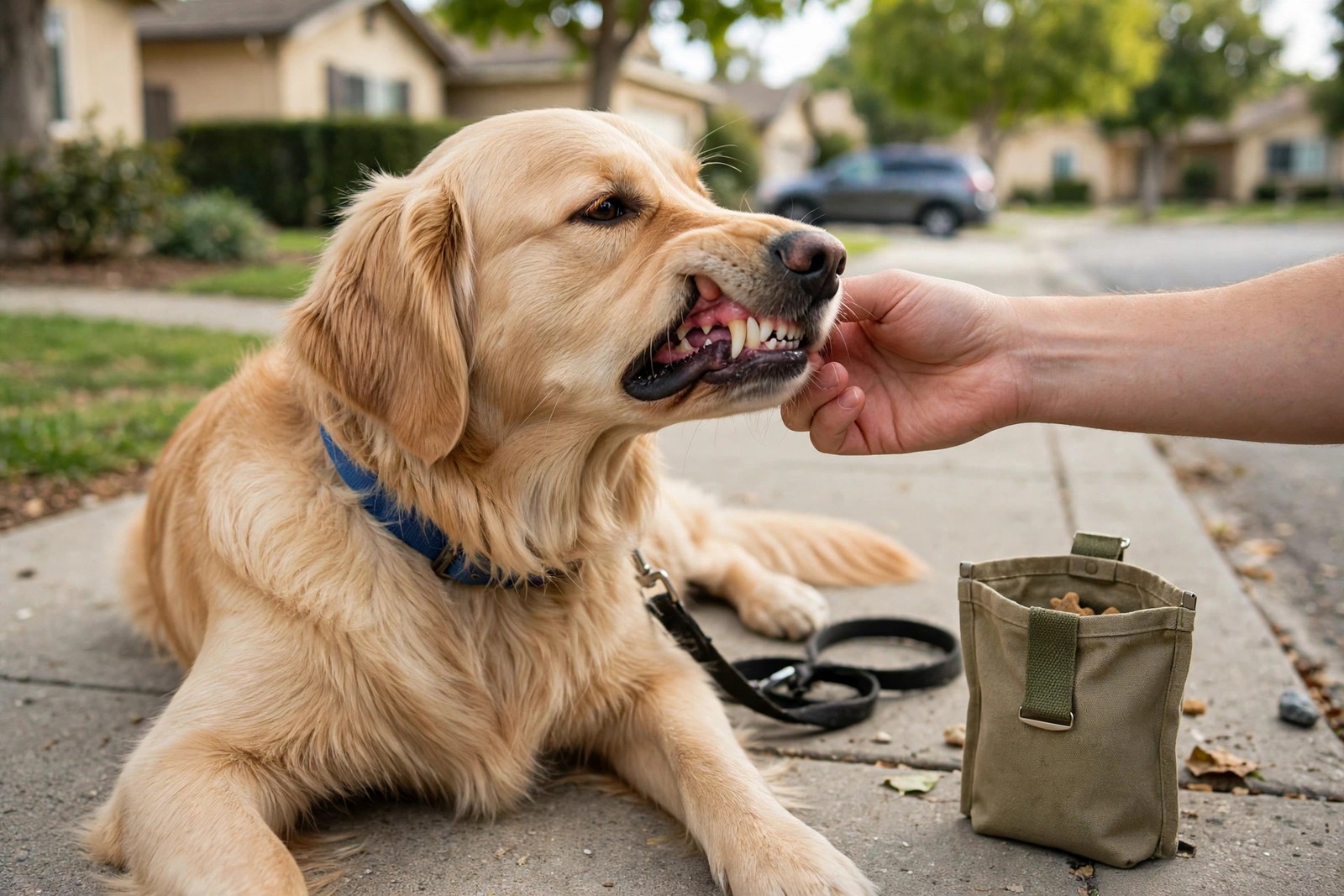
A home mouth check has a simple job: know what your dog's mouth normally looks like, and notice early when it changes. Working in a fixed order, gums first, teeth second, then breath and eating behaviour, keeps the check complete in about a minute. Choose good light and a calm moment, lift the lip gently on each side, and include the back molars, since those large chewing teeth gather tartar quickly and hide at the edge of a casual glance.
First: The Gums
Healthy gums look smooth and pink and sit snugly against each tooth. Many dogs carry natural dark pigment across part of the gum, and pigmented areas are normal for that dog, so learn her pattern rather than expecting uniform pink. Run your eyes along the gumline where gum meets tooth. That junction is where trouble announces itself: a red rim, puffiness, a gum edge pulling back from the tooth, or bleeding when the lip moves. Compare the two sides of the mouth, because a change affecting one side only often points to a local problem with a specific tooth, and noting the side helps your vet start in the right place.
Second: The Tooth Surfaces
Look at the outer surfaces of the teeth, the faces your lip lift reveals. Teeth should be reasonably clean, with at most a faint film. Thick brown or grey tartar, especially cemented along the gumline of the canines and back teeth, is a finding worth recording with its location. Check for a tooth that looks chipped, cracked, discoloured next to its neighbours, or loose when the others sit firm. Do not wiggle a suspect tooth repeatedly to test it, since a painful tooth punishes probing and one careful observation gives the vet the same information. Note tartar by tooth position, such as upper left back tooth, so your next monthly check compares like with like.
Third: Breath and Eating Behaviour
Breath completes the picture. A healthy mouth does not produce sweet breath, yet a marked change toward foulness, especially alongside gum redness or new tartar, belongs in your notes. Then watch behaviour across the following days. Dropping food, chewing on one side, leaving hard pieces she usually crunches, pawing at the mouth, rubbing her face, or new drooling all suggest that something in the mouth feels different to her. Dogs commonly keep eating through considerable mouth discomfort, so these behavioural hints often arrive before appetite itself changes, and they deserve the same weight as anything you saw during the lip lift.
Changes That Prompt a Dental Visit
Book a dental appointment for gums that bleed, swell, or recede, and for tartar building steadily along the gumline. A loose, broken, or discoloured tooth prompts a visit on its own, as do a lump on the gum, persistent bad breath with any visual change, or the eating behaviours described above lasting beyond a day or two. Sudden pawing at the mouth with drooling and distress warrants a same-day call, since a dog may have something lodged or a tooth may have fractured. Home care cannot remove tartar below the gumline or assess a tooth's root, so a check that finds these changes has done its job by sending you in, not by prompting home remedies.
Keeping the Record Between Visits
Write one dated line per check: gums, tartar locations, breath, behaviour. That line takes seconds and transforms the next vet conversation, because you can say a red rim appeared on a specific tooth two months ago rather than reporting a vague impression that the mouth seems worse lately. Ask at each professional visit what the vet found and add it to the same record, so home observations and clinical findings accumulate in one place rather than competing from memory.
A running mouth record inside KinsLe's Pet Passport, pairing your monthly home checks with professional cleaning dates and findings, means any vet meeting her for the first time reads her dental story in minutes.