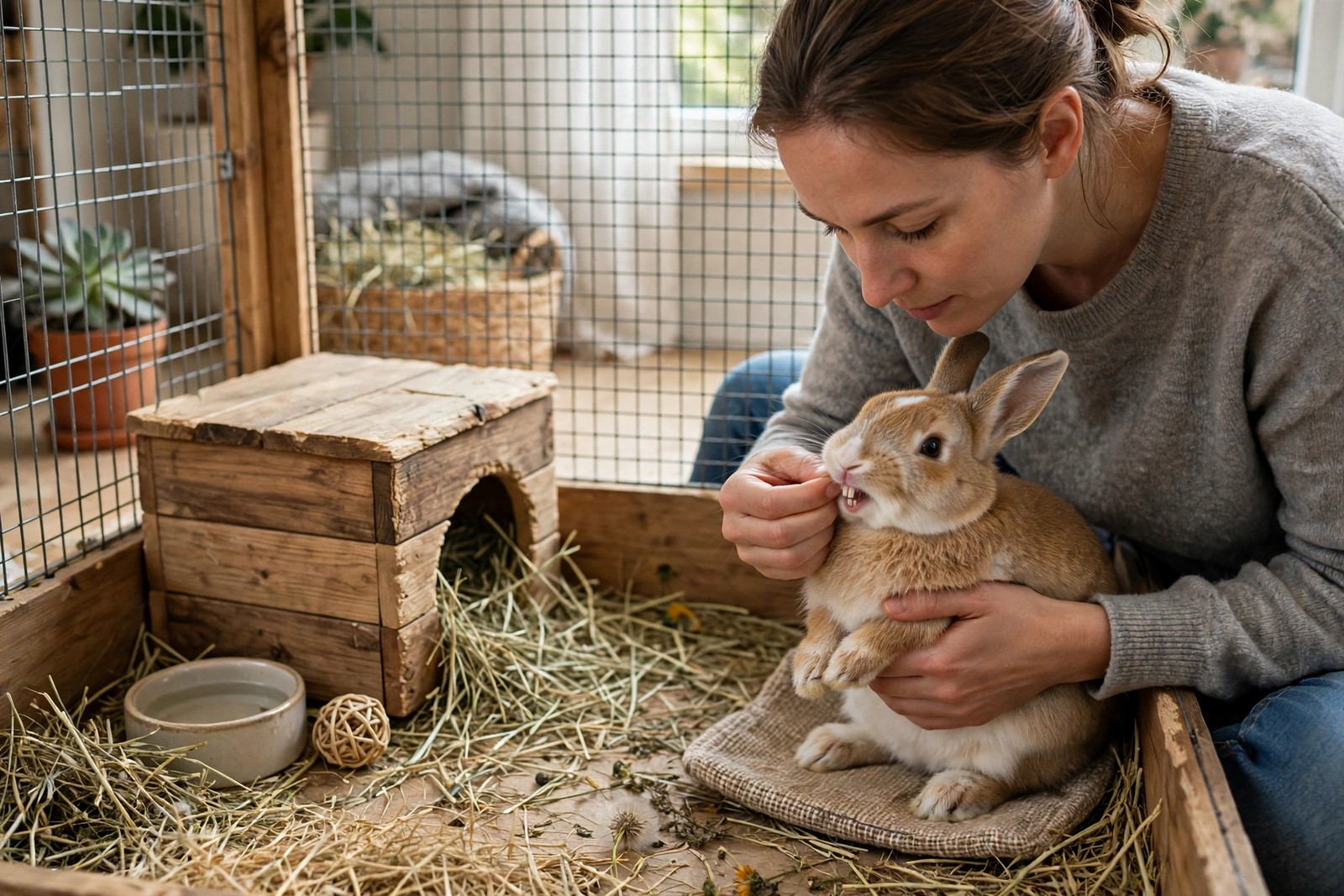
Most of what you need to know about a rabbit's teeth can be gathered without opening her mouth at all. Start by watching a meal: a rabbit whose teeth are starting to trouble her changes the way she eats long before she gives up eating altogether — dropping pellets, chewing slowly or to one side, choosing soft foods over hay, or developing a wet chin from dribbling, the sign keepers call slobbers. Then, with her settled calmly on a low surface and never tipped onto her back, feel along the jawline with your fingertips for lumps or unevenness, and lift the front lips just enough to see the incisors, which should meet evenly and look smooth, neither overgrown, slanted nor broken. The molars at the back stay out of view at home; seeing them properly takes a vet's equipment, and pretending otherwise helps no one.
Why the Back Teeth Are a Vet-Only View
Rabbits' teeth grow continuously, and one common painful problem — molar spurs, sharp points that cut the tongue and cheeks — hides at the back of the mouth, visible only with an otoscope or during a vet dental exam. So the home check is a screening habit, not a clearance: dropped food, selective eating, smaller droppings (a sign less fibre is going through), weight loss, a wet chin, or reduced grooming all say 'book a dental check', even if the front teeth look perfect. Diet is the owner's real dental tool: unlimited grass hay, chewed with a side-to-side grinding motion for hours a day, is what wears molars evenly — a rabbit fed mostly pellets does not chew enough to protect her own teeth.
Working With Your Vet
Turn your home observations into an appointment with a shape. Note the day eating first changed, what she leaves now that she used to finish, and whether droppings have shrunk alongside, then hand that timeline over at the visit; a vet examining molars works far better from a fortnight of dated detail than from a general worry. Film twenty seconds of her eating if you can — one-sided chewing is easier to show than to describe. Ask the vet to show you the molar view they get, so you know what your home signs correspond to. And treat the red flags as same-week, not same-month: a rabbit who stops eating, drools persistently or produces rapidly shrinking droppings can slide into gut slowdown within a day, which is an emergency pattern in this species, so those signs mean a prompt call rather than another evening of watching. Between visits, keep weighing her weekly; teeth that hurt announce themselves on the scales before they show anywhere else.
Keep the log with her other health papers so each appointment starts from the whole story. Her dental findings, weights and visit dates are gathered by KinsLe's Pet Passport into a single packet that travels to every appointment with her.