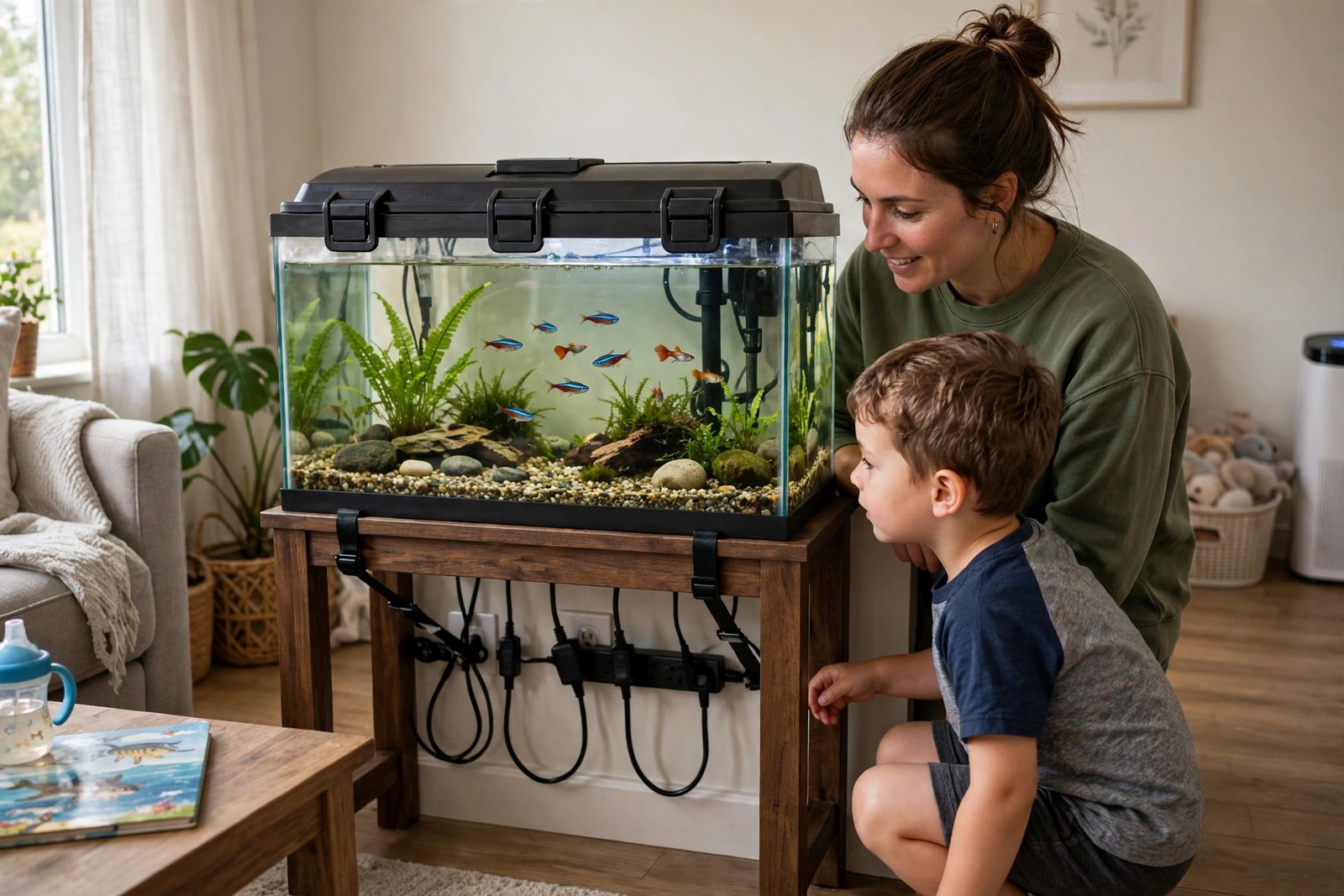
An aquarium combines the three things that draw a small child and endanger both child and fish: water, glass, and electricity. Childproofing it properly is a layered job, not a single purchase. Work through the lid, the stand, the cables, and the cupboard of supplies, then finish with the household rule that holds the whole system together on an ordinary busy day.
Start With the Lid and the Stand
Fit a lid that latches or locks and that a child cannot lift, slide, or push a hand under. An open-top tank invites thrown toys, poured juice, and a climbing child leaning on the rim, and even a well-meant handful of cereal can foul the water badly enough to harm fish. Keep the feeding hatch closed between meals, and feed the fish yourself or hand a measured pinch to an older child rather than leaving the food tub within reach.
Set the tank on a proper aquarium stand, level and rated for the full weight of water, gravel, and glass, which is far heavier than the empty tank suggests. Anchor the stand to the wall where tipping is possible, check that the tank does not rock or slide when you press the rim firmly, and never place an aquarium on a dresser, a bookshelf, or a wheeled trolley that a child can pull, climb, or move. Position the whole setup where a running child cannot collide with it at full speed, away from the swing of doors.
Make the Electrics Boring
Water and electricity meet behind every aquarium, so give the cables the same attention as the glass. Arrange a drip loop on every cord: the cable should dip below the socket before rising to it, so water running down the cord drips off the low point instead of reaching the plug. Fit socket covers on unused nearby outlets, keep power strips off the floor and away from splashes and drips, and route cords where small fingers cannot grab and pull a heater or light fitting into the tank. Unplug equipment before you put your own hands in the water for maintenance, and make that step a habit children see you follow without exception.
Lock Away Food, Treatments, and Tools
The supplies around a tank are sized exactly right for small hands. Move all of the following into a latched or high cupboard:
- Fish foods, which a generous child can empty into the tank in one shake
- Water conditioners, treatments, and test-kit reagents, which are chemicals and must never be tasted
- Nets, algae scrapers with blades, and siphon tubes that start by mouth in older kits
- Loose filter media, carbon, and spare heaters with glass tubes that break
Rinse your own hands after handling treatments, and wash a child's hands after any supervised tank job, because pond and tank water, fish food, and chemical residues do not belong on fingers that go straight into mouths.
Teach the Rule, Give a Job
Tell children plainly and repeatedly that hands stay out of the water and that nobody taps the glass, because tapping that feels gentle to a child arrives as a shock to the fish. Then give curiosity a legal outlet: counting the fish at feeding time, spotting a named snail, or holding the torch during an evening look at the tank. A child with a watched job guards the rule instead of testing it. Agree the same wording and the same limits with every adult and babysitter, so a grandparent does not lift a toddler up to pat the water as a treat.
Revisit the setup as your child grows, because a latch that defeats a two-year-old merely puzzles a determined five-year-old, and a stool that appears beside the tank changes every calculation overnight. KinsLe Family Sharing gives relatives you pick access to its profile, for a relative enforcing the hands-out, no-tapping rule with a visiting child.