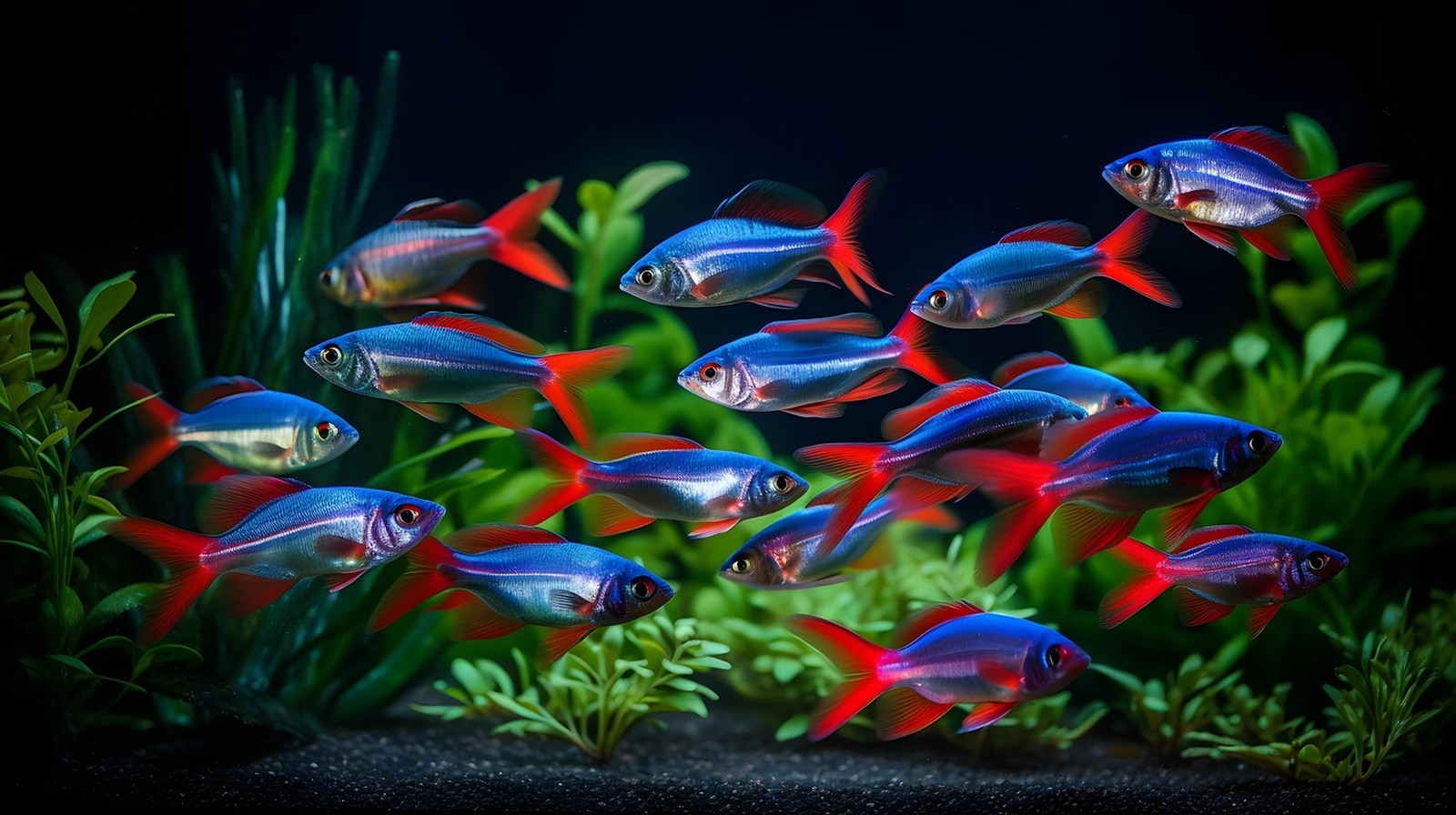
Background and substrate colour look like decoration choices, and they are, yet they also change how your fish look and how secure they feel. Fish adjust their own colouring to their surroundings, reflections on bare glass unsettle shy species, and bottom-dwelling fish spend their lives in direct contact with the substrate you choose. Decide both colours from the fish outward, before the tank is filled, because changing substrate under water, livestock, and planting is a disruptive job nobody enjoys.
Why Dark Backgrounds Work So Well
A black or deep blue background does three useful things at once. It throws pale, silver, red, and neon-coloured fish into sharp relief, so the fish become the brightest objects in the tank. It hides the cables, filter tubes, and algae film that show glaringly against a light or printed backdrop. And it ends the see-through effect of a bare back pane, where movement in the room behind the tank passes through the fishes' world and startles them. Printed scenic backgrounds can look charming in a shop, yet they date quickly, trap a colour scheme you may tire of, and compete visually with the fish. Plain and dark is the choice experienced keepers return to, in matte black for a gallery look or in deep blue for a sense of water depth.
Fit the background outside the glass, smooth and gap-free, because trapped air bubbles and water streaks between film and glass show as pale patches that spoil the effect you paid for.
Substrate Colour and Fish Colour
Many tropical fish deepen their colour over a dark substrate, because in the wild a pale body against a dark riverbed invites predators, while a pale body against bright sand is camouflage. Tetras, barbs, and many cichlids kept over dark gravel or dark sand typically display richer reds, blues, and blacks than the same fish over white gravel. The fish is not dyed by the substrate; it is relaxing into its full colour because the setting reads as safe.
The rule reverses for fish built for pale ground. Corydoras and other soft-bellied bottom-dwellers sift fine sand for food all day, and pale natural sand suits both their behaviour and their colouring. Light-coloured loaches and fish from bright, sandy habitats likewise look natural over sand tones. Where a community mixes showy mid-water fish with sand-sifting bottom-dwellers, a mid-toned natural substrate in brown or soft grey is the honest compromise, dark enough to settle the swimmers and gentle enough for the sifters.
Texture Matters as Much as Colour
Never let colour override texture for bottom-dwellers. Sharp-edged gravel wears down the delicate barbels of corydoras as they dig, and damaged barbels invite infection. Choose smooth, rounded gravel or fine sand for any tank with bottom feeders, whatever shade you pick. Avoid strongly dyed gravel in lurid colours: the fish vanish visually against it, the colours clash with natural planting, and cheaply dyed coatings can flake. Natural tones also hide waste and mulm between cleans far better than white substrate, which displays every speck and can make a well-kept tank look neglected.
Putting the Combination Together
Choose in this order: substrate texture for the fish that touch it, substrate colour for the fish that live on it, then background colour for the fish that swim in front of it. Test the pairing with a handful of substrate in a white tray under your tank light before you commit a full bag, because colours shift under aquarium lighting and a grey that looks moody in the shop can look washed out at home. Photograph your final combination and note both choices, so a later top-up of substrate matches the original rather than arriving a shade apart.
Recorded choices save arguments when a tank is rebuilt, shared, or handed on, and KinsLe Pet Passport keeps your aquarium's substrate, background, stocking, and care notes together in one portable packet, so the reasoning behind the setup travels with the fish.