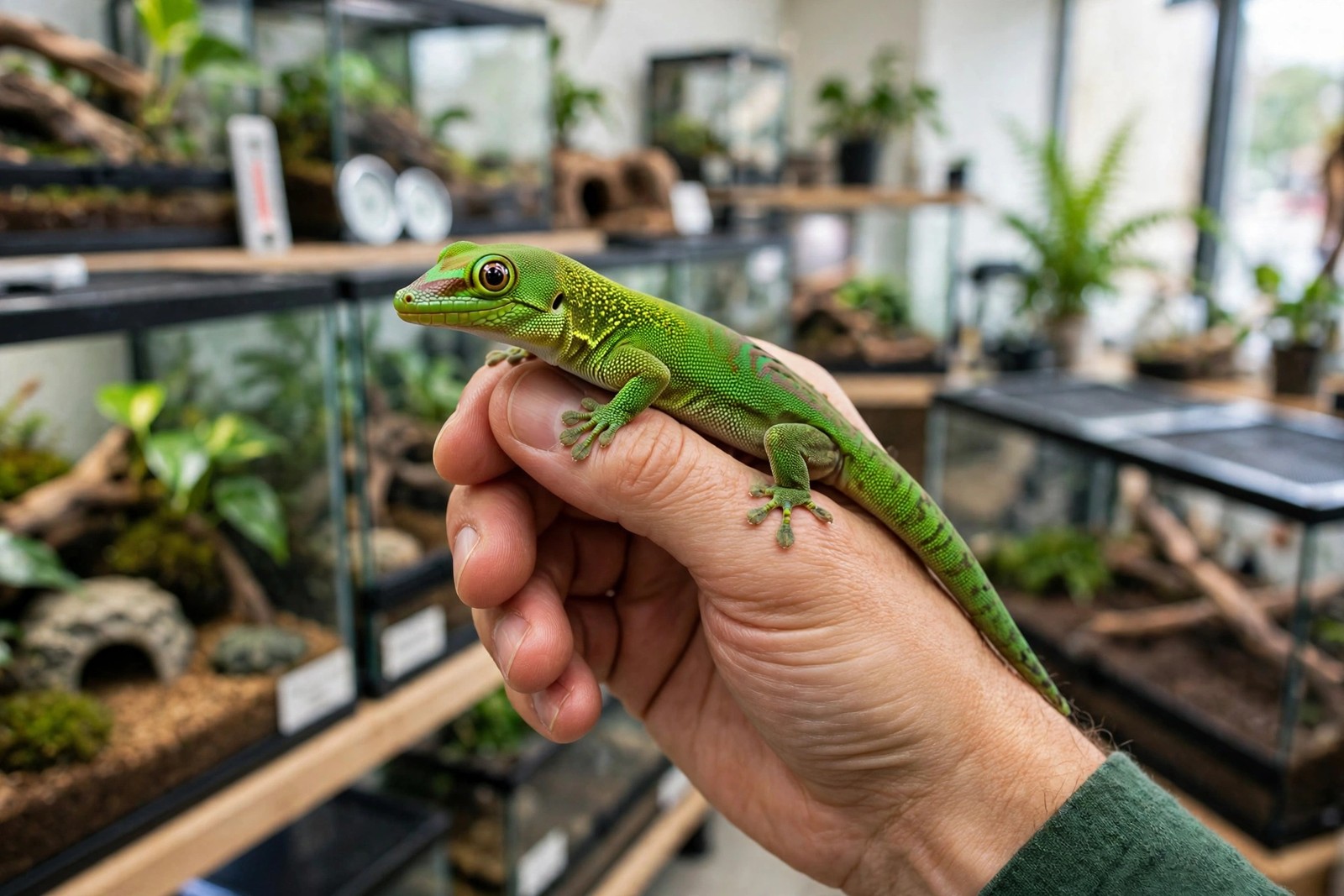
Choosing a healthy reptile is an inspection, not an impression, and it starts before you handle the animal at all. Stand back and watch it in its enclosure first. A healthy reptile for its kind is aware of its surroundings: it tracks movement, holds its body with tone rather than sprawling limply, and moves with purpose when it chooses to move. Then ask to see it up close and work through the same checks in the same order every time. You are looking for an animal whose body tells a consistent story of good feeding, clean housing, and sound health — and you should be willing to walk away from any animal, however appealing, whose story does not add up. A good seller expects these questions and answers them without hurry.
Eyes, Mouth, Vent, and Body
Look at the eyes first: they should be bright and clear, open fully, and free of discharge, crust, or a sunken look. Ask to see the mouth, or watch for the chance when the animal gapes or feeds: the inside should be a clean, even color with no bubbles, no excess mucus, and no cheesy yellow patches, which are signs no healthy mouth carries. Check the vent, the opening on the underside of the tail base: it should be clean and closed, with no swelling, redness, dried waste, or discharge. Then read the body with your hands and eyes together. For its kind, the animal should feel solid and well covered, with no sharp spine ridge standing up along the back and no hip bones jutting through the skin — those sharp landmarks, in a lizard or a tortoise, speak of an animal who has not been eating or absorbing food well.
Shed, Movement, and Response
Skin tells recent history. Look for a complete shed with no stuck patches clinging to toes, tail tip, or around the eyes, since retained shed in those places cuts circulation and signals humidity or health problems in the background. Ask when the animal last shed and whether it came away cleanly. Watch it move across a surface: limbs should work evenly, the body should lift and coordinate, and there should be no trembling, rolling, or persistent tilting. Test the responses appropriate to its kind — a firm, confident grip when a gecko or chameleon holds your finger, active tongue-flicking in a snake exploring its surroundings, a prompt withdrawal when a tortoise's leg is gently touched. If the seller will feed the animal while you watch, take the chance: an animal who notices food, aims well, and eats with enthusiasm has just shown you appetite, vision, and coordination in one demonstration.
Origin, Current Food, and the Quarantine at Home
Ask two questions whose answers shape the first months at home: is the animal captive-bred, and what exactly is it eating now, including how often and whether prey is dusted or gut-loaded? Captive-bred animals generally arrive with fewer parasite burdens and a feeding history in human care, and knowing the current menu lets you keep the diet continuous rather than changing everything on day one. Whatever you bring home, quarantine the new reptile away from any existing animals — separate enclosure, separate equipment, hands washed between animals — for a solid settling period, with a first fecal check and health visit arranged with a reptile veterinarian. Keep every fact you gathered today: origin, feeding, shed dates, the seller's own notes. That documented history is what the Transferrable Profiles feature in KinsLe protects, because the animal's documented history travels with it from seller to you and onward, instead of living in a conversation you had once at a counter. From day one in KinsLe, the Transferrable Profiles record carries this reptile's origin, feeding history, and selection notes forward, ready for any future keeper or veterinarian.