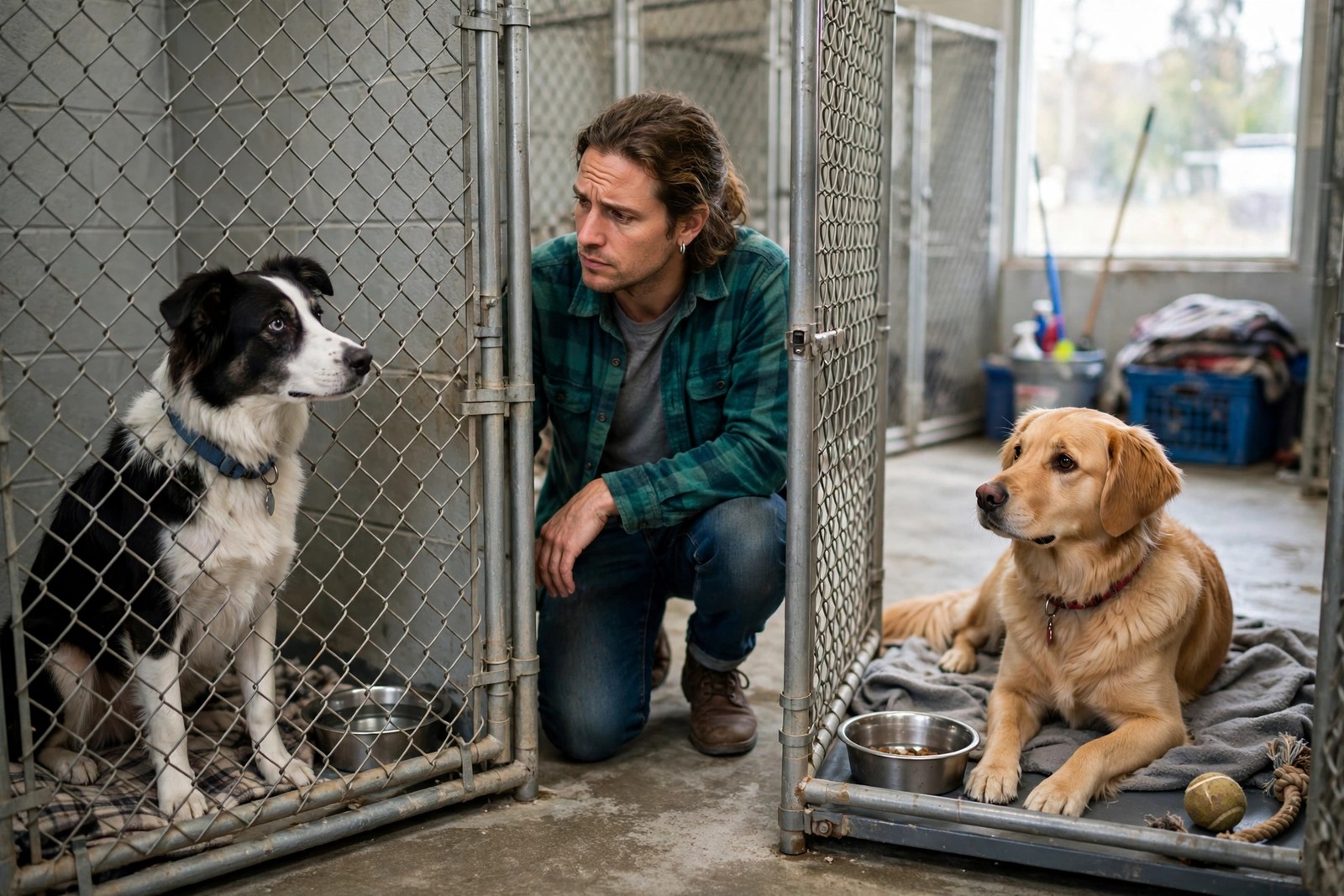
Two good shelter dogs can both feel right in the kennel run and be completely different animals at home, so give the decision more than one meeting. See each dog twice, at different times of day if the shelter allows, and pay most attention to the quiet moments: how each settles after excitement, how each takes a treat, rests, and responds to ordinary handling. Walk both away from the kennels, ask staff about feeding time, cleaning time and closing time, when dogs show their unguarded selves, and then set what you have seen against the life you can actually offer — your hours, your space, your experience, and the worst week you regularly have, rather than your best one.
The Basics First
Fit beats favourites at this stage. A dog whose energy matches your ordinary Tuesday will thrive; a dog chosen for looks or a heartbreaking story, whose needs exceed your routine, becomes hard work for both of you. Weigh adult size honestly if either dog is young, because the animal in front of you is a draft of the dog you will live with for years. Ask for each dog's health record, vaccination history and any behaviour notes the shelter holds, and meet the individual in front of you rather than the breed description — shelter staff who have fed, walked and settled both dogs are often the sharpest guide you will get.
Steps That Make the Difference
Work through the comparison in this order:
- Visit both dogs twice, at different times of day, before deciding
- Watch resting and settling behaviour, not only play and greeting excitement
- Walk and handle each dog away from the kennels
- Ask staff about each dog at feeding, cleaning and closing time
- Compare both against your real hours, space, budget and experience
If anyone else will share the dog's care, bring them to the second visit rather than reporting back. Everyone should meet the dog they are voting on, handle him on the lead, and agree the house approach — cues, rules and who does what — before a name is chosen, because a decision one person made alone gets relitigated at the first chewed shoe.
Keeping It Going
Once you have chosen, expect the first fortnight to teach you what the kennel could not: how he sleeps, what he does at dawn, which noises bother him. Keep the notes from your visits beside what you observe now, because the contrast shows you his settling pattern and flags anything the shelter should hear about while their knowledge of him is fresh. When the choice is made, KinsLe's Transferrable Profiles brings the chosen dog's existing profile across to you — shelter notes, routines and history included — so day one at home builds on everything already learned about him.