
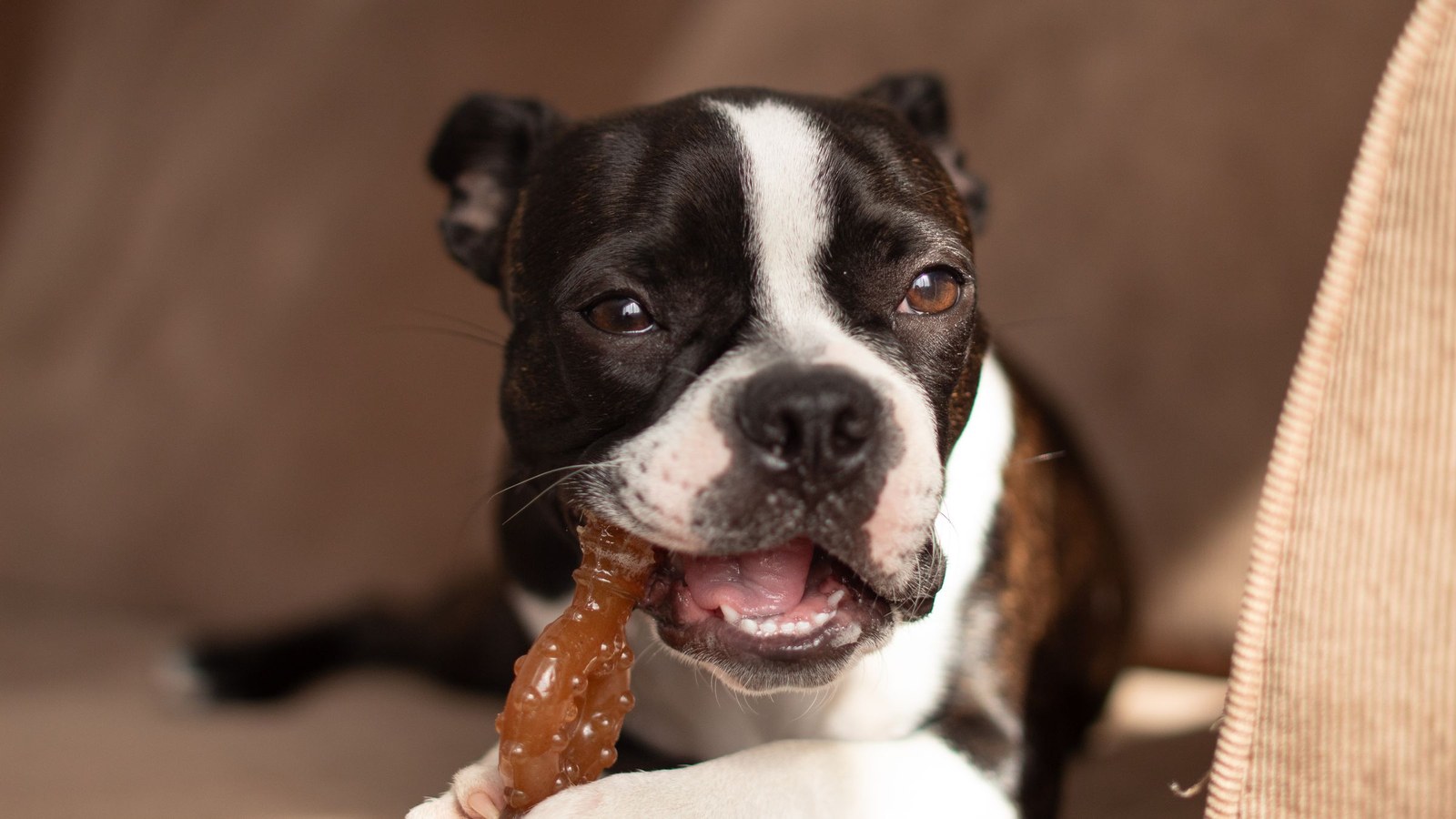
To choose enrichment toys that are safe for your dog, match the toy to your dog's chewing strength, pick sizes too big to swallow, and avoid brittle plastic, small detachable parts, and anything your dog can shred and eat. Then supervise every new toy until you know your dog's style — gentle nibbler, methodical de-stuffer, or power chewer on a mission — because the same toy can be safe for one dog and dangerous for another.
Know Your Dog's Chewing Style First
Toy safety starts with the dog, not the label. Puppies explore with their mouths and will test everything, but their teeth and jaws are still developing, so they need softer options made for puppies, checked often for tears. Gentle adult chewers may happily carry a plush toy for months. Determined power chewers — many bull breeds, Labradors, and terriers fall here — can reduce a standard toy to fragments in minutes and swallow the evidence.
If your dog's goal is always destruction and ingestion, choose accordingly: solid, dense toys designed for strong chewers, sized generously, and food puzzles made from hard-wearing materials. If a toy's packaging says "indestructible," read it as marketing, not a guarantee. No toy is. Your supervision is the safety feature.
What to Look For — and What to Put Back
In the shop or online listing, check for:
- One solid piece, or parts too large to fit in your dog's mouth if separated
- Non-toxic materials from a reputable maker, with clear sizing guidance
- A size up from what you think you need — toys should not fit wholly inside the mouth
- Food toys and lick mats that are dishwasher-safe, so bacteria do not build up in crevices
Put back brittle hard plastics that can crack into shards, toys with glued-on eyes, ribbons, bells, or squeakers your dog will excavate and swallow, and anything heavily frayed. Be cautious with very hard chews for aggressive chewers — teeth can fracture on items that do not give at all, and your veterinarian can advise what suits your dog's teeth. Rawhide and cooked bones carry well-known risks of blockages and splintering, so many vets steer owners toward safer alternatives; ask yours what they recommend for your dog.
Supervise, Inspect, and Retire on Time
Introduce one new toy at a time and watch the first sessions closely. Does your dog settle to chew, or immediately try to rip chunks off? Does the toy hold up, or is it dented, cracked, or losing pieces after ten minutes? Take it away between sessions until you trust the combination of that toy and that dog.
Inspect toys weekly — more often for power chewers. Run your fingers over edges, check seams on fabric toys, and look inside food toys for damage or stuck residue. Retire anything cracked, sharp, fraying into strings, or small enough now to be swallowed. String and fabric fragments are a particular hazard because they can cause serious intestinal problems if eaten.
If you suspect your dog has swallowed toy pieces, or you see vomiting, drooling, loss of appetite, straining, or a painful belly, contact your veterinarian promptly rather than waiting to see. Keep the toy packaging so you can describe exactly what is missing.
A Simple Rotation and Safety Routine With KinsLe
Safe toys stay safe partly through housekeeping: rotating a small set keeps interest up and spreads wear, and regular checks catch damage early. Kinny, the built-in assistant in KinsLe, can remind you to rotate and inspect toys on a regular rhythm, so worn items get retired in time instead of lingering in the toy box until something breaks off. A quick weekly nudge turns an easy-to-forget chore into a habit.
Pair those reminders with your own two-minute hands-on check, and enrichment stays what it should be — fun that is also safe.
Kinny on KinsLe answers follow-up questions about sizing a puzzle toy for a power chewer or judging when cracked plastic becomes unsafe, with each reply drawn from the KinsLe Answers library.