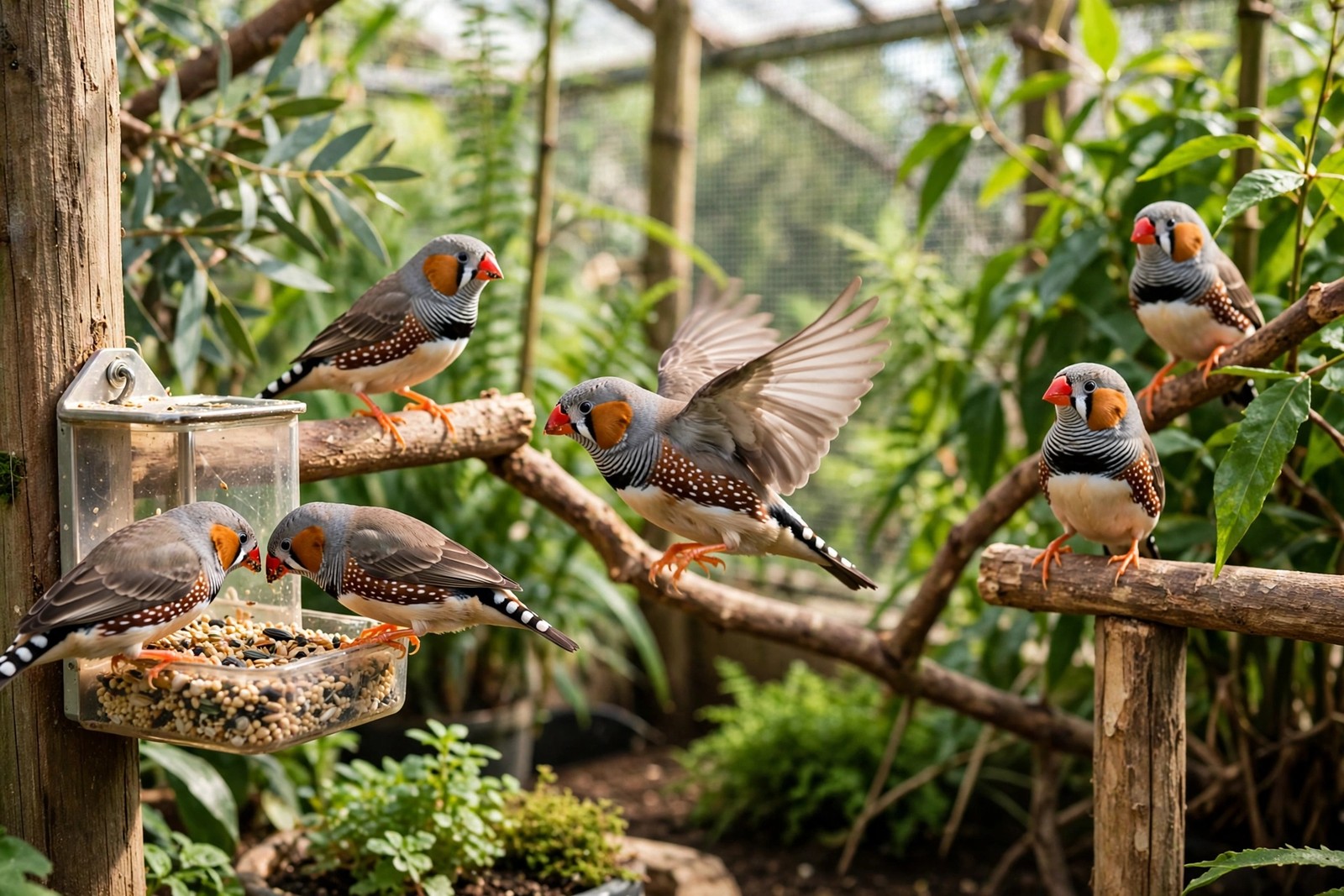
The beginner's instinct in a busy aviary is to catch birds and inspect them in the hand, one by one. Resist it. Netting and handling stresses every bird in the enclosure, exhausts the very birds you are judging, and teaches you less than patient watching does. Finches are small, fast, and honest in a group setting: a healthy bird cannot fake energy, appetite, or clean breathing for long, and a sick one cannot hide fluffed stillness among active companions.
Watch the Whole Group From Outside
Arrive when the aviary is active, usually morning, and watch for a good stretch before pointing at any individual bird. Scan the group as a flock first. Healthy finches move: short, direct flights between perches, constant hopping, bathing, preening, and busy work at the seed and water stations.
Follow one finch for a full minute: does it feed eagerly and repeatedly, hold its own at the seed dish without being bullied away, and fly strongly the full length of the aviary when the group startles? A bird who is always the one left sitting while others feed, or who gets displaced from every perch, is telling you something about its strength or social standing, and neither version belongs on your list until you understand why.
The Healthy Signs to Look For
Up close, still without catching, look for bright eyes that are fully open, round, and clear, with no swelling, discharge, or half-closed drowsiness during active hours. Plumage should lie smooth and tight to the body, glossy rather than dull, with no bald patches beyond a normal molt and no droppings staining the feathers. Check the vent as birds turn and preen: it should look clean and dry, because a soiled vent points to digestive trouble you do not want to import.
Open-beak breathing, audible clicking or wheezing, and a tail that bobs with every breath are all reasons to walk away from that bird and look harder at the health of the whole group. The floor test matters most of all: a finch sitting fluffed on the floor or huddled on a low perch, separated from the group, is the classic picture of a bird conserving energy because it is unwell, whatever the seller says about it resting.
Catch Only the Birds You Chose
Once you have chosen, have only those birds caught. Watch them being caught if you can, note their markings in detail before the net comes out, and double-check each bird in the travel box against the bird you watched, because in a group of near-identical finches, substitutions happen by accident as easily as by design.
At home, house them in their quarantine cage with food and water placed obviously, then leave them in peace to feed and recover before any handling, photographing, or showing off to visitors. The first day's job is calories, water, and sleep, in that order.
Quarantine Before Mixing
Quarantine new birds before mixing them with an established flock; it is standard keeper practice and the cheapest insurance in the hobby. House newcomers separately, ideally in a different room, for a few weeks, tend to them after your established birds, and wash your hands between cages. Watch the quarantine cage with the same checklist you used in the aviary: appetite, droppings, breathing, energy, and plumage tell you within days whether a bird brought a problem home with it.
Record where each bird came from, when it arrived, what it eats most readily, and any observation worth remembering, because a finch's history is otherwise gone the moment it changes hands, and these small birds pass between keepers often across a lifetime of breeding, showing, and rehoming. When quarantine ends clean and the new birds are eating and flying strongly, introduce them gradually, watch the flock dynamics for bullying at the seed dish, and enjoy the group you chose with your eyes first. As your flock grows, KinsLe keeps a Transferrable Profiles entry for every finch, so source and health notes stay attached wherever each bird goes next.