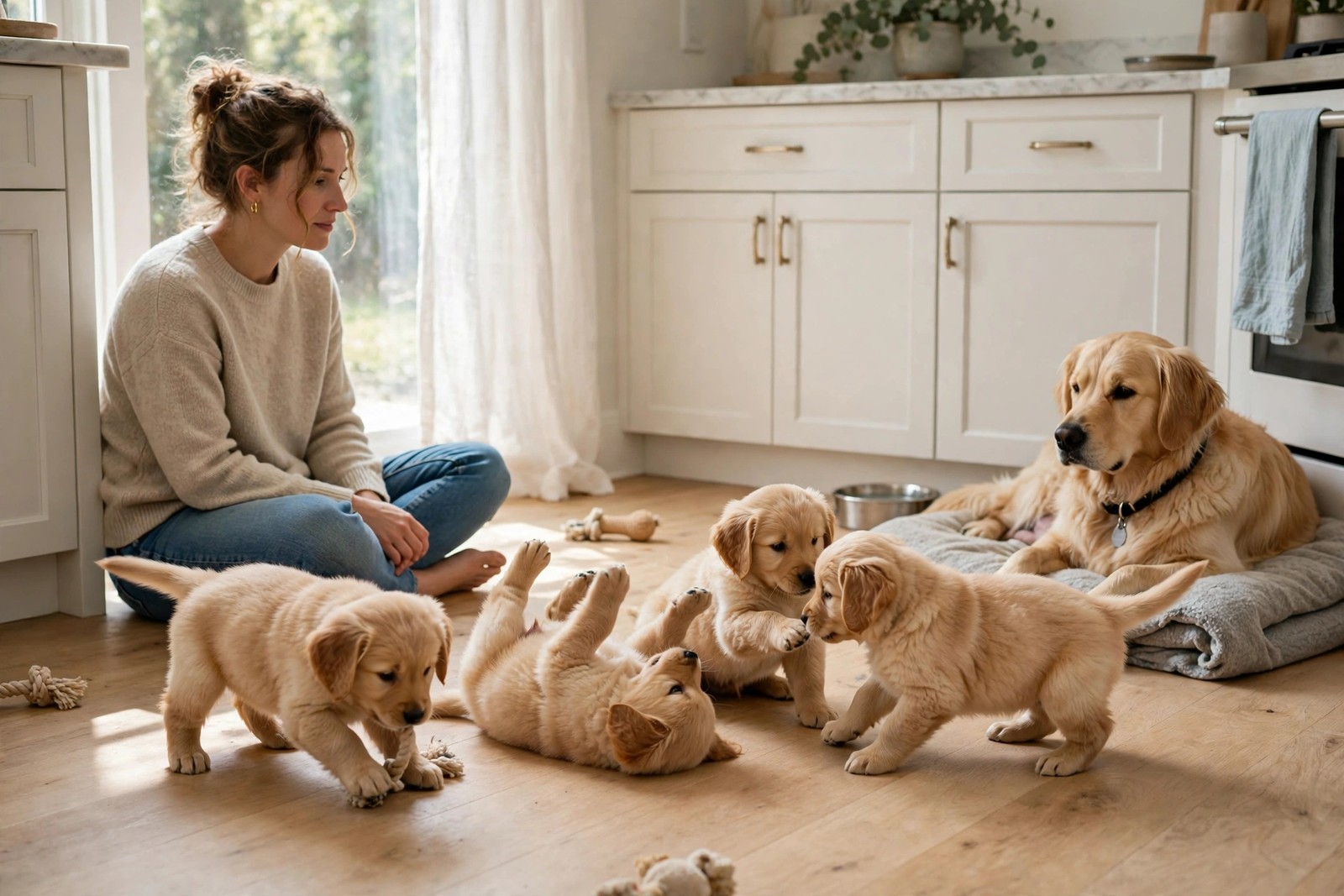
Choosing well is mostly observation. A litter at six to eight weeks old is a small society with visible characters in it, and an hour of watching tells you more than the order in which puppies happen to reach your shoe. Sit on the floor, let the litter carry on around you, and note how each puppy explores, plays, startles, recovers, and rests before you fall for a face.
The Temperament to Look For
For most households, the puppy in the middle of the range is the soundest bet. This puppy trots up to investigate a new person or a dropped set of keys, may startle at a sudden sound but recovers within moments and goes back to playing, wrestles with littermates without relentlessly flattening them, and settles into a nap when the game winds down. The boldest puppy in the litter — first out, first onto your lap, last to back off — often grows into a confident, pushy adolescent who needs an experienced, structured home. The puppy who hangs back, hides behind the bed, or stays pressed to the wall is not automatically a gentle soulmate either; shyness at this age can develop into nervousness that takes patient, skilled work. Neither extreme is a mistake for the right owner, but a first-time owner with children usually wants the puppy between them.
Health and Condition Checks You Can Do on the Spot
Hold your shortlisted puppy and look closely. Eyes should be bright and clear with no discharge, ears clean inside with no sour smell, and the coat full and clean with no flaky patches or flea dirt at the base of the tail. The puppy should breathe quietly, move freely without limping or bunny-hopping, and feel solid rather than bony, with a soft belly that is not tightly bloated. Watch the litter's pen as well: formed stools, clean bedding, and puppies who have plainly been handled and raised around household sounds all say good things about the start they have had. Ask to see the mother — her temperament and condition are a useful preview of the adult dog your puppy may become.
Use the Breeder as the Expert Witness
A responsible breeder has watched these puppies every day since birth and knows which one is the whirlwind, which one is the thinker, and which one wilts without company. Describe your real life honestly — working hours, children, other pets, how much training experience you have — and ask which puppy they would send to that home. Breeders who match puppies to households rather than handing them out by colour or by who asked first are doing you a service, and many will steer you away from a puppy you fancied toward a better fit. Treat that steering as a good sign, not a sales tactic.
Two Traps to Avoid
The puppy who 'chose you' may simply be the one who was awake, hungry, or nearest the gate; puppies cycle through sleep and play quickly, so a single visit can mislead, and a second visit at a different time of day gives a fairer picture. And a one-off test — rolling a puppy onto its back, say — tells you far less than the pattern of behaviour across your whole visit.
When the choice is made, KinsLe's Transferrable Profiles lets your breeder transfer your puppy's profile to you with its vaccination record, feeding routine, and early notes intact, so your puppy's history arrives home with it.