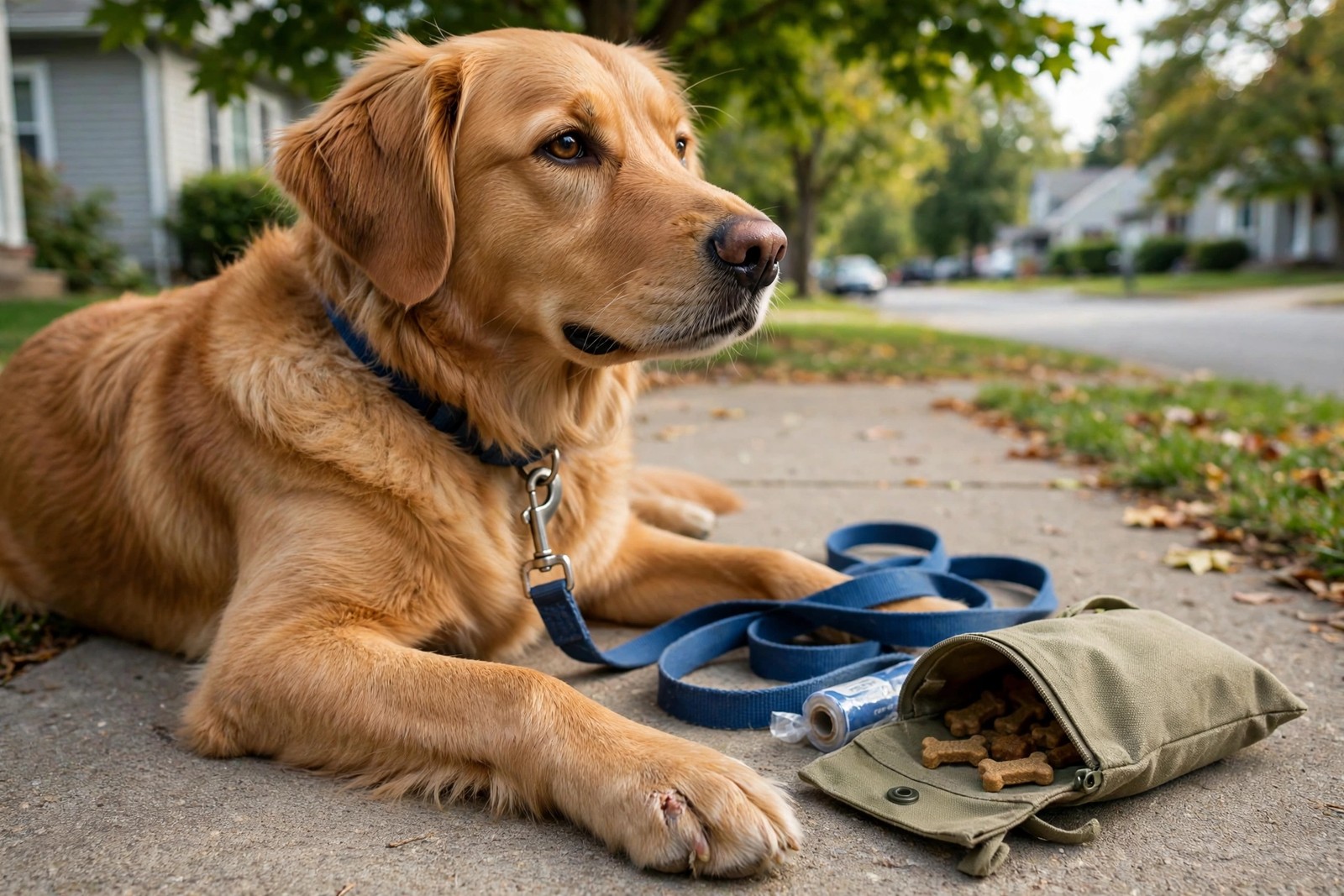
A paw scrape picked up on gravel or rough ground is a familiar minor injury in an active dog's life. Shallow grazes that have stopped bleeding usually need only careful cleaning and protection while the skin settles. The owner's real skill lies in judging which wounds stay in that minor category and which ones cross the line into professional care, because paws carry weight, touch dirty ground, and hide damage between the toes.
Cleaning the Scrape Step by Step
Settle your dog somewhere with good light and have a second person steady her if she is fidgety. Look at the whole paw first, top and underside, and spread the toes to check between them for grit, small stones, or a second cut hiding out of sight. Rinse the scrape with clean lukewarm water, letting a gentle flow wash dirt out rather than scrubbing with cloth or cotton, since scrubbing pushes debris deeper and restarts bleeding. If dirt clings after rinsing, rinse again for longer rather than rubbing harder. Pat the area dry with a clean cloth or gauze once the water runs clear. Avoid applying household antiseptics, creams, or anything from your own medicine cabinet unless your vet advises it, because products made for human skin can sting, damage healing tissue, or harm a dog who licks them off.
Protecting the Paw While It Settles
A dog's tongue is the main threat to a healing scrape. Licking keeps the surface wet, reopens edges, and introduces bacteria, so prevent it with a protective collar or a fitted covering whenever you cannot supervise directly. Keep walks short and on clean, dry surfaces while the scrape settles, and cover the paw for outdoor trips if the ground is wet or muddy. Rinse and pat dry again after walks during the first couple of days if the paw gets dirty. Check the scrape daily in the same light, noting whether the surface looks drier and calmer, and whether your dog bears weight on the foot as willingly as on the others.
Wounds That Need Professional Care
Several findings move a paw wound out of home care. A cut that is deep, gaping, or still bleeding after gentle pressure and rest needs a vet, as does any wound where you can see tissue below the skin surface. Bite wounds deserve professional assessment however small they look, because teeth drive bacteria deep through a puncture that seals over at the surface. Damage on or near a joint, a wound with something embedded in it, or a paw that swells, heats up, discharges, or develops a smell also belongs in a clinic. Lameness that persists, reluctance to walk, loss of appetite, or a dog who becomes quiet and feverish alongside a paw wound all raise the urgency. A scrape that shows no improvement across a few days of careful home care has also earned an examination, since slow healing sometimes signals a deeper cause.
Watching the Healing Honestly
Improvement looks like a dry, tidy surface, edges drawing together, and a dog walking comfortably without turning to lick at every pause. Take a dated photo on the first day and another whenever you check, because comparing photographs exposes slow deterioration that daily familiarity forgives. Note anything you applied, any covering used, and how she walked each day. That simple log, offered at a vet visit, tells the clinician how long the wound has had to heal and what has touched it, both of which shape treatment choices.
Preventing the Next One
Once healed, note where the scrape happened. Broken glass on a regular route, rough frozen ground, or a gritty surface she crosses daily may call for a route change or protective boots for that stretch. Inspect paws briefly after walks as a standing habit, since the thirty seconds spent looking is what turns the next injury into a same-day rinse rather than a problem discovered by limping.
Recording the injury date, the cleaning you did, and daily healing notes in KinsLe's Pet Passport builds a wound history your vet can read in seconds if this paw, or another one, ever needs professional care.