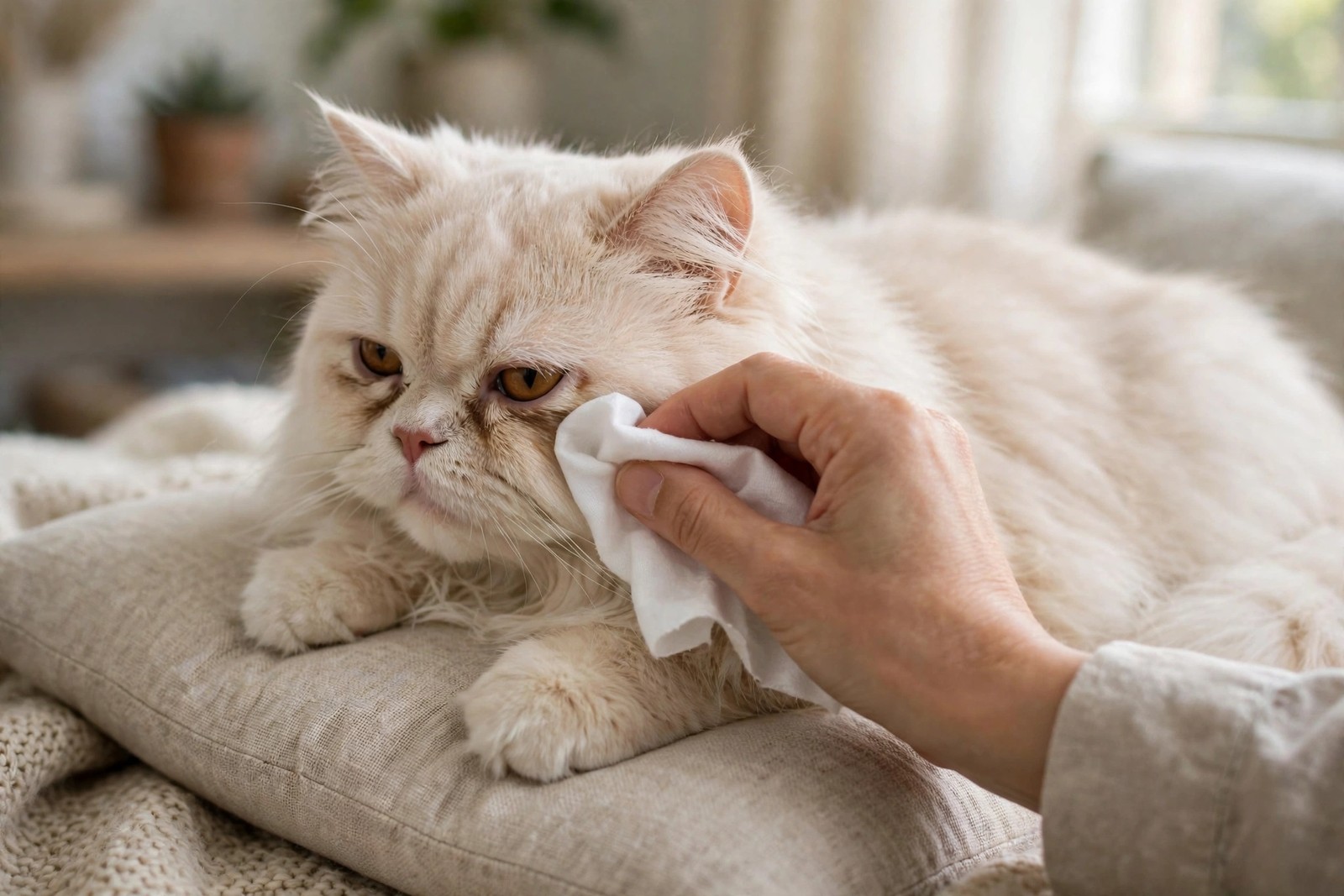
Tear staining is the reddish-brown track that runs from the inner corner of a cat's eye down the side of the nose. The marks themselves are usually harmless dried tears, but the skin underneath stays damp and can get sore if discharge is left to crust. A short daily wipe, done the same gentle way, keeps the area clean while you watch for the changes that actually need a vet.
Why the Stains Form
Tears normally drain through small ducts at the inner corner of the eye into the nose. When more tears are produced than the ducts carry away, or the ducts drain slowly, tears spill onto the fur instead and oxidise to that rusty colour. Flat-faced breeds such as Persians and Exotics are especially prone, because their facial shape makes drainage less efficient, and pale coats show every mark. Allergies, dusty litter, a mild irritation or a shallow duct can all increase tearing, which is why a sudden change matters more than the stain itself.
The Cleaning Method, Step by Step
Wash your hands, then moisten a soft cloth, gauze square or cotton pad with warm — not hot — water. Hold the damp cloth gently against the stained area for ten to twenty seconds first: softening dried discharge before you wipe is the step that prevents sore skin, because crust that is picked or scrubbed off pulls at the delicate skin under the eye. Once it has softened, wipe slowly downward and outward, following the direction the tears run, and always away from the eyeball itself. Use a clean section of the cloth, or a fresh pad, for the second eye, and never use the same pad on both. Plain warm water is enough for routine cleaning; skip human eye drops, make-up removers and scented wipes entirely, and stop if your cat squints, flinches or pulls away repeatedly.
How Often, and How to Make It Easy
Once a day suits most cats, with a second quick wipe in the evening for heavy tearers or flat-faced breeds. Build it into an existing calm moment — after a meal or during an evening lap session — and keep each session under a minute, finishing with something your cat likes. A cat who is held firmly and dabbed at while already stressed learns to vanish at the sight of the cloth, so work at her pace over the first week, even if the first few attempts only manage one eye.
When Tearing Needs a Vet, Not a Wipe
Cleaning manages the stain; it does not treat a cause. Book a vet appointment if tearing suddenly increases, affects only one eye, or comes with squinting, redness, swelling, cloudiness, pawing at the eye, or discharge that turns yellow or green. Those signs can point to a blocked tear duct, conjunctivitis, an ulcer or something lodged in the eye, and eye problems in cats can worsen quickly, so do not wait them out. A vet can check whether the ducts drain properly and whether the eye itself is healthy. Noting when the tearing changed, and whether the daily wipes are keeping up, gives that appointment a head start — and keeping the wipe on a shared schedule in KinsLe's Care Teams means a partner or sitter follows exactly the same gentle routine while you are away.