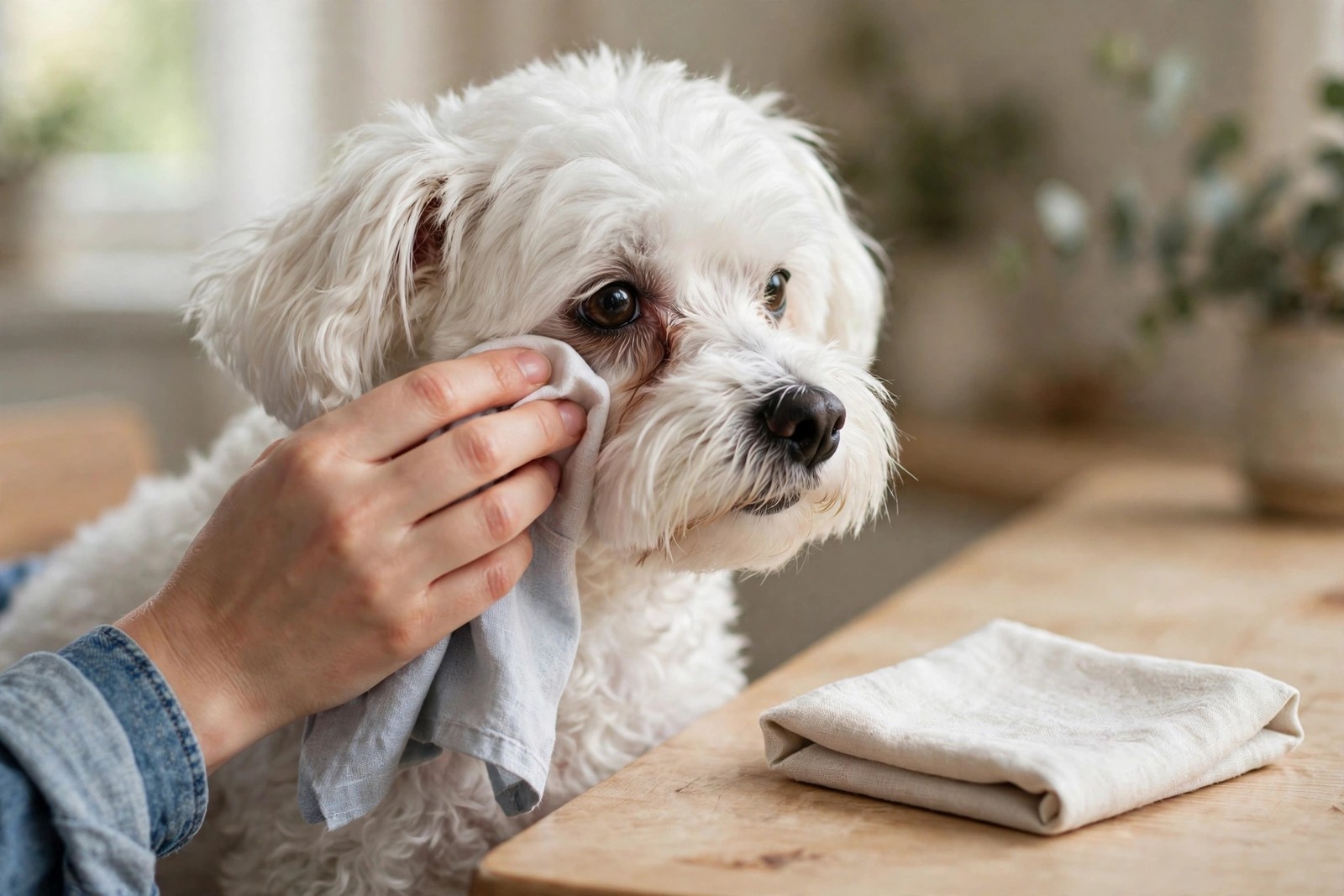
Clean tear staining cosmetically and gently: wipe under each eye daily with a clean cloth dampened with plain water, use a fresh cloth for the second eye, pat the area dry, and keep the hair beneath the eyes trimmed short. On a white coat the rusty-brown track under the eye looks dramatic, yet the mark itself is usually dried tear moisture oxidising on pale hair, and the upkeep is laundry-level simple. What matters is separating that cosmetic routine from the shorter list of eye changes that deserve a vet, and doing the daily wipe well enough that wet hair never sits against the skin long enough to irritate it.
The daily wipe, done properly
Soften the area first: hold the damp cloth against the tear track for a few seconds so dried residue loosens, then wipe downward and outward with light strokes rather than scrubbing back and forth against delicate skin. Use one cloth for the first eye and a fresh cloth for the second, every time, because wiping across both eyes with the same cloth carries discharge from a troubled eye into a healthy one. Pat the fur dry afterwards, since a track left wet re-stains faster and keeps the skin beneath damp. If crusting has built up over several missed days, repeat the soften-and-wipe cycle over two sessions rather than picking at it, and never pull dried matter away from the eyelid margin.
Hair, beards and moisture management
Short hair under the eyes gives tears less to soak into and less to stain, so ask your groomer — or carefully trim yourself with round-tipped scissors while your dog is calm and still — to keep the tear-track area neat between grooms. The same moisture logic explains beard staining on light-coated dogs: water and food held in a wet beard mark pale hair the same way tears do, so blot the beard dry after drinking and meals and wash food residue out of it at the weekly bath. Shallow water bowls that wet less beard, and a quick towel kept by the water station, reduce the daily load more honestly than any whitening product. None of this changes how many tears your dog produces; it simply stops ordinary moisture from sitting on white hair long enough to leave its colour behind.
Causes that belong to the vet
Book a veterinary check when tearing is new, clearly worse, or present in one eye only, because asymmetry points to a local cause a vet should examine. Squinting, pawing at the eye, redness of the white of the eye or the eyelids, cloudiness, a swollen lid, or discharge that is thick, yellow or green all belong on that same list, as does staining that suddenly deepens after a settled period. Behind such signs a vet may investigate possibilities such as blocked tear drainage, irritation from lashes or hair touching the eye, or an eye surface problem — possibilities for examination, not conclusions to draw at home. Take a phone photo of both eyes in daylight before you go, since a dated image helps the vet judge whether tearing is progressing.
What to keep away from the eye
Resist the cupboard of stain remedies: bleaching products, peroxide-based mixes, oils and herbal pastes have no place that close to a working eye, and a cosmetic mark never justifies risking the eye itself. Ask your vet before using any tear-stain product regularly, including wipes sold for the area, and stop anything that leaves the skin red or your dog rubbing her face. Photograph the tear tracks monthly from the front in the same light; a stable, symmetrical picture supports the cosmetic reading, while change in the photo is your cue to revisit the vet list above. Noting that monthly photo beside each day's wipe entry in KinsLe under Care Teams gives the routine a memory, letting you show the vet a season of staining at a glance instead of reconstructing it from guesswork.