
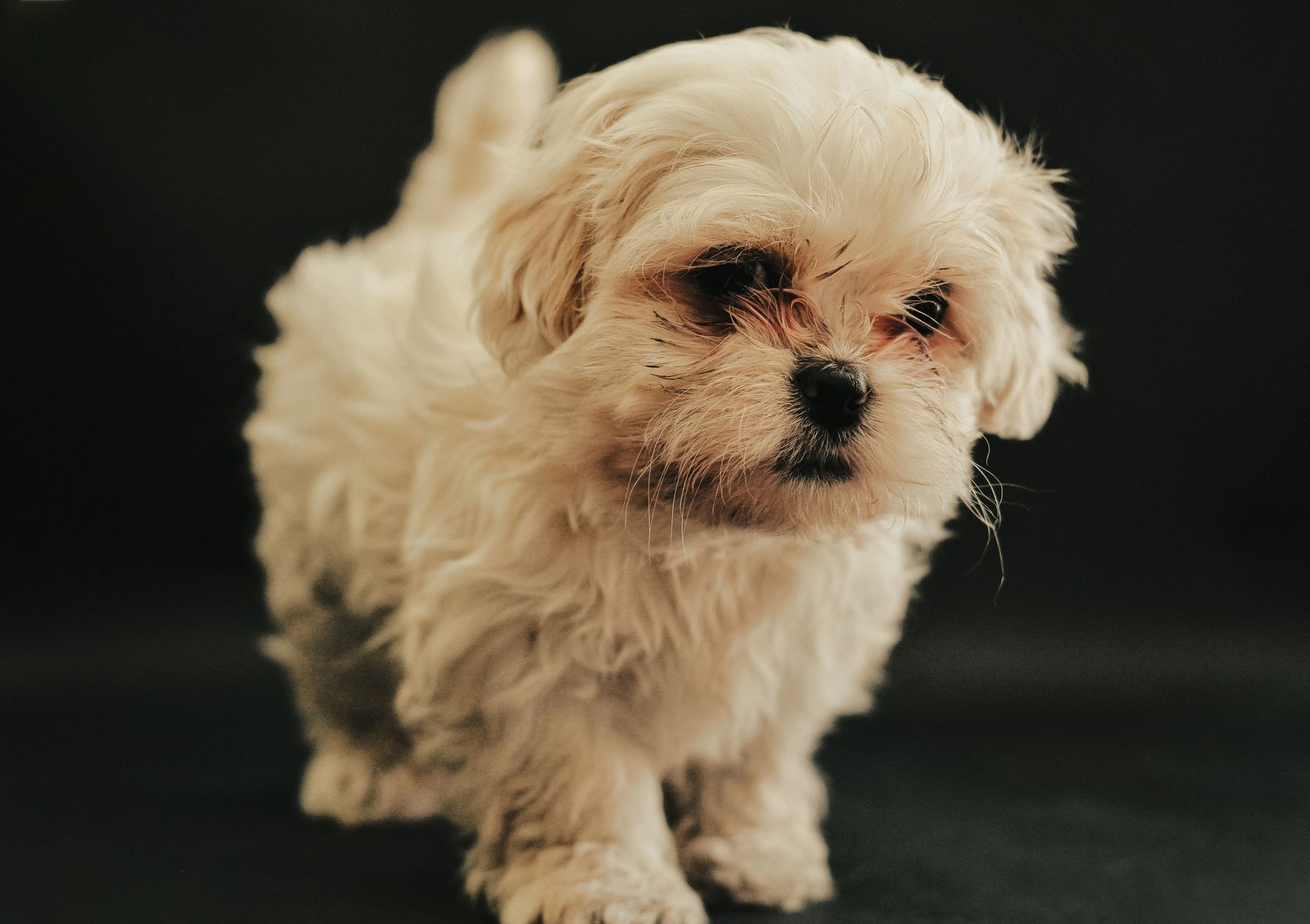
The safest way to clean tear stains is also the simplest: use a soft cloth dampened with warm water, or a veterinarian-approved eye wipe, and gently wipe the damp fur under each eye once a day. Use a clean section of the cloth — or a fresh wipe — for the second eye, so you never carry grit or discharge from one eye to the other. That daily habit, done calmly and consistently, is what actually fades most staining over time.
Why Tear Stains Happen in the First Place
Tears are supposed to drain through tiny ducts into the nose, but in many dogs some of that moisture spills onto the fur instead. Flat-faced breeds like Shih Tzus, Maltese, Poodles, Bichon Frises, and French Bulldogs are classic tear-stainers because of their face shape and shallow eye sockets. Puppies who are teething, dogs with allergies, and dogs with eyelashes that grow toward the eye can all water more than average, too. The moisture itself is clear, but as it sits on light-colored fur it oxidizes and interacts with natural yeast and bacteria on the skin, leaving that familiar reddish-brown rust color. White and cream coats simply show it more — dark-coated dogs tear just as much, you just cannot see the stain.
A Gentle Daily Cleaning Routine
Make it part of an existing habit, like right after the morning walk, so you never skip it:
- Wash your hands first — eyes are an easy place to introduce bacteria.
- Dampen a soft cotton pad or microfiber cloth with warm (not hot) water.
- Stroke downward and outward under the eye, following the direction the tears run. Never press on the eyeball itself and never scrub.
- Use a fresh pad for the other eye.
- Pat the area dry. Fur that stays damp all day stains faster and can irritate the skin underneath.
- Reward your dog with a small treat so the routine stays a pleasant one.
If your dog wriggles, keep sessions to a few seconds and build up. A puppy who learns this early will usually sit through it happily for life; an adult new to the routine may need a week of treat-paired practice first.
What to Avoid Around the Eyes
Never use harsh household cleaners, hydrogen peroxide, bleach-based whitening products, or human makeup removers near your dog's eyes — the eye surface is delicate and these can cause real injury. Be equally cautious with internet-famous home remedies and oral "stain remover" supplements: some contain ingredients inappropriate for long-term use, and none fix the reason the eyes are watering. Keeping facial fur trimmed short around the eyes, if your groomer recommends it, reduces the wick that holds moisture against the skin.
When Staining Is a Vet Question, Not a Grooming One
Book a veterinary visit if the staining suddenly gets much worse, only one eye is affected, the discharge turns yellow or green, your dog is squinting or pawing at the eye, or the skin under the eye looks red, sore, or smells yeasty. Blocked tear ducts, eye infections, ingrown eyelashes, and allergies all need a professional diagnosis rather than a stronger wipe, and your veterinarian can check whether the tearing has a treatable cause before you invest in stain products.
Keeping That Delicate Fur Tidy With KinsLe
At a full groom, a good groomer will carefully trim the eye-area fur and check that nothing is irritating the eyes — and KinsLe's Pet Services Directory helps you find local groomers you can ask to keep that area tidy at every appointment, so the daily wiping you do at home stays easy. Pair a tidy trim with your gentle routine and most staining stays light and manageable. Pet Services Directory on KinsLe helps you locate a nearby groomer who will trim the fur beneath both eyes at every visit, keeping home wiping simple.