
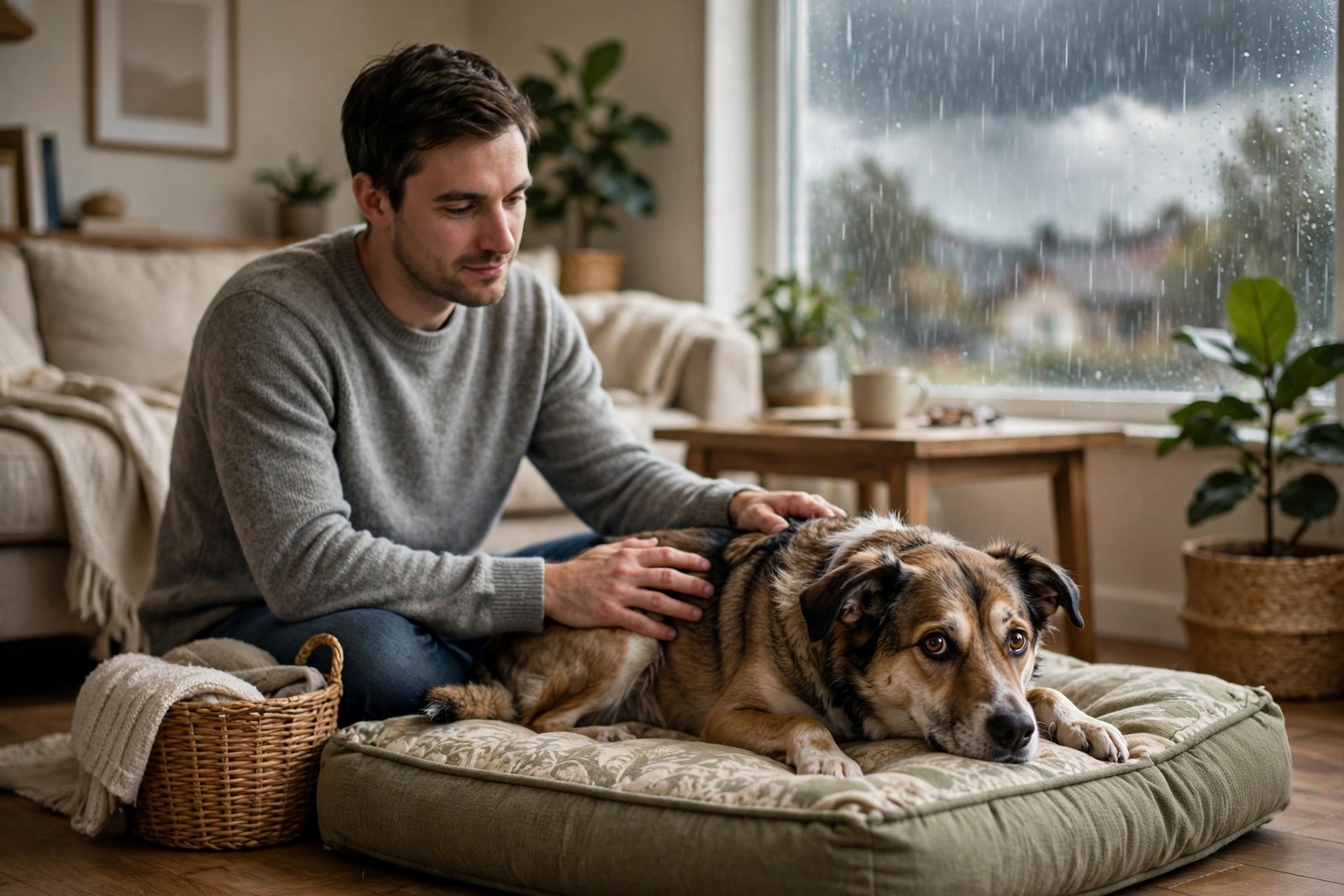
The most comforting thing you can do for your dog during a thunderstorm is let him choose where he feels safest, stay calmly nearby, and keep the routine as normal as possible. You do not need to fix the fear in one storm — you need to make the hours feel survivable, and repeat that same reassuring pattern every time.
What Storm Fear Really Looks Like
Some dogs are obvious: pacing, panting, drooling, whining, and gluing themselves to your legs. Others go quiet and disappear — under the bed, into the bathroom, behind the toilet where pipes and small spaces seem to dampen sound and static. Both are fear. A dog who “just sleeps through it” in the laundry room may have found his own coping spot, not proof he is fine being dragged out.
Storm anxiety often builds before you hear thunder. Dogs can sense pressure changes, smell rain on wind, and hear distant rumbles long before we do. If your dog starts shadowing you on a darkening afternoon, that early clinginess is information, not manipulation.
Puppies and newly adopted dogs are still learning whether your home is safe when the sky gets loud. Seniors can develop storm fear they never had before, especially if hearing, vision, or joint pain makes them feel more vulnerable.
A Comfort Plan That Helps
Build a storm station in advance in the place your dog already picks:
- A bed or blanket that smells like home, in an interior room with fewer windows
- Water, a long-lasting chew or lick mat if he will take it, and a favorite toy
- Background sound — TV, radio, or a fan — started before the storm peaks
- Blinds closed against lightning flashes
Sit with him if he seeks company, with slow, boring petting rather than excited soothing. Talk in your normal voice about normal things. Reward the small calm moments — a sigh, a head resting down, choosing the bed — with quiet praise or a treat, so calm behavior gets noticed without turning the storm into a party.
Some dogs relax in a snug-fitting anxiety wrap; others hate anything extra on their body. Try one on a calm day first. Never force cuddles, hold a dog who wants to hide, or scold pacing and barking — punishment adds pain to fear and teaches him storms predict trouble from you, too.
What Not to Do, and When to Call the Vet
Avoid opening doors for a “quick look outside,” and keep exterior doors secure — a startled dog can bolt when lightning cracks close. Skip unproven calming products that promise instant miracles, and never give your dog any medication or supplement meant for people unless your veterinarian has specifically directed it.
If storms bring true panic — self-injury, chewing doors, urinating despite being house-trained, or hours of inconsolable distress — that is a veterinary conversation, not a training failure. Your vet can rule out pain and discuss a longer-term plan tailored to your dog. Keep notes on what happens and what helped; patterns matter more than one bad night.
Keeping the Whole Household on the Same Page
Storm comfort fails when one person invites the dog onto the bed with excited baby talk, another shuts him in a different room, and a third tries a new trick mid-storm. Dogs read inconsistency as unpredictability, and unpredictability is the whole problem.
Start by agreeing the plan itself — where his safe spot is, what helps, what to avoid, and who is home — before the next storm arrives. Everyone in the family follows the same steps, so your dog gets steady reassurance instead of five different experiments. Share his profile through KinsLe Family Sharing with the family members you choose, and those relatives gain access to the profile of the dog who hides from thunder in his chosen safe spot.